The Invisible Line in the Ocean That Penguins Refuse to Cross
Penguins inhabit coastlines and islands across the Southern Hemisphere, from Antarctica to the southernmost regions of South America, Africa, Australia, and New Zealand. While they are often associated exclusively with icy landscapes, their actual boundary is not ice, land, or latitude alone. It is a largely unseen ecological divide shaped by ocean temperature, food availability, and evolutionary history.
This “invisible line” is centered around the equator and the warm ocean systems that surround it. For penguins, crossing into those waters is rarely viable, and over millions of years, this limitation has remained constant.
Why Warm Waters Create A Natural Barrier
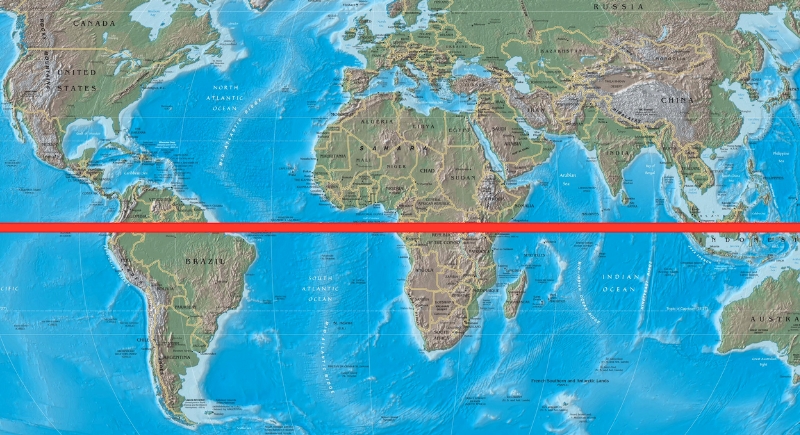
Image via Wikimedia Commons/Cburnett
The equator itself is a geographic marker, but the surrounding marine environment presents conditions that are poorly suited for penguins. Penguins are built to conserve heat, not release it. Dense, waterproof feathers, compact bodies, and insulating fat layers enable them to survive prolonged exposure to cold water, but create serious challenges in warm seas.
Swimming and hunting in tropical waters increases the risk of overheating, especially during long dives or extended foraging trips. Penguins lack efficient mechanisms to cool their bodies while they are active, making sustained activity in warm water particularly dangerous.
Food availability also shifts dramatically near the equator. Cold ocean currents support dense populations of krill, squid, and cold-water fish that penguins depend on. Warm tropical waters generally lack the same nutrient concentration, meaning less reliable prey and lower energy returns for the effort spent hunting.
The Galápagos Penguin Exception
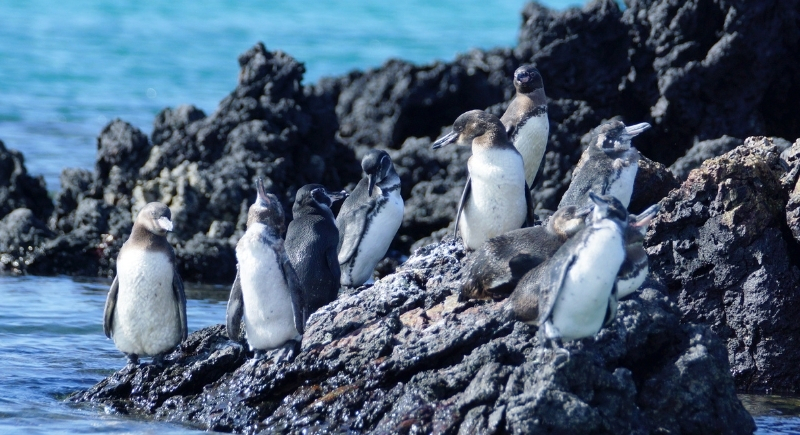
Image via Getty Images/Patrick_Gijsbers
The Galápagos penguin is the only penguin species whose natural range reaches slightly north of the equator. Its survival in this region is possible because of cold ocean currents flowing up from the south, which lower water temperatures and bring nutrients to the surface.
Even so, the species remains highly vulnerable to temperature changes. During El Niño events, when warm water replaces those cold currents, Galápagos penguin populations often decline due to reduced food availability and increased heat stress.
Their presence near the equator depends entirely on localized cold-water conditions rather than tolerance of tropical environments.
Evolution Locked Penguins To The Southern Hemisphere
Penguins evolved in the Southern Hemisphere approximately 60 million years ago. Over time, they lost the ability to fly as their wings transformed into flippers optimized for swimming and diving. This tradeoff made them exceptionally efficient underwater but removed the possibility of long-distance flight across unsuitable environments.
Without flight, penguins cannot easily cross vast stretches of warm water. Swimming across tropical zones would expose them to prolonged heat, limited food, and exhaustion. The same adaptations that make penguins elite divers also restrict their geographic range.
Fossil evidence supports this long-standing southern confinement. Some prehistoric penguin species were exceptionally large, with fossil remains from Antarctica indicating certain species reached about 2 meters in height and weighed up to 115 kilograms. Despite their size, these species remained adapted to cold southern waters and never expanded into tropical or northern ecosystems.
Why Penguins Never Established In The Arctic
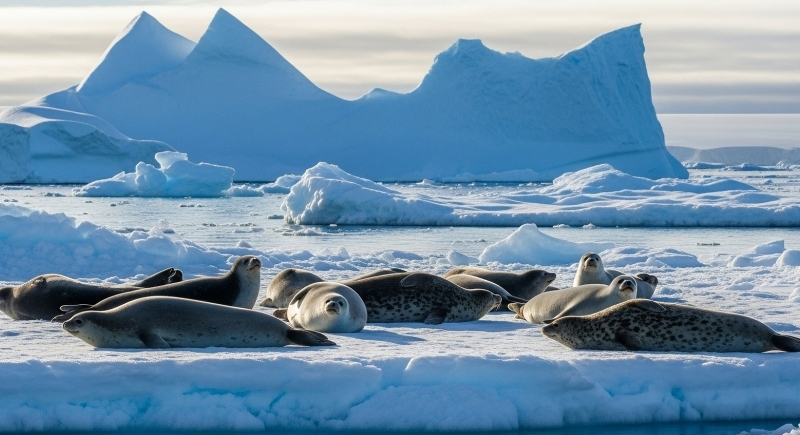
Image via Canva/Flixx Studio
The absence of penguins in the Arctic is often contrasted with the presence of seals and whales in both hemispheres. The difference comes down to mobility and breeding needs. Marine mammals can migrate long distances through deep water and regulate body heat differently. Penguins must come ashore to breed and raise their young.
Antarctica historically lacked land predators, allowing penguin colonies to nest in relative safety. The Arctic, by contrast, has long supported land predators such as polar bears. Penguins never evolved defenses or behaviors to cope with those threats.
By the time modern Arctic ecosystems were established, penguins were already specialized, flightless, and tightly synchronized with southern seasonal cycles.
A Boundary Defined By Environment And Adaptation
The invisible line penguins rarely cross is not enforced by instinct or chance. It exists because warm water disrupts their thermal balance, food webs thin out, and long-distance movement becomes impossible without flight. Evolution reinforced these limits over millions of years.
Rather than testing that boundary, penguins remain where everything they need aligns. They are one of the clearest examples of how ocean conditions and evolutionary history can quietly define where life can, and cannot, thrive.