The Mystery of Eel Reproduction Is the Weirdest Thing in Nature
For centuries, eels have kept one of nature’s most stubborn secrets. Scientists have chased answers through ancient folklore, dead ends in early experiments, and decades of missing evidence. Even with modern tracking technology, the most critical moment of eel reproduction still unfolds far from land, deep in open ocean waters, where no human has ever watched it happen.
A Creature That Refused To Make Sense
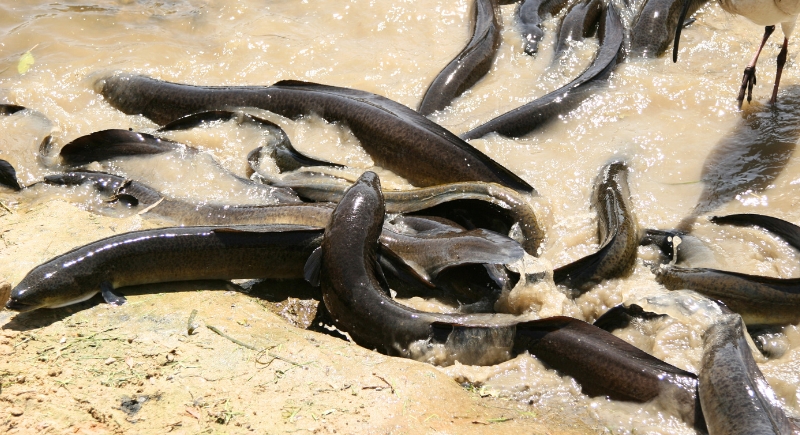
Image via Getty Images/webstuff
At a surface level, eels seem simple. They have long bodies, smooth skin, and move through water with a wave-like motion. Their biology tells a much more complicated story. For centuries, researchers struggled to find eel eggs, observe their mating behavior, or identify their reproductive organs. That absence led to explanations that now sound implausible but once filled genuine gaps in knowledge.
Some believed eels formed from river mud warmed by the sun. Others suggested young eels emerged from material shed by adults. Early dissections showed no obvious reproductive organs, which reinforced the confusion.
A Life Cycle That Keeps Changing Shape
Another challenge came from appearance. Young eels and adult eels look so different that scientists initially classified them as separate species. Eels do not hatch looking like miniature versions of adults. They begin life as tiny, transparent larvae with flat, leaf-like bodies. These larvae drift with ocean currents for months or even years, growing slowly as they travel vast distances.
As they approach continental waters, they transform into glass eels. At this stage, they remain nearly transparent and migrate into estuaries and rivers. Over time, they darken and develop into elvers, then yellow eels. Many freshwater eels remain in this phase for more than two decades.
Near the end of their lives, yellow eels undergo another transformation. They become silver eels. Their eyes enlarge, their bodies change shape, and internal systems shift to support long-distance swimming in the open ocean.
The Journey That Ends Everything Else
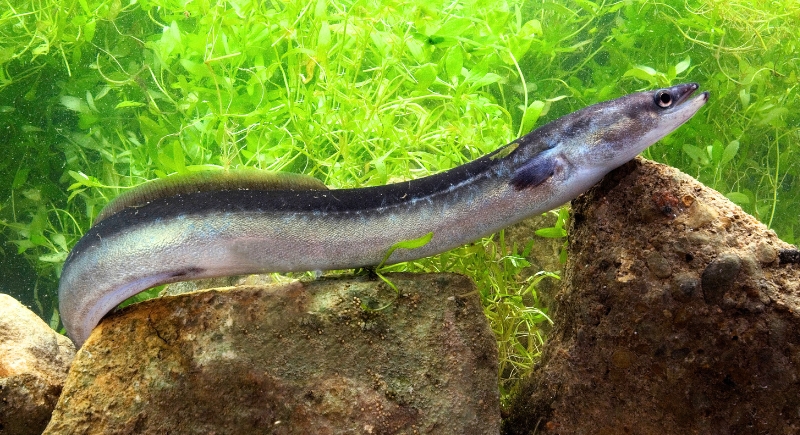
Image via Getty Images/Michel VIARD
Once silver eels begin migrating, they stop eating. Their digestive system breaks down as stored energy is redirected toward movement and reproduction. Using those reserves, they swim thousands of miles across the Atlantic.
European and American eels travel toward the same region: the Sargasso Sea. This area sits within a slow-moving system of ocean currents in the North Atlantic. Scientists have collected the smallest eel larvae there for more than a century, suggesting it is where spawning occurs. For decades, this larval evidence served as indirect proof. Adult eels and their eggs remained unseen.
Advances in satellite tagging finally allowed researchers to follow adult eels far into the Atlantic Ocean. Tags attached to migrating females showed consistent movement toward the Sargasso Sea, confirming long-standing hypotheses.
Some tracked eels traveled between 3,100 and 6,200 miles. Data showed that migration routes converged across open water, even when the eels started in different rivers and seas. Travel times varied, but the destination matched the location where larval eels had been found.
Even with this breakthrough, no one has observed eels mating or spawning in the wild. The process occurs far below the surface and ends shortly after reproduction.
Eggs, Sperm, And A Vanishing Act
Based on dissections and controlled studies, eel reproduction relies on external fertilization. Females release millions of eggs into the water. Males release sperm into the same area. Fertilization happens without pair bonding, nests, or parental care.
After spawning, adult eels die. Their offspring drift with ocean currents and eventually make their way back toward freshwater habitats their parents once occupied. How these young eels navigate back to specific river systems remains unresolved.
Researchers continue to study magnetic fields, temperature changes, salinity gradients, and ocean circulation patterns, yet no single factor fully explains their accuracy.
Why The Mystery Still Matters

Image via Getty Images/DedMityay
European eel populations have declined by roughly 95 percent since the 1980s. Factors include dams, habitat loss, disease, overfishing, illegal trade, and climate-driven changes in ocean conditions. The ocean phase of their life cycle remains the least understood, which complicates conservation efforts.
Eels continue to challenge assumptions about fish biology, migration, and reproduction. After thousands of years of study, the most critical moment of their life cycle still happens far from human view.
Understanding when and where eels reproduce affects river management, fishing limits, and habitat protection. Each unanswered question makes recovery more difficult for a species already under severe pressure.