The Northern Blue-Banded Bee Is Not Yellow or Brown
If you picture a bee, you probably imagine yellow and brown stripes without thinking twice. The northern blue-banded bee breaks that expectation the moment you notice it. Its abdomen flashes vivid blue bands that can look almost metallic in direct sunlight, set against a dark body that makes the color pop. Even among crowded flowers, it is hard to miss once you know what to look for.
Most grow to about 11 to 13 millimeters long, close to the length of a small paperclip. The thorax carries a soft red-brown fuzz, while the abdomen stays smooth and dark, which only sharpens the look of those blue bands. Males and females show small differences, too. Males usually have one extra stripe, a detail that helps with identification if you catch a clear view.
Where They Actually Live
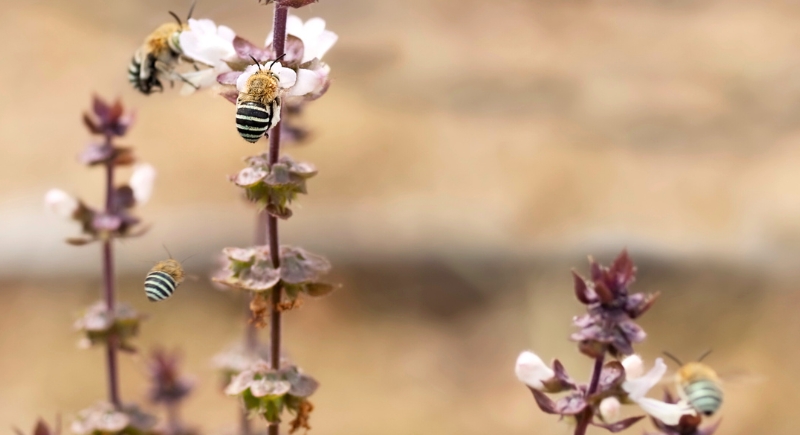
Image via Getty Images/sherjaca
This bee is most common across northern Australia and parts of Southeast Asia. It favors warm regions and avoids colder, temperate zones. Sightings in places like the United States or Europe remain rare enough to be treated as outliers.
Northern blue-banded bees also adapt easily to cities, suburbs, forests, and open woodland. Clay soils, sandy patches, and even old mortar between bricks can serve as nesting spots. That flexibility explains why people sometimes notice them near homes long before learning their names.
Solitary By Design, Not By Accident
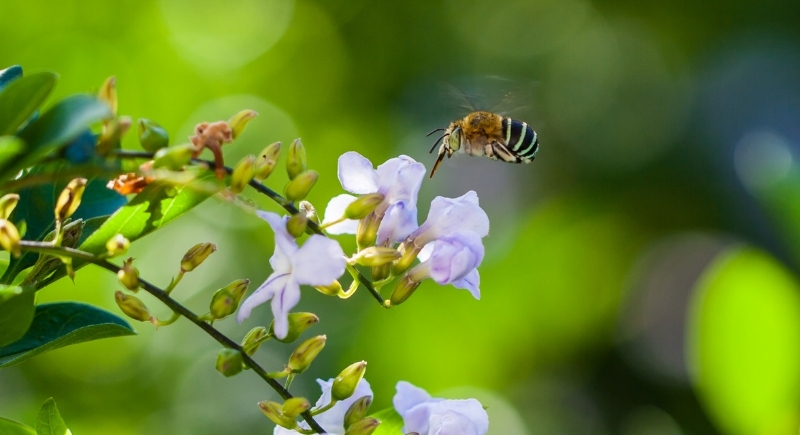
Image via Getty Images/monkeystock
Unlike honey bees, these bees work alone with no queen, hive, or honey stores to defend. Each female builds her own nest, usually a narrow tunnel about 10 centimeters deep, with an entrance about 8 millimeters wide.
Inside, she creates individual cells, stocks them with nectar and pollen, lays an egg, and seals the chamber. But males skip the digging entirely and, at night, often cling to plant stems with their mandibles and sleep outdoors, sometimes in small groups. It looks social, but the cooperation stops there.
Why Farmers And Scientists Pay Attention
The northern blue-banded bee earns attention for one reason that has nothing to do with color: it performs buzz pollination. This method involves gripping a flower and vibrating flight muscles at a specific frequency, forcing pollen out of tightly sealed structures.
Tomatoes, eggplants, and chili peppers depend on this technique. Many flowers release pollen only when shaken in this exact way. Studies show that blue-banded bees can visit up to 1200 flowers per day, which explains why researchers are exploring their use in greenhouse pollination rather than relying on imported species.
What They Eat And How They Behave
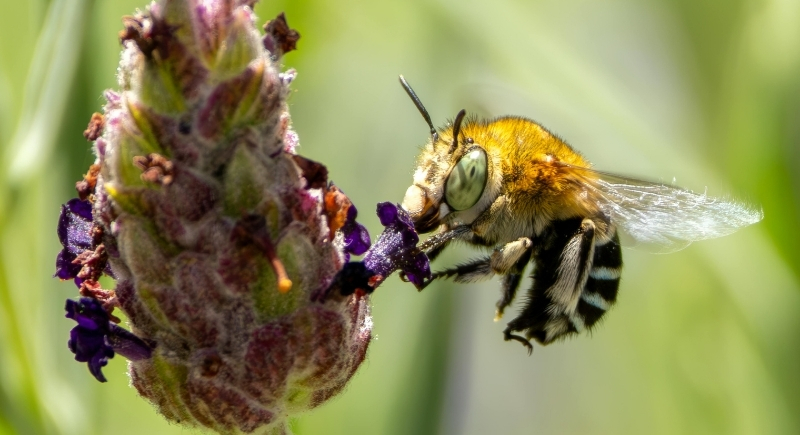
Image via Pexels/Stuart Robinson
Northern blue-banded bees feed on nectar, especially from blue and purple flowers like lavender and grevillea. Their larvae eat a small supply of pollen and nectar prepared by the mother. Honey is never involved. These bees do not make or store it.
Despite their bold blue bands, they are not aggressive. Stings are rare and usually happen only if the bee is trapped or handled. Without hives or honey to defend, they move calmly from flower to flower with little disturbance.