The Scandalous Reason This Museum Shut Its Blue Whale Exhibit
In the 1800s, a massive blue whale washed ashore near Askin Bay, just outside Göteborg, Sweden. Instead of letting the moment fade into local history, the specimen was preserved and eventually put on display. Since 1865, museum visitors could actually step inside the whale’s body, examine it up close, and treat it as both science and spectacle. For years, it remained one of the museum’s most unusual attractions. Then one unexpected incident forced staff to rethink how the exhibit was handled and who could enter it.
How A Dead Whale Became A Museum Landmark
In 1865, taxidermist and museum curator August Wilhelm Malm acquired the whale after it beached near Göteborg, Sweden. Instead of treating it solely as a scientific sample, Malm preserved nearly every component. The organs were stored in barrels, the baleen was salted, the skeleton was boiled and cleaned, and the skin underwent treatment over several weeks.
Workers built a large wooden internal frame shaped like a whale. The preserved skin stretched over that structure and was secured using brass tacks. The finished display allowed the jaw to open, and visitors could physically walk into the whale’s body. Interior furnishings even included benches, carpeting, and wall hangings.
By late 19th-century standards, this blurred the line between education and spectacle, as museums often did to attract crowds. The specimen still sits at the Natural History Museum in Göteborg today and remains widely described as the only fully taxidermied blue whale ever created for public display.
Why The Exhibit Design Was So Unusual
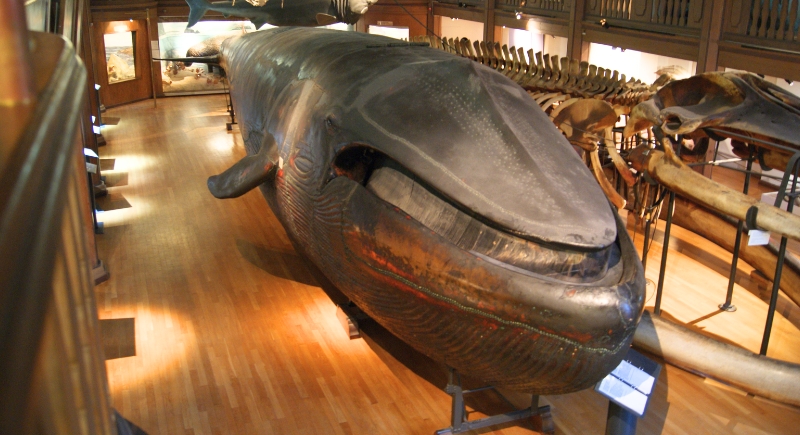
Image via Wikimedia Commons/Jopparn
During that era, natural history displays often embraced dramatic presentation. Museums competed for public attention, and large animals drew the most attention. Allowing people inside a whale turned scientific curiosity into something closer to an attraction.
The hinged jaw originally remained open most of the time. Visitors could step through the mouth and enter the interior chamber. This setup lasted decades and became part of the museum’s identity. Over time, crowds treated the space less like a specimen and more like an odd tourist landmark.
The Scandal That Changed Public Access
During the 1930s, museum staff discovered a couple engaged in intimate activity inside the whale’s mouth. The incident spread through local rumor and later media coverage. Public reaction was mixed, with shock, humor, and embarrassment directed at the institution.
After that discovery, museum leadership changed how the exhibit operated. The jaws stopped staying permanently open, and access became limited. Today, the mouth typically opens only during specific events such as national holidays or special museum programming.
The whale itself never left the display. The major change centered on controlling how visitors could physically interact with it. The decision reflected shifting expectations around public behavior inside scientific exhibits.
The exhibit highlights how museums have changed over time. Earlier institutions often blended education and spectacle more openly. Modern museums tend to focus more heavily on controlled visitor interaction, conservation ethics, and educational context. The Göteborg blue whale remains proof of how scientific preservation, public curiosity, and social norms can collide in unpredictable ways.