
Watch for the slow scoot, the shared blanket edge, and the weirdly polite paw placement when they start sleeping together.
The slow scoot: inches, not pounces
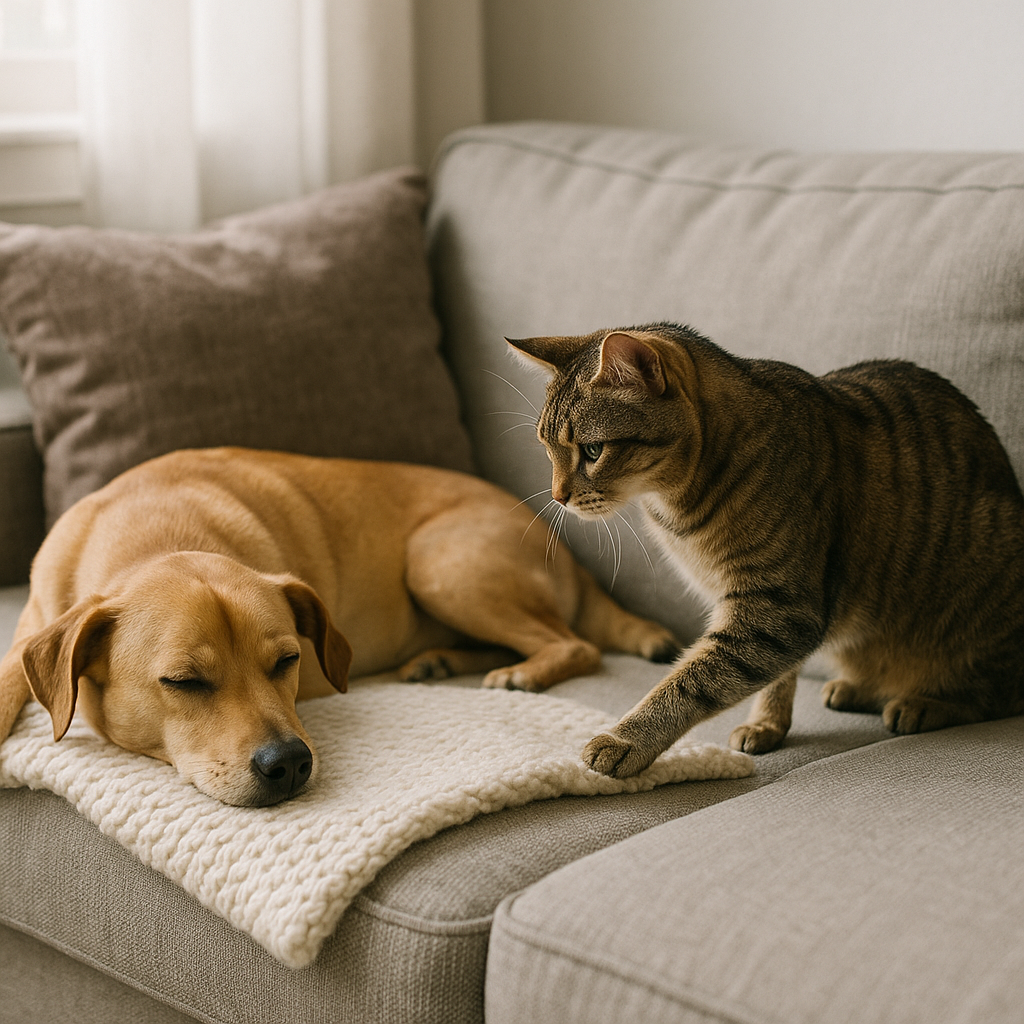
When two pets aren’t friends yet, they don’t arrive at a shared sleeping spot like it’s a party. One of them drifts in like they’re trying not to disturb a sleeping roommate. I started noticing this on my own couch because I’m the kind of person who can’t help pausing a show to watch the tiny politics happening in the blankets. The dog will be fully parked, chin down, eyes half closed. The cat appears, hops up, and instead of doing the usual leap-to-center move, they take the long way around: along the back cushion, then down to the arm, then one paw at a time onto the throw. It may be caution mixed with curiosity.
The giveaway is the pace. You’ll see a sit. Then a pause that lasts a full minute. Then a sink of the shoulders as they decide, fine, I’m committing. And the distance closes in ridiculous increments: two inches, stop. One inch, stop. That slow scoot can be encouraging when the rest of the body stays loose and relaxed, but pace alone doesn’t prove trust. If the other animal doesn’t flinch, you’ll get the next step: the newcomer tucks their feet and chooses a position that’s “parallel,” not face-to-face. That little gap may simply give both animals room to get comfortable. What matters more is the overall picture: loose bodies, relaxed faces, and neither pet appearing eager to leave.
What I don’t count as progress is the high-speed drive-by. If the cat sprints across the cushions, or the dog flops down like a sack of laundry right on top of the existing nap, that’s not friendship. That may simply be excitement, playfulness, or a less cautious approach. The slow, deliberate approach is different. It says, I’d like to share this, and I’m willing to do it on your terms.
Blanket-edge sharing can signal growing comfort
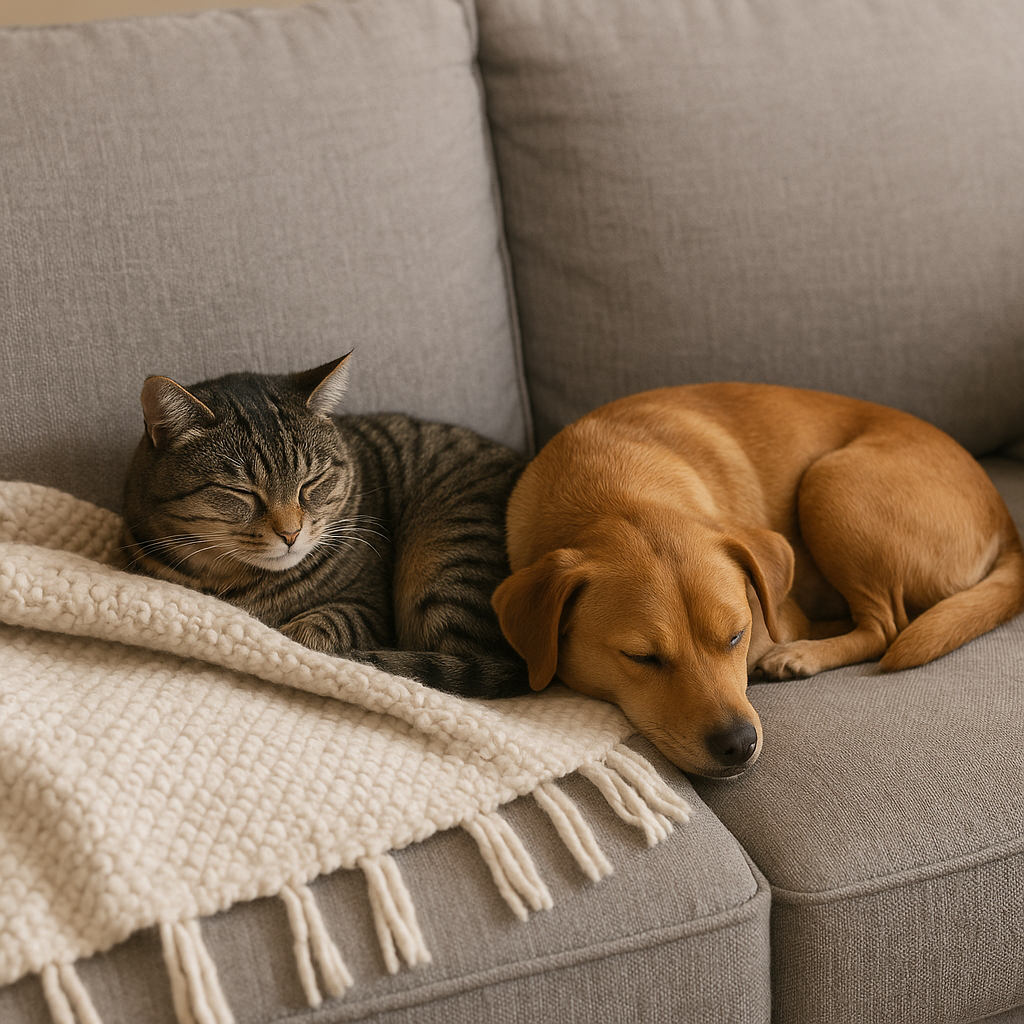
The couch blanket is where I can tell whether we’re dealing with temporary tolerance or the start of an honest-to-goodness nap alliance. Early on, one animal takes the center like they paid rent on it. The other gets the fringe, the part that slips off your knees and somehow always smells like yesterday’s popcorn. As they become more comfortable around each other, that geography may start to change: they might share the blanket edge without the blanket turning into a tug-of-war.
Here’s the moment I look for. One of them is already asleep, preferably in that deep, heavy way where their breathing slows, and their face goes slack. The other arrives and doesn’t bother trying to steal the premium square footage. Instead, they take a thin strip of blanket right along the seam, settle, and then do the tiny tuck: paws disappear, body rounds, tail wraps. It’s modest. It’s also bold. Choosing the edge means they’re close enough for accidental contact, but they’re not forcing it.
If you want to clock how comfortable they are, watch what happens when the blanket shifts. You stand up to refill your water, the throw slides an inch, and both animals have to decide whether to reset the boundary. When they’re still touchy, one will pop their head up, do that sharp look, and relocate with a huff. When they’re getting along, you’ll see micro-adjustments instead of evacuation: a paw slides back under, a shoulder wiggles, a chin resettles. No drama. Just a quiet agreement to stay put.
And yes, a warm sleeping spot can make this kind of couch sharing easier to notice. A warm sleeping spot may make the couch more appealing, but don't assume that heat will speed up a friendship. If you use a heated pet bed or pad, follow veterinary safety guidance, supervise its use, and make sure both animals can easily move away from the heat. The important part is that neither one tries to monopolize it once they’re both settled. They let the other have the good strip. That’s the whole thing.
The polite paw: contact without the clamp
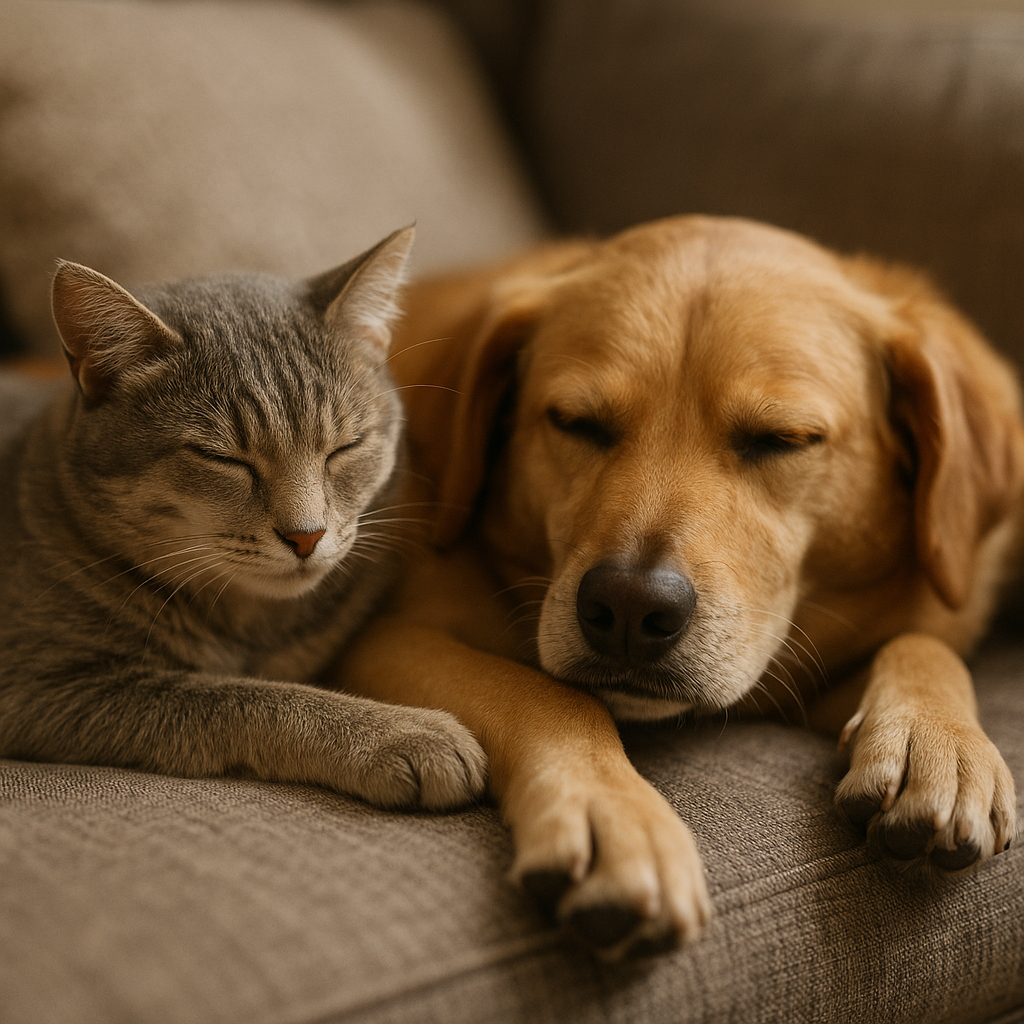
I used to think the first time they touched during a shared nap would look sweet. It rarely does. It looks accidental, almost bureaucratic, like someone signed a form. One paw ends up resting on the other animal, and nobody makes it weird. That’s the sign. Not the big cuddle pile you want for your camera roll, but the low-key “polite paw” placement that says, I’m comfortable enough to let my body cross your boundary by half an inch.
There are versions of touch that don’t count. The dog’s heavy leg flops over the cat, pinning them. The cat drapes across the dog’s neck like a scarf, then swats when the dog breathes. Those interactions are harder to interpret from position alone, especially if one animal looks trapped, tense, or irritated. The polite paw is different because it’s light and it stays light. Think toes, not forearm. You’ll see it on the couch or at the foot of the bed when both are already drowsy, and nobody’s auditioning for dominance.
What sold me the first time I saw it was the lack of a check-in. No head lift. No stare. No stiffening. The cat’s front paw ended up on the dog’s wrist, right where the fur changes texture, and they both just kept breathing like it was the most normal thing in the world. Ten minutes later, the dog shifted, and instead of shaking the cat off, they moved around the paw. That’s a choice. It’s an encouraging sign of comfort, especially when both animals stay loose and relaxed, although one sleepy interaction alone can’t tell you exactly how close their bond is.
If you want to notice it in real time, don’t hover. Sit like you normally do. Keep the TV at the usual volume. Let the room sound be the room sound. The moment is quick, and if you lean in with your phone, you’ll get the classic reset: both heads up, both pretending they weren’t just about to fall asleep together. When you catch the polite paw without either pet breaking the nap, it can feel like one more encouraging sign that sharing the couch is becoming normal.