
Three pet-birthday rituals that look bizarre until you notice the hat, the frosting, or the gift bag is doing all the work.
The cake they won't eat (but they'll guard like treasure)
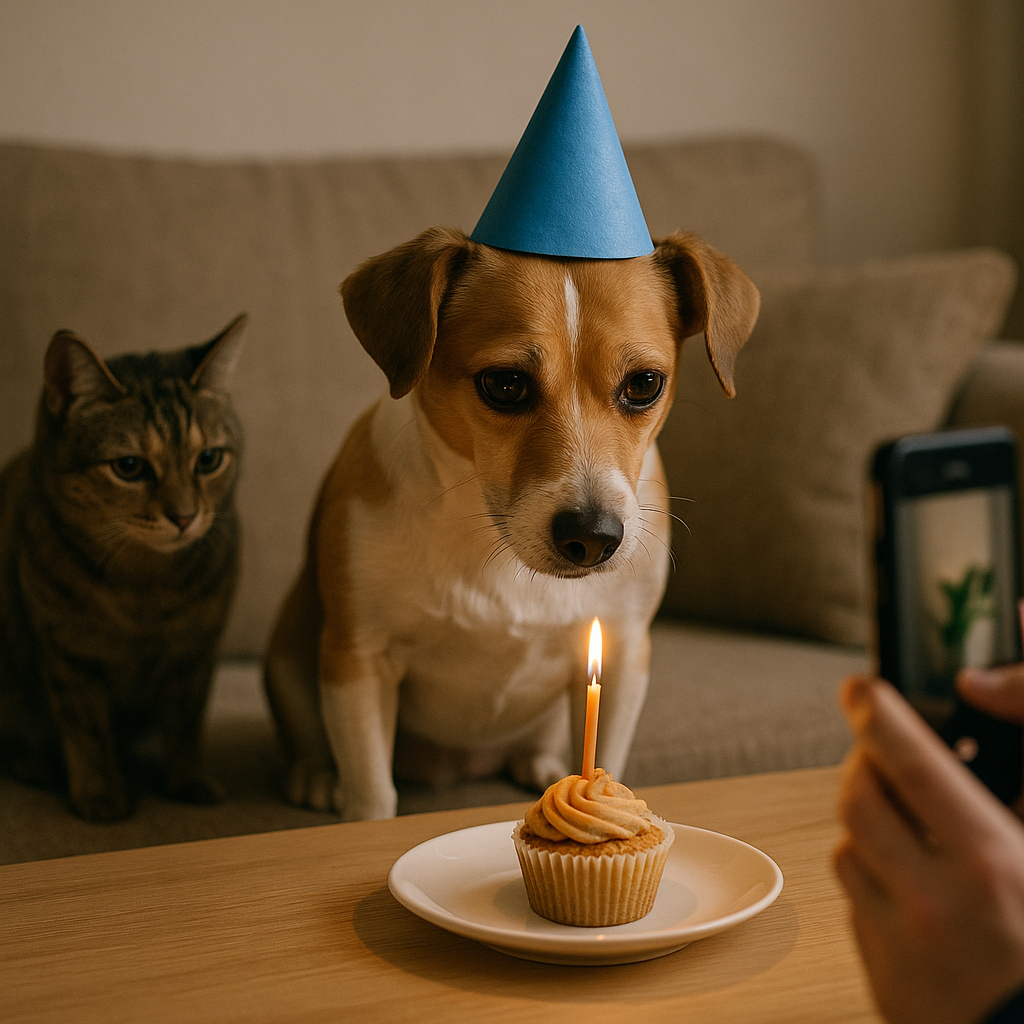
I learned this the hard way with a little dog-safe cupcake I made for a friend's pup: nobody cared until we set it on a real plate, added a flameless candle for the photo, and did the whole sing-song routine. Then the dog froze in place like I'd handed her a paycheck. No bite, no sniff, just guarding. Cats do a version of this, too, except their version is sitting three inches away, pretending the whole thing is beneath them, while still tracking every hand that moves toward it.
It looks like a strange ritual when your pet refuses the food and then acts like it's sacred. Usually, it's not about the recipe at all. It's the ceremony. A plate on the coffee table is different from a bowl on the floor. A candle means people are excited. Phones come out. The room's energy changes. For some pets, all that extra activity may make an unfamiliar setup more exciting or stressful. If a dog starts hovering over or guarding the treat, give them space rather than assuming they're enjoying the attention.
If you want the birthday treat to land as food rather than a museum exhibit, take the pressure off. Put the treat down in their normal eating spot and let them enjoy it without moving the plate. If you want a styled photo, take it before serving the treat or photograph the pet from a comfortable distance while they eat. Or skip the plate entirely and smear a small amount of xylitol-free peanut butter on a lick mat so the activity is clear: lick, relax, repeat. With cats, I stick to a spoon of Churu or a little pate on a small saucer and keep the crowd back. One person filming, everyone else hands in pockets. The best birthday photos I've gotten were taken while the animal was busy chewing, not while a group of adults was staring as if it were a proposal.
Why the party hat triggers the statue response
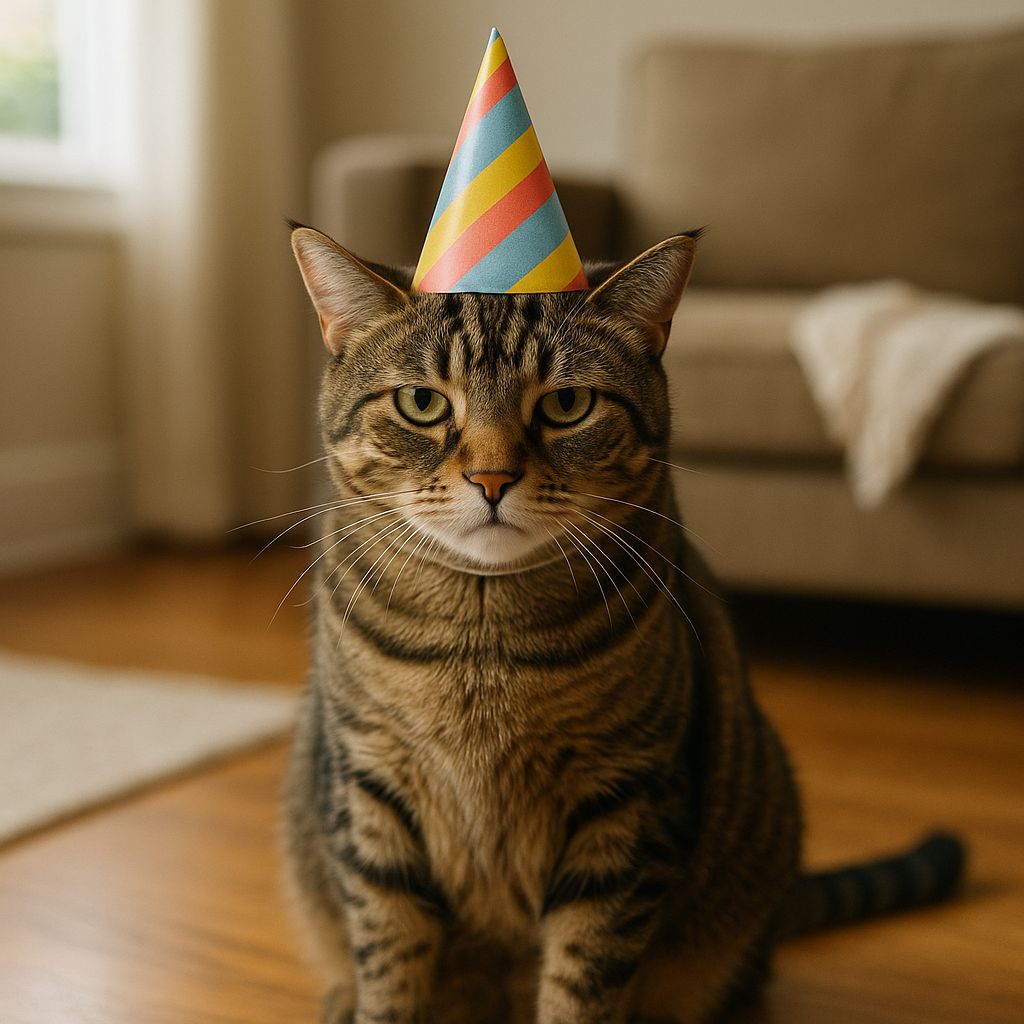
The funniest pet birthday parties are always the ones where the animal turns into a decorative object the moment the hat comes out. Not running away and not fighting. Just standing there like a taxidermy display while their eyes quietly say, I'm waiting for you to stop being like this.
That statue response can be a sign that the pet is uncomfortable or stressed by something unfamiliar on their head. Freezing or stiffening shouldn't automatically be read as patience, so if the hat changes how the pet moves or they look uneasy, I take it off. When people interpret the freeze as "they're being so patient," they may keep the hat on longer even though the pet is uncomfortable.
What works for me is treating the hat like a two-second prop, not a costume. I get the camera ready first. I also skip elastic. I avoid tight chin straps altogether and use only a lightweight accessory that doesn't restrict the ears, eyes, mouth, or movement. If the pet seems uncomfortable, the photo can happen without the hat. If I'm using a cone hat, I make sure the inside edge isn't scratchy cardboard where it touches fur.
Then I do the quickest sequence possible: treat in hand, hat on, one photo burst, hat off, treat delivered. I keep a treat handy as a reward, but if the hat causes freezing, stiff movement, or obvious discomfort, I skip the photo and take it off.
The gift bag inspection that turns into a full-body dive
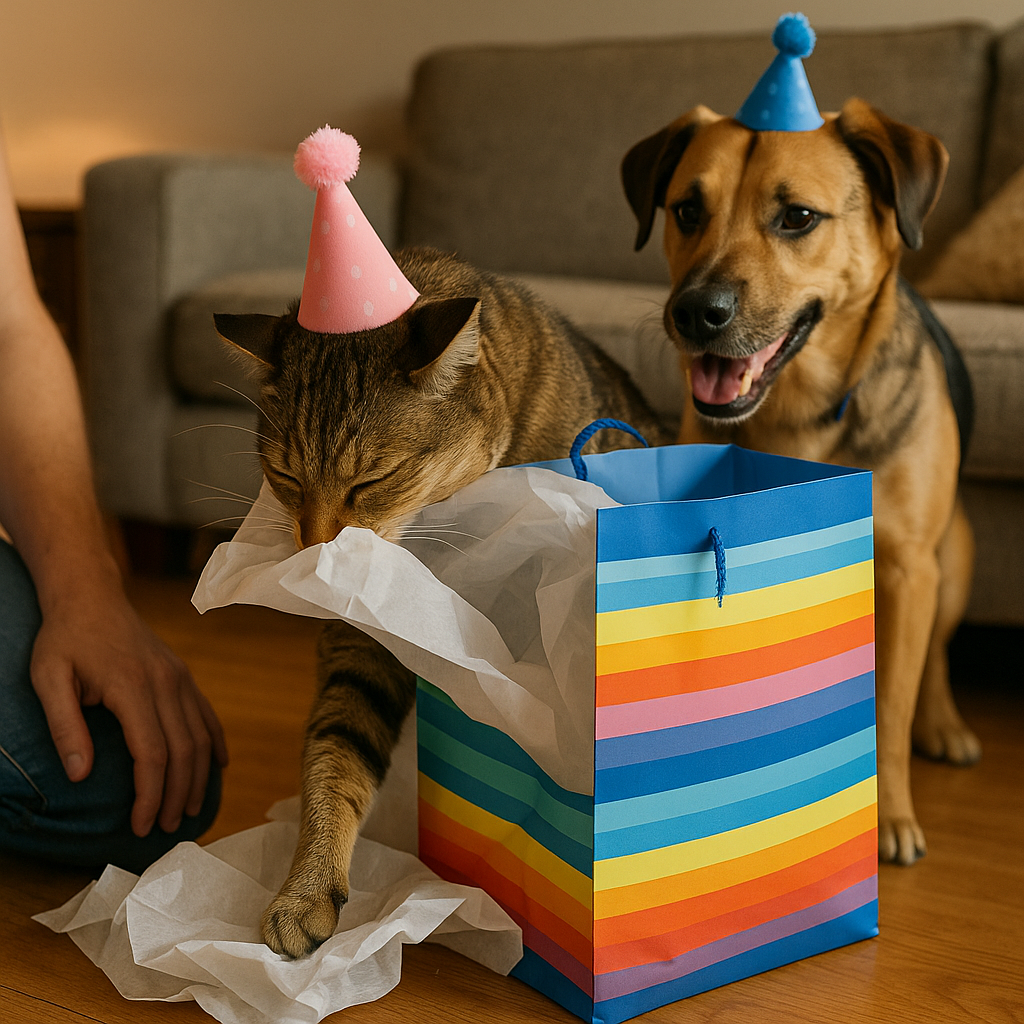
Every pet birthday party has that moment where the animal ignores the actual gift and goes feral for the packaging. The dog shoves their whole head into the gift bag like it's a mailbox full of secrets. The cat does the slow paw, slow paw, sudden face-first plunge into tissue paper, then comes up blinking like they just time-traveled.
The packaging may simply be more interesting than the present. Paper bags and cardboard boxes give cats places to investigate, hide, paw at, and explore, and the crinkly tissue adds another unfamiliar texture and sound.
The only time I intervene is when the setup invites a bad habit or a scary moment. Ribbon and thin string handles can get chewed, and a cat can back out of a bag with a handle looped in the wrong place. So if I'm doing the gift-opening photos, I remove ribbons first, cut the handles off paper bags, and use a big open box as the main stage. A Chewy delivery box is perfect for this because it's sturdy and wide, and you can toss a sheet of tissue in without creating a narrow trap.
If you want the pet to notice the present inside the packaging, hide one high-value treat under the tissue paper, then place the toy on top of it. The pet will do the full inspection for the treat, and when they hit the toy, it feels like they discovered it. It's not magic. It's just letting the bag be the appetizer instead of acting offended that they're more interested in paper than the expensive thing you wrapped.