The World’s Oldest Wild Bird Returns to Nest at 75 Years Old
A 75-year-old bird has returned to Midway Atoll National Wildlife Refuge for the 2025/2026 nesting season. She is the oldest known wild bird ever recorded and remains an active breeder. The Laysan albatross was first banded in 1956. Researchers have tracked it for nearly seven decades, which makes its age and ongoing behavior unusually well documented. Wildlife officials confirmed her arrival came slightly earlier than in some recent seasons. At this stage of life, most birds of her species have long stopped breeding. But this one has not.
A Life Tracked Across Decades
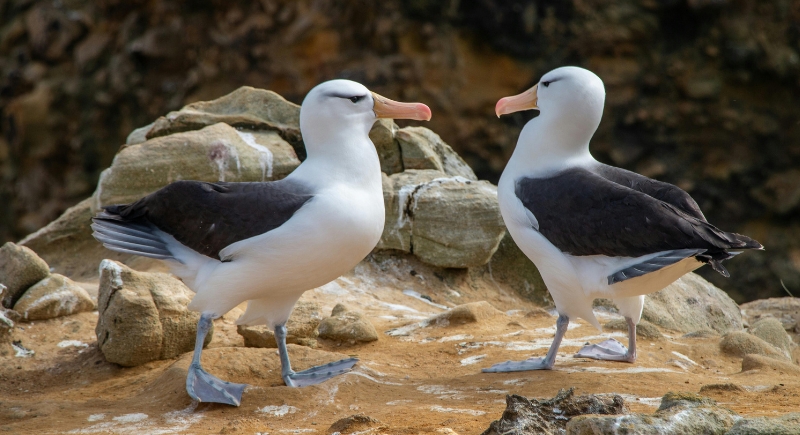
Image via Pexels/ArcticDesire.com Polarreisen
The bird at the center of this moment is Wisdom, a Laysan albatross known as mōlī in Hawaiian. Wildlife biologists first banded her in 1956 after she laid an egg, marking her with the identifier Z333. Because Laysan albatrosses do not begin breeding until at least five years old, researchers estimate she hatched around 1950 or earlier. That puts her at roughly 75 years old today.
For context, the average lifespan of a Laysan albatross sits around 68 years, according to the National Oceanic and Atmospheric Administration. Wisdom has already passed that benchmark and continues to return each breeding season. Longevity paired with continued nesting is what makes her unique.
Over her lifetime, Wisdom has laid an estimated 50 to 60 eggs. Roughly 30 of those chicks survived to fledge. For a species that lays just one egg per breeding season, those figures are impressive. They also explain why scientists continue to closely monitor her.
During the 2024 season, at age 74, she laid her first egg in four years. Wildlife officials confirmed she had taken a break in breeding, a pattern that becomes more common with age. Her return for the 2025/2026 season came slightly earlier than in previous years, another detail that caught researchers’ attention.
This year, she arrived without her longtime mate, Akeakamai, who has not been seen for several seasons. Instead, Wisdom bonded with a new partner, who has since been marked for future monitoring. The pair began incubation duties soon after her arrival, following the same routine observed in much younger birds.
Midway Atoll
Wisdom’s consistency is tied to one place. Midway Atoll National Wildlife Refuge sits near the northwestern edge of the Hawaiian Archipelago and hosts millions of seabirds each year. Laysan albatrosses return to the same nesting sites annually, relying on familiarity and timing rather than exploration.
Midway’s protected status plays a role. Once a military outpost, the atoll transferred to the Department of the Interior in 1993. Today, it supports large seabird colonies with limited human disturbance. For a bird that has crossed the Pacific countless times, stability on land may be one reason she continues to thrive.
A Rare Case of Ongoing Adaptation
Image via Pexels/Dalia Nava
Wisdom’s story is not one of uninterrupted success. Some seasons include eggs. Others do not. Mates disappear. New bonds form. What remains constant is the return itself. That pattern highlights something often overlooked in wildlife stories. Survival at this scale depends less on strength and more on adjustment.
Scientists see value in observing how an animal of this age continues to navigate breeding cycles, migration, and changing partners. Each season adds data that may shape future conservation strategies for long-lived seabirds.
While other animals, such as Greenland sharks and deep-sea sponges, are known for their extreme lifespans, Wisdom differs because her life has unfolded in plain view. Decade after decade, her presence at Midway Atoll continues to offer a rare chance to observe aging in the wild without interruption.