There Is a Real-Life School Bus Just for Dogs, and the Photos Are Adorable
In several places around the world, real buses now pick up dogs from their homes and drive them to daycare, parks, or adventure play areas while their owners are at work. The idea sounds like something invented for social media, but multiple services are already operating in North America and Australia, and videos of dogs riding together have pulled in millions of views online.
How Dog School Bus Services Actually Work
Most dog bus services run like modified daycare pickup routes. Drivers follow a scheduled route, load dogs safely into secure seating areas, and transport them to fenced parks or supervised play spaces.
Some operators use full-size retired school buses, while others use minibuses or vans customized with gates, harness anchors, and separated seating areas. Safety is a major focus because dogs of different sizes and temperaments ride together. Many services assign specific seats so dogs can build a routine and reduce stress during transport.
After pickup, dogs usually spend one to several hours at a private dog park or activity facility before heading home. Some services include extras like treats, water breaks, or cleanup before drop-off.
The Canadian Ruff And Puff Dog Bus
In Calgary, Alberta, a company called Ruff and Puff started in 2020 after its founder saw a video of dogs riding together in a vehicle and decided to build something similar locally.
The founder purchased a bus and redesigned it with sliding gates and secure harness points so dogs could ride safely. The service now transports groups of dogs to fenced, private parks where they run, socialize, and play off-leash.
Some dogs reportedly recognize the sound of an approaching bus and wait near windows or doors for pickup. The service also adapts activities to the season, including water play in warmer months and snow play during winter.
The Wisconsin Dog School Bus That Went Viral
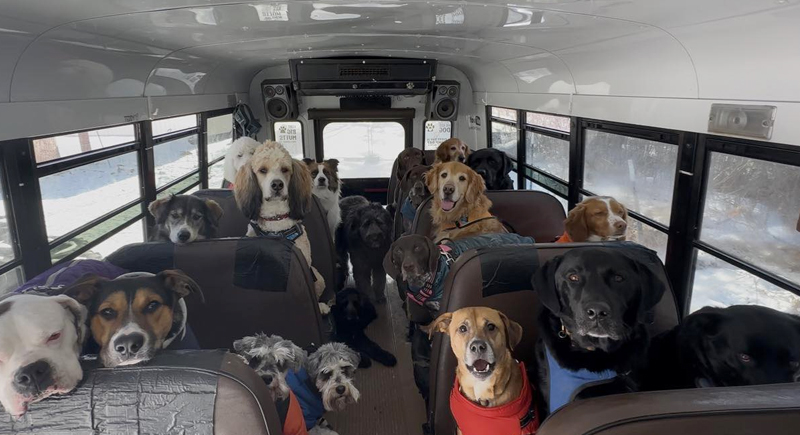
Image via Facebook/K9 Konvoy
In Oconto, Wisconsin, a service called K9 Konvoy grew from something much smaller. The founder originally walked her own dogs after early work shifts, then added neighbors’ dogs when people asked if they could join.
As demand grew, she upgraded from a personal car to a utility van, and eventually to a full bus after turning the idea into a full-time business in 2023.
The service now transports roughly 22 to 26 dogs per day. Pickup usually starts around 8 a.m., and dogs are taken to a three-acre fenced park owned by the founder’s family. The park includes trails, toys, and play structures designed specifically for dogs.
Snack routines and occasional birthday celebrations for dogs are also part of the daily routine, which helps fuel the service’s popularity.
Australia’s Dog Bus Programs With A Different Focus
In Queensland, Australia, a minibus service transports dogs to a structured dog adventure park and training environment. Some programs also double as employment training spaces for people with disabilities or those entering animal-care careers.
One program operates weekly routes serving dozens of dogs. Trainers say many dogs learn their schedules and show excitement before pickup days. These programs often combine daycare, enrichment training, and social interaction for both dogs and humans working in the facilities.
Why These Services Exist In The First Place
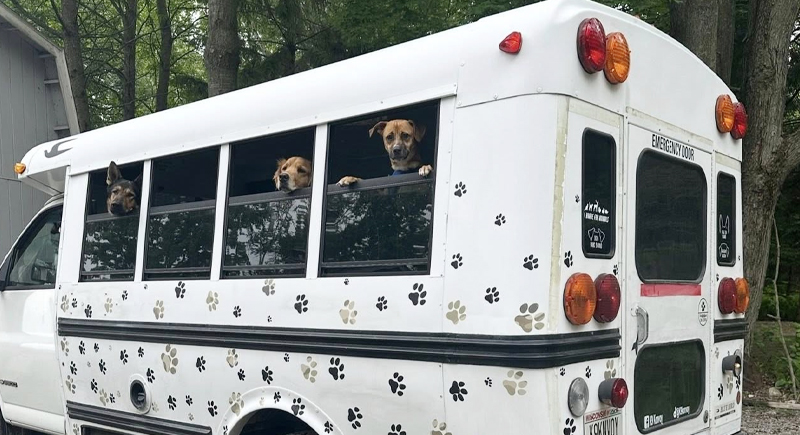
Image via Facebook/K9 Konvoy
Many of these services started in areas where traditional dog daycare is far away or inconvenient for working owners. In smaller cities or rural communities, driving 20 to 30 minutes each way for daycare isn’t always practical.
Dog bus services solve that by bringing transportation to the customer instead of requiring owners to drive across town.
They also provide structured exercise and social interaction, which many trainers consider important for behavior and mental stimulation, especially for high-energy breeds.
Cute But Also Logistically Complex
Videos of dogs sitting in rows on buses, wearing birthday hats, or waiting patiently for treats have helped drive global attention. Some dog bus accounts have reached hundreds of thousands or even millions of followers across platforms.
Many viral clips show dogs looking out bus windows, sitting in assigned seats, or lining up for snacks, which helped turn small local services into widely recognized internet trends. But running a dog bus service involves more than driving and playtime.
Operators often handle scheduling, behavior matching between dogs, safety training, cleaning, and daily health checks. Many drivers are also trained in dog handling, basic first aid, and behavior monitoring. Some services require temperament testing before allowing dogs to join group transport.
Weather planning, route timing, and emergency backup transportation are also part of daily operations.