There’s a Place in Japan Where Wild Deer Literally Bow to People
In a park in Japan, visitors often come across a scene that feels almost unreal: hundreds of wild deer lowering their heads in greeting. There’s no trainer nearby, no crowd cueing them on. These animals live freely, yet they’ve picked up one of the country’s most familiar gestures of respect. Watching them bow, you can’t help but wonder how an instinct for survival turned into something that looks a lot like courtesy.
An Unusual Greeting
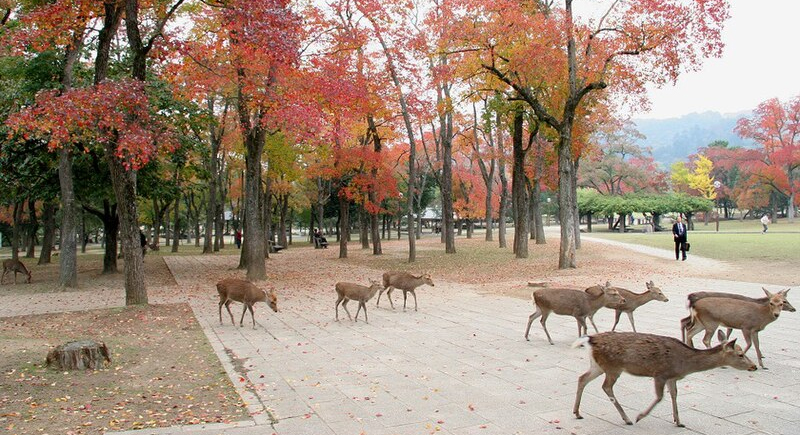
Image via Wikimedia Commons/Talko
In the heart of the former capital, one park is home to roughly 1,200 free-roaming deer. Nara Park, located in Nara Prefecture, is home to these deer, now officially “natural monuments” of Japan. The park spans 502 hectares (about 1,240 acres) and is surrounded by major historical sites, temples, shrines, and gardens. So while the bowing deer grab the headlines, you’re right in one of Japan’s most deeply layered cultural zones, mixing nature, religion, history, and tourism in one walkable loop.
The region’s deer have a long history. According to local legend, the deity Takemikazuchi arrived in Nara riding a white deer. As a result, deer became sacred messengers, especially around the Kasuga Taisha shrine and the surrounding forests. Over centuries, the deer came to live alongside humans in this space, and yes, they learned that a polite head-nod means “snack please.” What makes the deer stand out is that they often bow low to humans when offered rice crackers. You hold a cracker, the deer lowers its head, and then you give the snack. Due to this, feeding crackers has now become a popular visitor activity.
How to Join the Bowing Ritual
Head into the park during daylight. Vendors sell specially made rice-bran crackers called ‘shika senbei’ for roughly ¥200. Hold the cracker, wait for the bow, hand it over, and don’t tease the deer. They’re good at bows, less good at being toyed with. Some deer may nip if they think you’re holding out or making them work hard for it.
It’s easy to focus on the cute behavior, but remember that these are still wild animals. Male deer can act aggressively during mating season or when vying for food. Visitors are urged to act respectfully and cautiously. More recently, studies show the bowing frequency dropped during visitor lulls amid the 2020 pandemic, suggesting that the deer-human interaction has deeper dynamics than we might guess.