This Albino Raccoon Looks Like a Spirit Animal, and We Are Obsessed
A white raccoon has been popping up across social feeds, and it stops people mid-scroll for a reason. Its fur looks almost unreal, its eyes bright and pale, the kind of animal you do a double take on because your brain expects something else. It feels less like a wildlife sighting and more like stumbling into a moment you were not prepared for.
Raccoons already have a strange reputation. They’re clever, nosy, and always seem aware they are doing something they probably should not. Take away the familiar gray coat and dark mask, though, and the whole personality shifts. Covered in white fur with pink eyes, this one loses the playful troublemaker vibe entirely. It reads as something rarer and harder to place, like an animal you would expect to see once and remember forever.
Why Albino Raccoons Feel Unreal
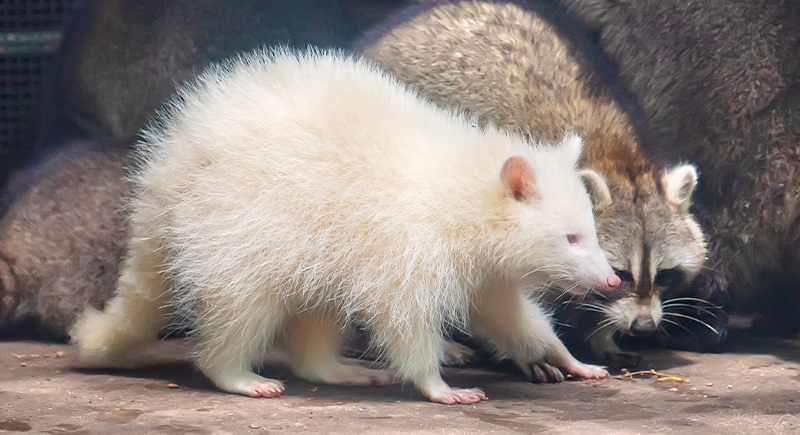
Image via iStockphoto/HuyThoai
Albino raccoons exist because of albinism, a rare genetic condition that prevents the body from producing melanin, the pigment that gives skin, fur, and eyes their color. Without melanin, their fur appears white or cream, and their eyes often look pink or pale red because blood vessels show through.
The odds of encountering one are astonishingly low. Wildlife experts estimate that only one in 10,000 to 20,000 raccoons is born albino. Spotting one in the wild is even rarer, with estimates closer to one in 750,000.
That rarity is a big part of why sightings feel so surreal. Most people will live their entire lives surrounded by raccoons and never see one like this.
Still a Raccoon, Just… Otherworldly
Despite the ethereal appearance, albino raccoons behave exactly like their gray-furred counterparts. They’re intelligent, inquisitive, excellent climbers, and deeply committed to investigating anything that looks edible or interesting.
Those tiny hands still poke, pry, and explore with purpose. The curiosity hasn’t softened just because the fur looks like moonlight. The only change is how visible they are. Raccoons rely heavily on camouflage, especially at night.
A bright white coat makes hiding nearly impossible. Predators can easily spot them, and their lack of pigmentation can also pose health challenges, including increased sensitivity to sunlight and weaker eyesight. As a result, albino raccoons often don’t survive long in the wild. Many never make it past their first year.
A Reminder to Admire From a Distance
When photos or videos of albino raccoons surface online, the response is immediate. Comment sections fill with words like ghost, angel, spirit guide, and fairy tale. People don’t just admire them. They assign meaning to them.
Part of that comes from contrast. We’re used to seeing raccoons as scrappy urban survivors, digging through trash cans and outsmarting barriers. Seeing one that looks delicate and luminous disrupts that mental image. It reframes a familiar animal as something rare and fleeting, almost sacred.
But as enchanting as these raccoons look, wildlife experts stress they’re still wild animals, and human attention can do more harm than good. Feeding them, approaching them, or trying to “help” often increases risk rather than reducing it.
Albino raccoons are already vulnerable. Drawing crowds or encouraging interaction only makes survival harder. The best response is quiet appreciation. Let the photos circulate. Let the awe linger. Let the animal stay wild.