This Lab Solved a 160-Year-Old Murder Case by Digging Up a Bottle of Poison.
Stanley, a Labrador owned by Paul Phillips, 49, kept returning to the same spot in his garden in Clyst Honiton, Devon, digging until something finally surfaced. What came up at first looked like part of an old pipe, but it turned out to be a bright blue glass bottle, still intact and stamped with the warning “Not To Be Taken.” The wording alone suggested it held something dangerous.
A closer look traced it back to the Victorian era, when bottles like this were commonly used to store poison. Finding one buried in a garden raised an obvious question. It was not just about what the bottle once contained, but why it had been hidden there in the first place.
A Local Story Comes Back Into Focus
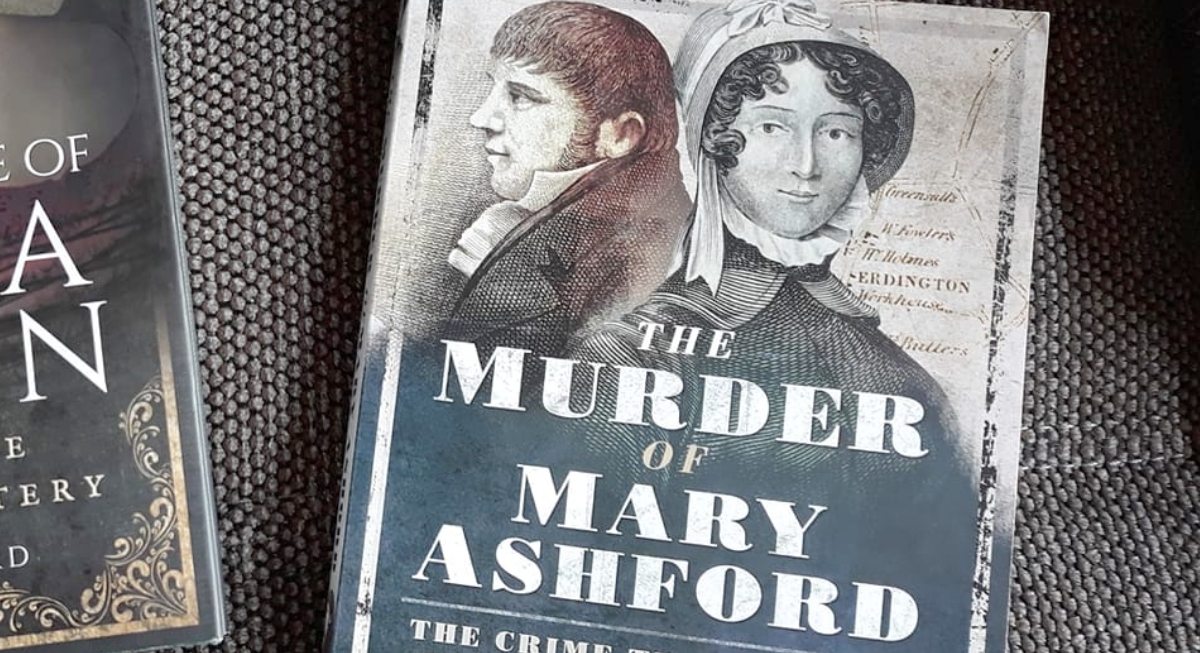
Image via Facebook/Sheri Cobb South
Phillips started digging into local history and found a connection that lined up. A woman named Mary Ann Ashford had lived just two doors away in the mid-19th century. In 1865, she murdered her husband, William Ashford, by poisoning his tea.
William, a shoemaker, had been married to Mary for 20 years. He owned an estate valued at £120, and she stood to inherit it. At the same time, she had been involved with a younger man named Frank Pratt, who worked for her husband.
William fell ill over time and received what appeared to be treatment for a sickness that didn’t make sense. His condition worsened, and then he died suddenly. Suspicion followed almost immediately. A police officer living next door arrested Mary, and tests later revealed arsenic and strychnine on her clothes. The buried bottle now looked like something someone once wanted out of sight.
The Execution That Drew a Crowd
Mary Ann Ashford was sentenced to death and executed on March 28, 1866, outside the County Gaol in Exeter. Around 20,000 people gathered to watch. The execution didn’t go as planned. Reports at the time described a prolonged death that took several minutes. The crowd witnessed every moment. That kind of spectacle left an impression, and cases like this added to growing discomfort with public executions across Britain. Public hangings were officially abolished just two years later in 1868, as things continued to shift.
A Modern Backyard Meets Victorian Crime
The timeline is now in plain view: a poison bottle was produced in the mid-1800s, a murder in 1865 involving toxic substances, a house located steps away from where the crime unfolded, and a bottle buried instead of discarded.
Phillips connected those pieces and reached a conclusion that feels hard to dismiss. The object Stanley uncovered may be directly tied to the poisoning that led to one of the area’s most notorious cases.
The find shifted the atmosphere at home in a noticeable way. The bottle now sits in the garage instead of indoors, kept there out of caution and because of the story it carries. Friends and neighbors grew curious, and Phillips has said he would like a local historian to look into it further.
Interestingly, since the day the bottle came out of the ground, Stanley has stopped digging in that spot entirely.