This Nine Colored Bird Looks Like It Was Painted by Magic
The national bird of Nepal has nine distinct colors on its body and can weigh up to 5 pounds. It lives high in the Himalayas, usually between 6,900 and 14,800 feet above sea level, where winters bury the ground in snow. To survive, the bird digs through the snow with its beak to reach roots, seeds, and small insects hidden beneath the surface.
Its scientific name honors Lady Mary Impey, the wife of Sir Elijah Impey, who served as the British Chief Justice of Bengal in the eighteenth century. The International Union for Conservation of Nature currently lists the species as Least Concern, although researchers note that its population is gradually declining. Even with those numbers attached, the bird still looks almost unreal, as if someone had painted it in nine colors and placed it carefully along a Himalayan ridge.
A Walking Prism At High Altitude
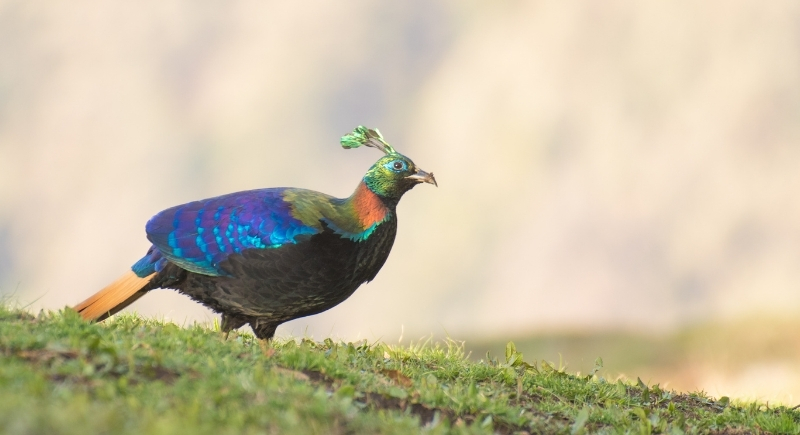
Image via Getty Images/cgtoolbox
The Himalayan Monal measures about 24 to 30 inches long and belongs to the pheasant family Phasianidae. Adult males carry a metallic green crest, coppery feathers across the back and neck, deep blue and purple tones along the body, and a bright white rump that flashes in flight. The tail feathers shift into rufous shades that darken toward the tips.
Count the visible shades in good light, and it is easy to hit nine. But the females look completely different. They wear streaky brown plumage with a white throat patch and patterned lower tail coverts. The color difference is not random: males advertise while females stay concealed while nesting on the ground.
Built For The Himalayas
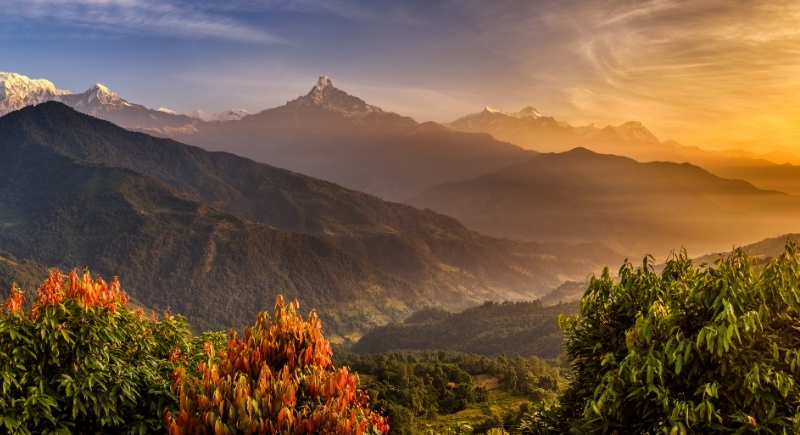
Image via Canva/Nick Fox
This bird’s range stretches across Afghanistan, Pakistan, India, Nepal, Bhutan, southern Tibet, and parts of China. In India, it appears along the Himalayan belt, including Uttarakhand, where it holds state bird status. The species prefers upper temperate forests dominated by oak and conifers, often mixed with grassy slopes and alpine meadows. It typically lives between 2,400 and 4,500 meters above sea level, though during winter it may descend to around 2,000 meters, where conditions are less severe.
Summer often finds it close to 16,000 feet. Winter pushes it lower, sometimes near 6,500 feet, where groups gather and roost together. That vertical movement tracks temperature and food availability. Snow does not stop it. The Himalayan Monal digs through snow cover using strong claws and a solid beak to reach roots and invertebrates.
What A Rainbow Eats
Despite its striking colors, this bird eats a very practical diet. Tubers, nuts, tender leaves, shoots, seeds, and berries make up most of its food, while insects and other small invertebrates appear occasionally. Studies based on fecal analysis in the Himalayas show that plant material dominates the diet, with invertebrates appearing in much smaller amounts.
Researchers have identified plants such as Nordostachys jatamansi, Potentilla fulgens, and Artemisia nilagirica among its food sources. The digging behavior leaves clear marks across snowy slopes. A hillside can show dozens of small excavation points after a feeding session.
Courtship Without Subtlety
Breeding season runs between April and August. During this window, males perform elaborate courtship displays that include dance-like movements and full exposure of their iridescent feathers. The white rump becomes part of the performance.
Pairs form monogamously during the season. After mating, the female scrapes a shallow ground nest and lays three to six eggs. Incubation lasts about 27 days to roughly one month, and the male stays nearby and guards the site. Chicks become independent at around six months. In human care, their lifespan typically reaches 10 to 12 years, but in the wild, it remains uncertain.
Color Comes With A Cost
The crest that makes the male look unforgettable also puts it at risk. Poaching remains a major threat because the head feathers carry cultural value and are seen as symbols of authority in parts of its range.
Habitat loss adds pressure. In the western Himalayas, studies have documented negative responses to human disturbance linked to hydroelectric development. The species relies on specific forest types and does not easily shift into altered landscapes. Population density can reach as high as five pairs per square mile in some areas, yet overall trends show a decline.