
Shredded tissues, hidden snacks, and a mysteriously dripping bottle reveal who is really in charge.
The Kleenex trail is a map, not a mess
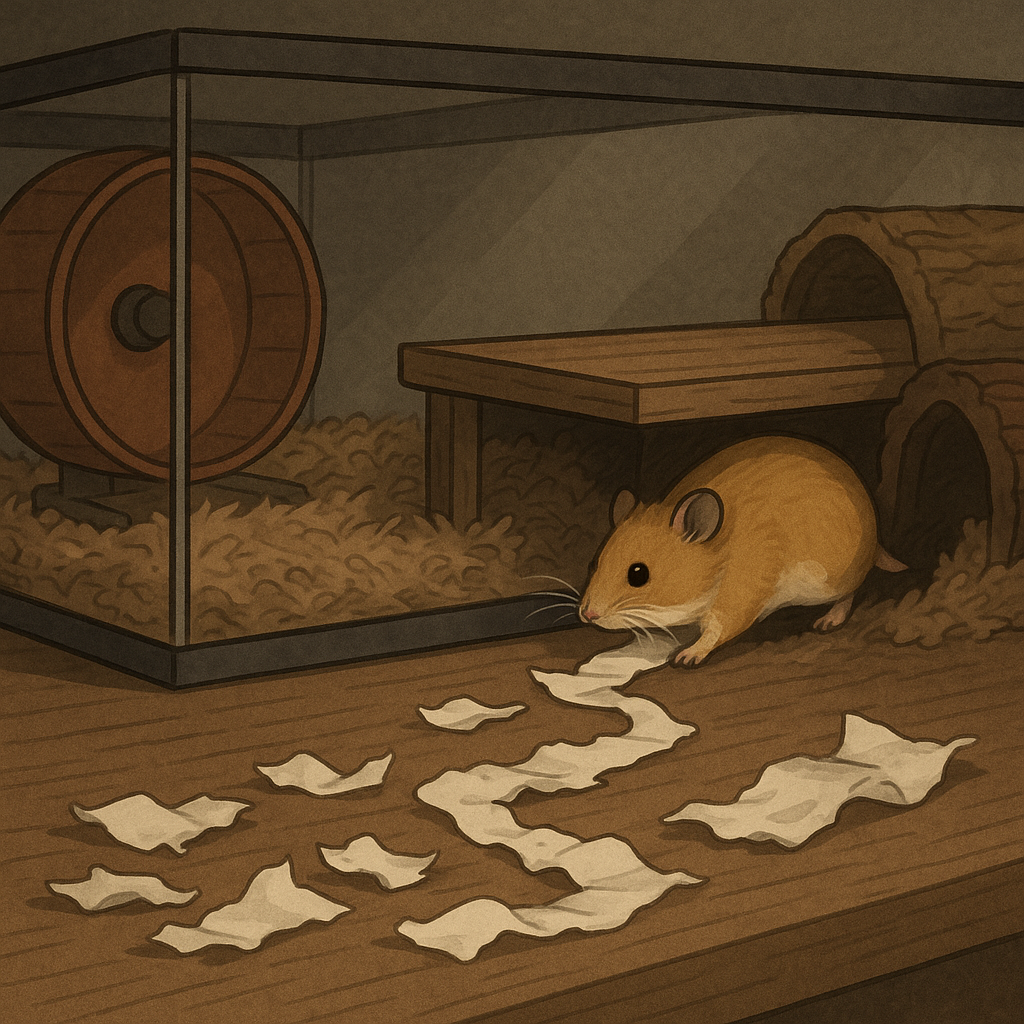
The first time I saw little confetti ribbons of tissue outside the enclosure, I blamed my own clumsy lid-latching. Then it happened again, and again, and I finally did what I should've done on day one: I stopped cleaning and started tracking. With hamsters, bedding is infrastructure. Give them one soft, tearable item, such as plain Kleenex, unscented toilet paper, or a strip of paper towel, and they'll drag it around like they're laying cable. Scraps left in the open usually reveal a nesting route you had not noticed.
Follow the tissue trail, and it usually ends at a carefully packed hideout your hamster built without permission.
Once you find the entrance, don't widen it right away. First, check what's nearby that makes it feel safe: is the hideout pressed against a solid wall? Is there a ceramic hide or a covered wooden house serving as a roof? Did you stack a bendy bridge to create a low tunnel? Those details tell you what your hamster prefers. Mine liked a snug, dark corner with one fast escape route, so any time I "improved" his layout with an open-top hide, he'd relocate, and I'd be back to tissue confetti on my desk.
The food cache behind the wheel stand
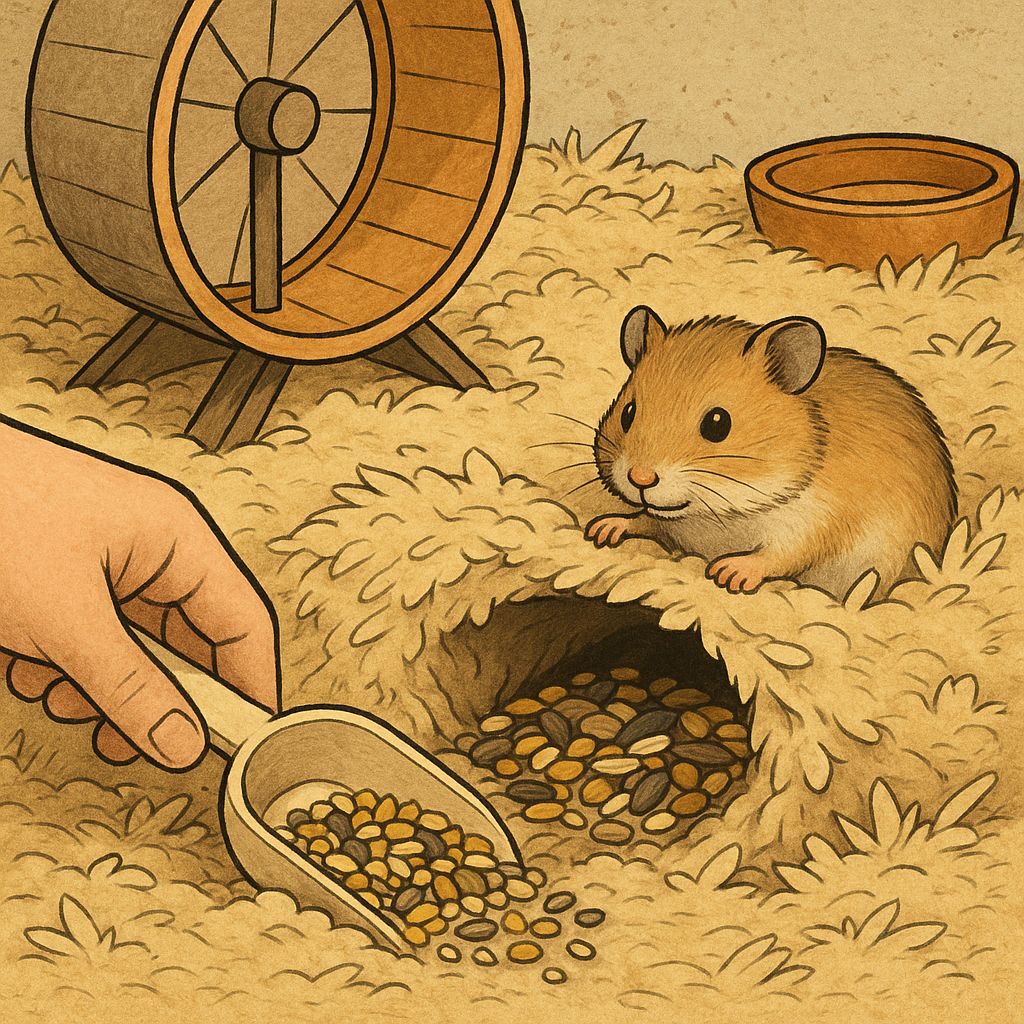
A hamster can make you feel like you're wildly overfeeding them. You top off a bowl, you come back in the morning, and it looks exactly the same. Meanwhile, somewhere in the enclosure, there's a little speakeasy pantry with a week's worth of sunflower seeds, millet, and whatever else they decided was too valuable to eat in public. If you're trying to figure out a hideout, the stash is your second map, and it's usually more honest than the bedding trail because they put food where they feel safest.
My tell is the wheel area. Not the wheel itself, but the support and whatever "base" you've got under it. A large wheel mounted on a stand often creates a hidden pocket behind it. It's a perfect place to press cheeks full of pellets, turn around, and unload. If your enclosure has deep bedding, the stand can also hold the bedding in place, and hamsters love building right up against that kind of hard edge. The result is a lumpy mound that looks like normal digging until you find a cluster of seeds that definitely did not fall there by accident.
The missing food is rarely gone. It has simply been transferred to a private pantry behind the wheel.
Once I locate it, I leave a portion of the stash. Seriously. If you steal the whole pantry, some hamsters go into frantic re-hoarding mode and will start moving food into even dumber places, like right beside the water bottle spout, where it gets damp. I take out anything obviously old or wet, I keep the rest, and I make one change that matters: I stabilize the area so the chamber doesn't collapse. A flat tile or a piece of cork bark set like a roof can turn a sketchy burrow into a solid hideout that doesn't cave in during a 2 a.m. sprint session.
Why the water bottle suddenly leaks
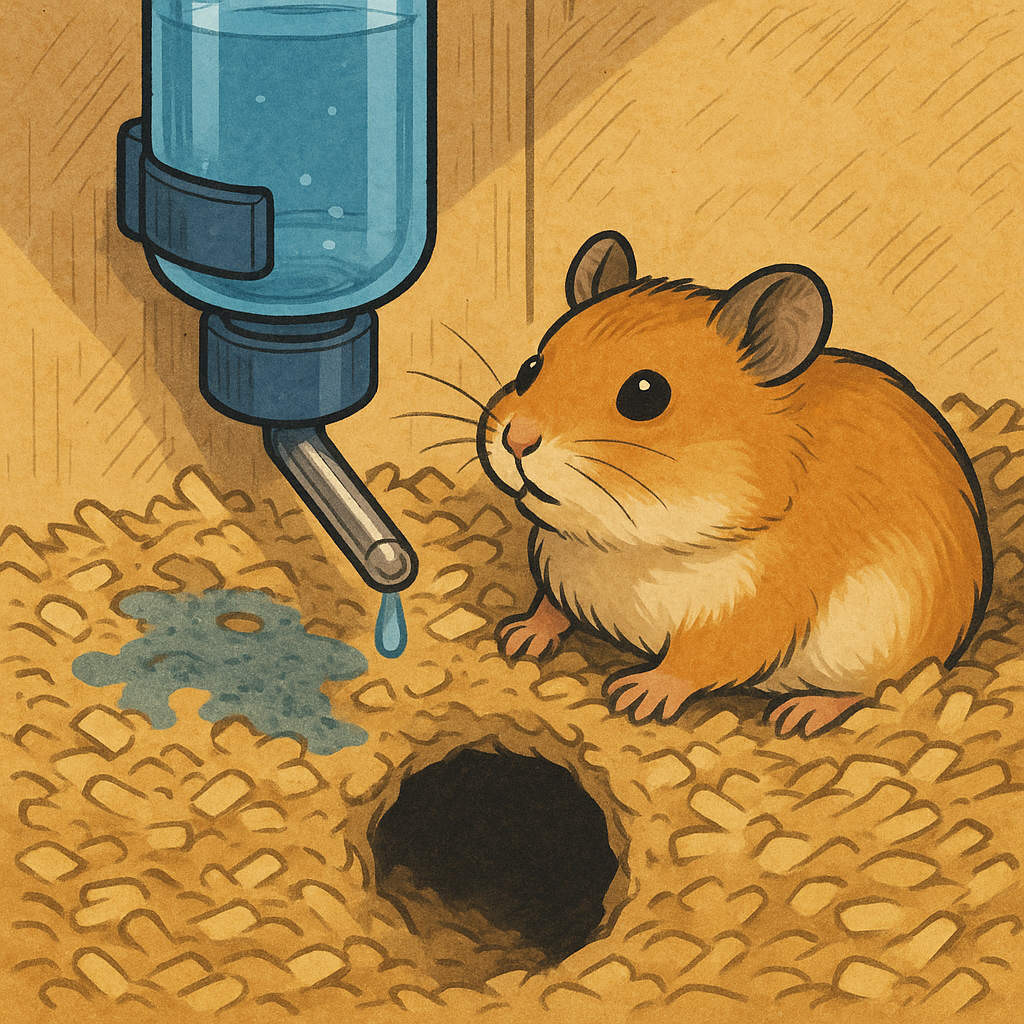
People love to blame the water bottle. Sometimes they should! A bad seal or an overfilled bottle can drip. But if the leak shows up out of nowhere after weeks of normal use, look at your hamster first. Mine wasn't dealing with a faulty bottle. He was using the bottle mount like a landmark, and he kept digging a tunnel right up to the spout area because it was a predictable, covered corner. The damp spot was collateral damage from his obsession with building a front door right under his drinking station.
The giveaway is the pattern of moisture. A true drip tends to make a steady wet column that spreads downward in one place. A damp zone disturbed by a hamster may look blotchy and mixed with bedding, like someone dabbed water in a few spots and then stirred it. You'll often see little clumps stuck to the spout or the bottle's metal tube because they've been pushing bedding up against it. That rubbing can even knock the ball bearing in the tube around, making the bottle dribble more than it used to. So yes, it looks like a leak, but the cause is usually that they're turning the whole corner into a tunnel entrance and constantly bumping the nozzle.
A suddenly damp corner may mean the bottle has become part of another unauthorized construction project.
By morning, the enclosure looks almost exactly as you arranged it, except every important decision has been quietly overruled.