
From window chirps to hallway yowls, every strange sound seems perfectly designed to make the household stop and obey.
The window chirp is a hunting glitch, not a greeting
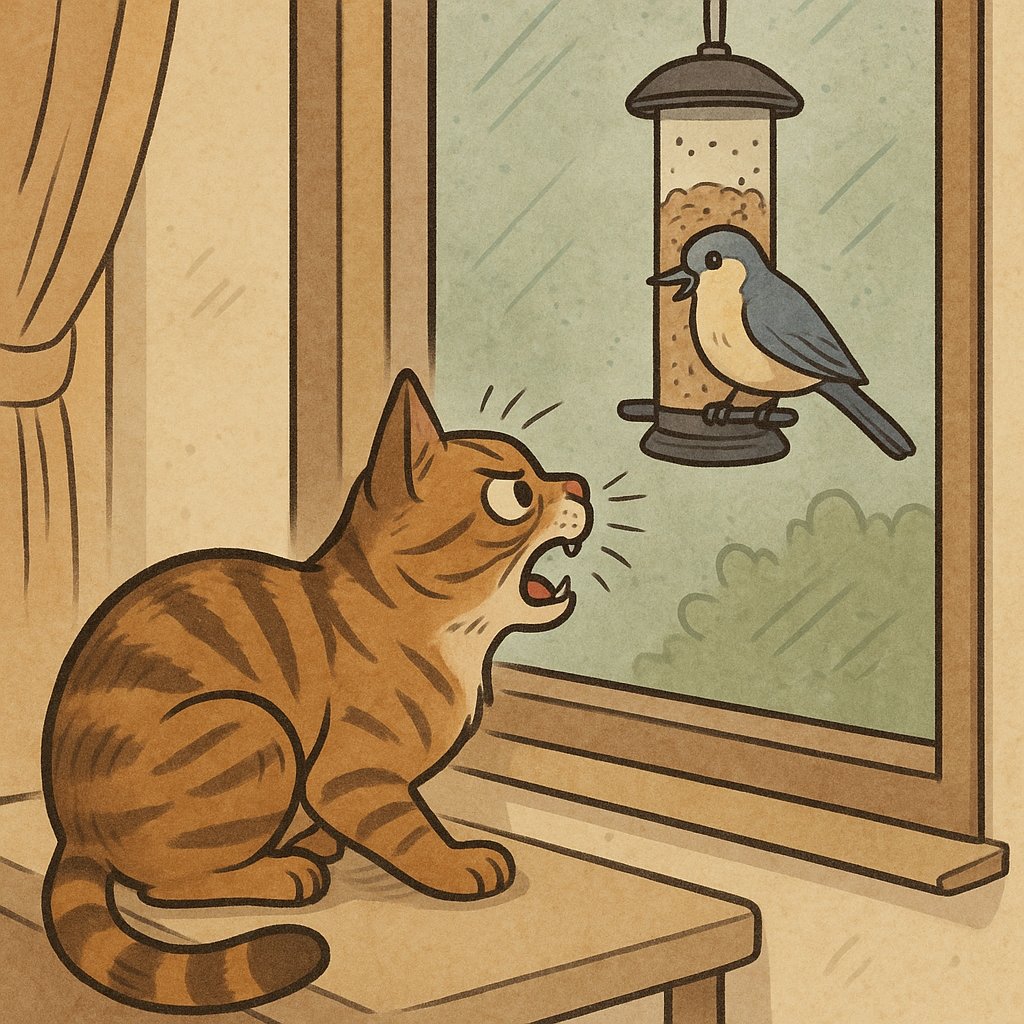
That chirp-chirp-chirp noise at the window gets misread as your cat trying to talk to you. It can sound like a tiny feathered town crier announcing every bird outside. The real clue appears when a bird moves closer to the glass, and the whole performance suddenly intensifies. The chirping kicks in the second the bird is close enough to flip the hunting switch, but still protected by physics, the screen, or plain old distance. It looks like excitement, but it also has the feel of frustration, like their body is revving and the scene isn't cooperating.
You'll usually see a tight crouch, tail tip twitching, and little jaw snaps in between the chirps. Some cats do a quiet version where only the whiskers and mouth move. Mine does the loud one, plus a rapid-fire little click that sounds like tapping a pen on a table. If you hear it, you don't need to sprint over and narrate the moment. You're not being summoned. You're just within earshot of a predator who can't file the paperwork on an unreachable target.
The chirping usually stops when the bird disappears, but by then everyone in the room has already looked up. Mission accomplished.
That long hallway yowl? More often, it's a roll call
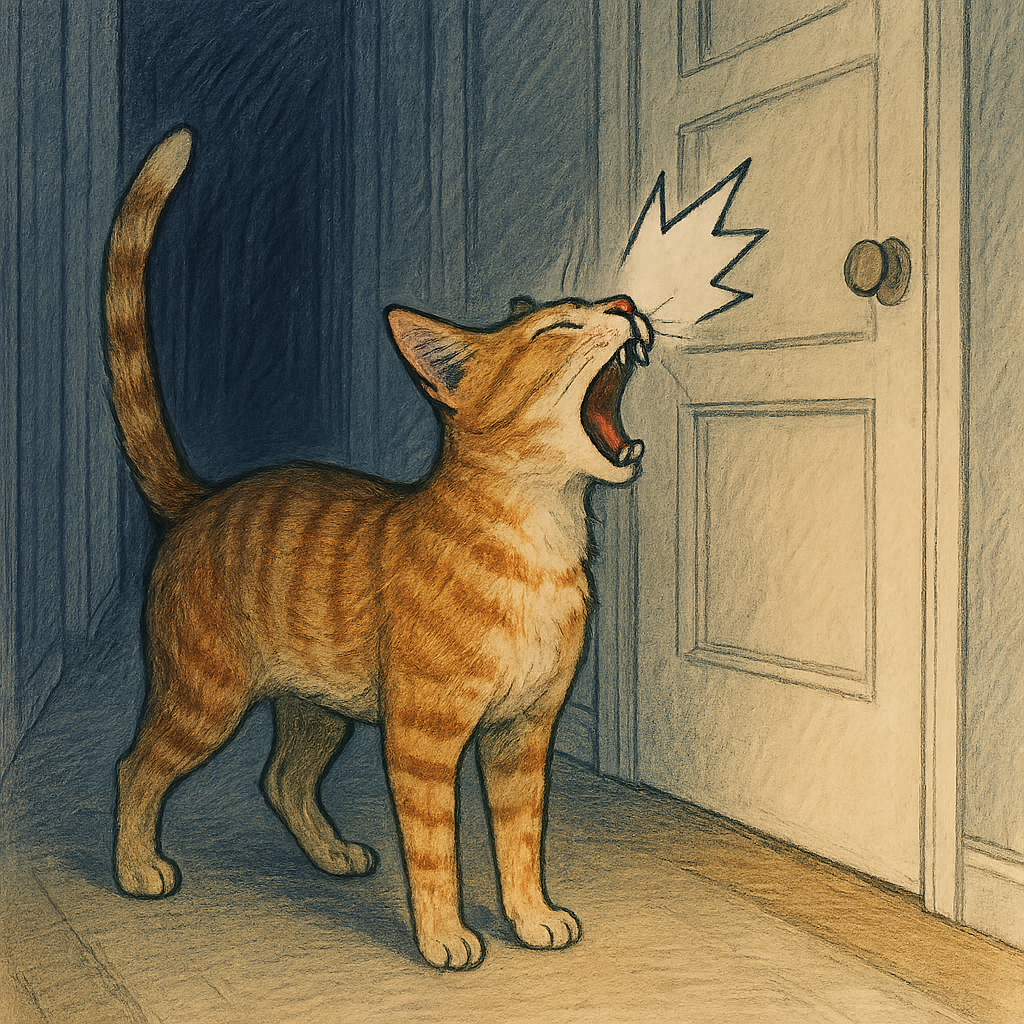
The spooky part is how deliberate it sounds. One cat, standing in the hallway like it's a cathedral, letting out a drawn-out yowl that makes you sit upright in bed and immediately assume a medical emergency. Plenty of owners have rushed into the hallway, only to find a cat staring at the linen closet like it owes money.
Here's the less dramatic explanation that fits most of the time: they are broadcasting their location. Cats do this when they can't quickly find a person or another pet, or when they're in that slightly wound-up state where they want a response but don't quite know what response. The hallway yowl is ideal because it bounces. Same cat, same lungs, suddenly sounds like a whole situation.
The giveaway is the pause afterward, when the cat stands perfectly still and waits for someone in the house to answer. His ears swivel toward every doorway, listening for the response he clearly expected. If I call his name once, he usually trots in, annoyed but fine. If I ignore it, he'll often repeat the yowl from an even more echo-friendly spot, like the bathroom doorway. Acoustics matter.
One hallway yowl can wake the household, summon a human, and confirm that the cat still controls nighttime operations.
The tiny squeak at the door is a negotiation tactic
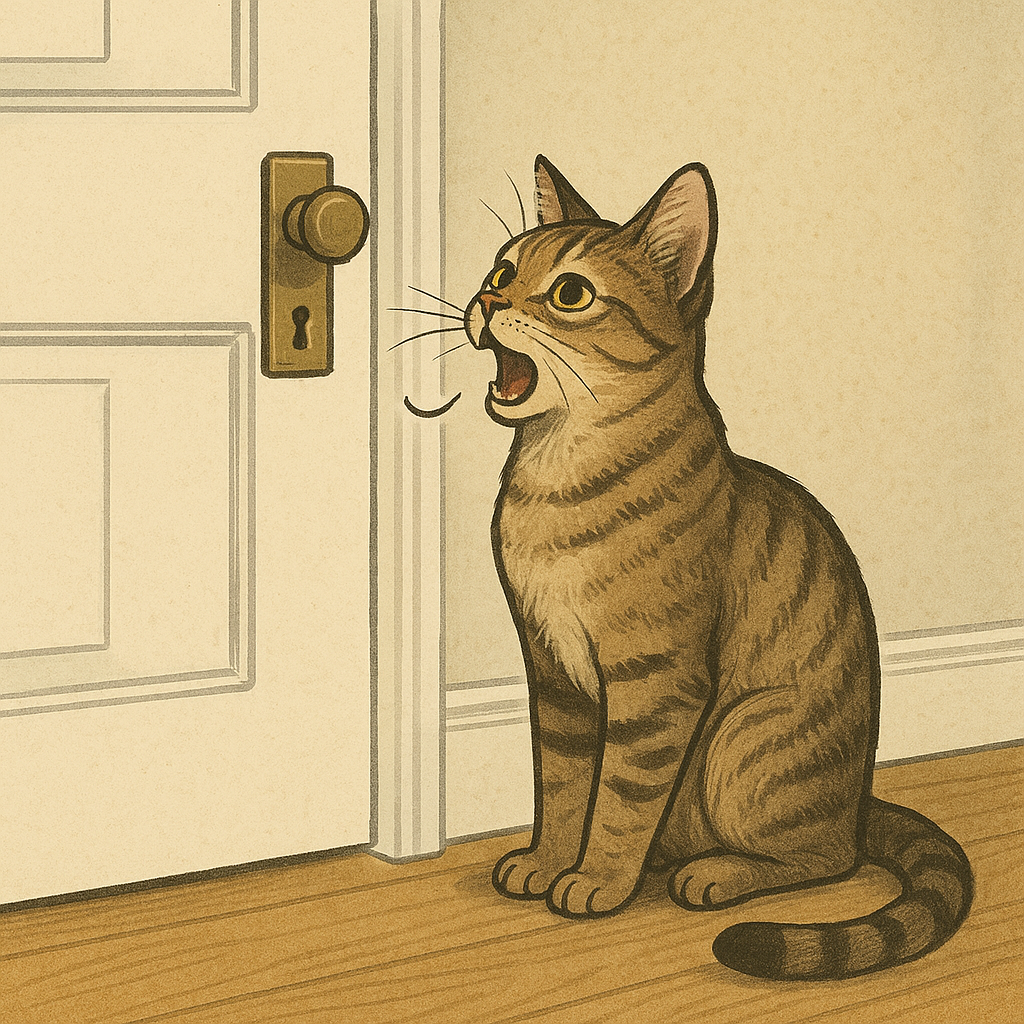
Not every weird noise is dramatic. Some are weaponized manners. The best example is the little squeak or soft trill a cat makes at a closed door, especially a bathroom or bedroom door. It's not the full-body meow. It's the tiny, almost kittenish sound that makes you feel like a monster for having boundaries.
I've watched mine cycle through his entire menu: scratch, pause, squeak, pause, louder squeak, then a perfectly timed silence that dares me to check on him. If I move toward the door, he adds another squeak, as if to say, yes, thank you, this is the correct direction. The sound isn't about pain. It's about access. Cats love control over territory, and a closed door is a big, obvious sign that something is happening without them, even if it's nothing, especially if it's nothing.
You can tell it's a negotiation because it's situational and consistent. Same door, same time of day, same tone. It often comes with them sitting upright, ears forward, looking at the handle or the crack underneath like it's a puzzle. Some will slide a paw under the door and rake it back, which makes that hollow thump-thump on the floor. That's not distress. That's a strategy meeting.
The tiny squeak keeps coming until the door opens, proving that household boundaries are merely suggestions.