What Cat Behaviorists Look For When an Adult Cat Accepts a Newcomer
Cats don’t open up fast, and if you had the chance to introduce a new cat while staying with your old cat, you know the struggle. Hissing, staring, swatting, and puffed fur are common once a new kitten or adult cat enters the home. Cats are extremely serious about their territory, so their first move is to protect it and get to other things later. Behaviorists usually pay close attention to the moment when fear and aggression start giving way to curiosity.
A resident cat that watches the newcomer calmly across the room is already making progress. Sniffing blankets, lingering near a closed door, or quietly following the new cat through the house also signals growing comfort. The goal is never instant affection, but tolerance first. That’s why gradual introductions are important. Swapping bedding, rotating rooms, and letting cats absorb each other’s scents before face-to-face meetings help reduce some of the shock.
Body Language Reveals More Than Vocal Sounds

Image via iStockphoto/Chalirmpoj Pimpisarn
Most people often focus on hissing because it sounds dramatic. Cat behaviorists usually look beyond that and, instead, study posture. A relaxed tail, soft eyes, forward-facing ears, and slow blinking suggest the older cat feels safe enough to stay calm around the newcomer.
Some cats even chirp or trill around a new companion once the tension has dropped. Those sounds often signal curiosity or social interest. On the other hand, a stiff posture, flattened ears, a twitching tail, or constant staring can mean the cat still feels on edge, even if outright fighting has stopped. Cats communicate a lot without touching each other.
Shared Space Is a Big Deal
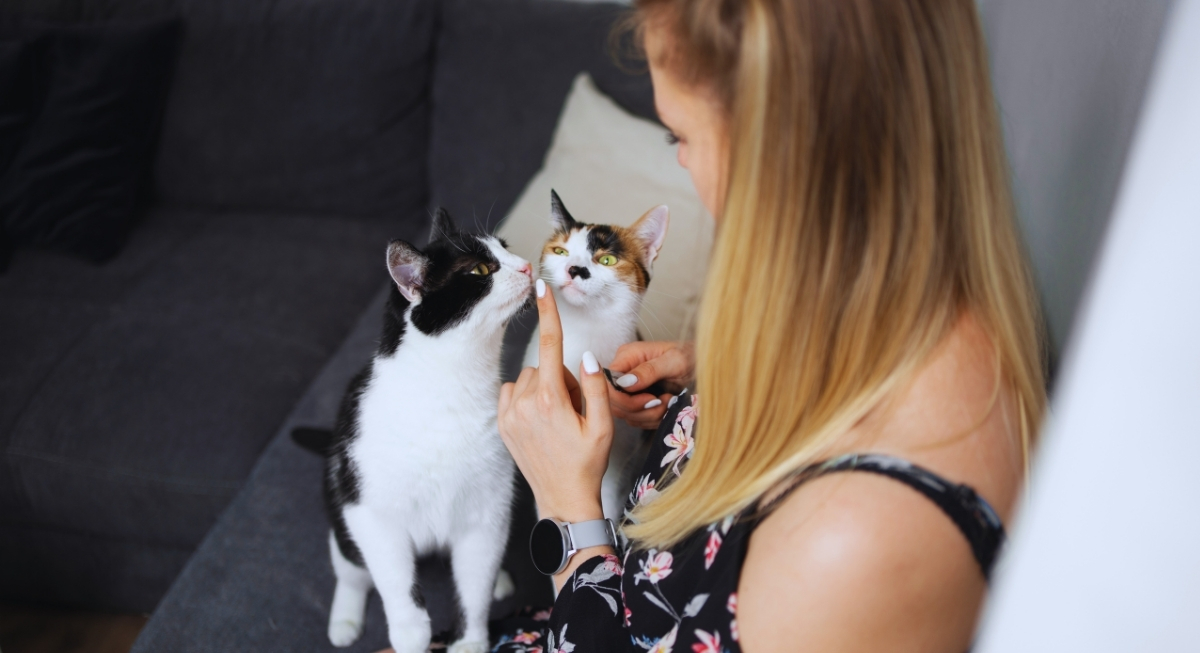
Image via Getty Images/Nils Jacobi
One of the clearest signs of acceptance happens when cats stop treating the home like divided territory. Behaviorists notice when both cats start hanging out in the same room voluntarily. That may sound small, but cats value personal space heavily. Choosing proximity shows trust is building.
Sleeping nearby carries even more weight. Cats feel vulnerable while resting, so an adult cat that naps near a newcomer usually feels less threatened by their presence.
The same goes for shared pathways around the house. If one cat stops blocking doorways, litter boxes, or favorite resting spots, the relationship has likely improved. That doesn’t mean owners should force sharing. Many experts still recommend separate feeding stations and multiple litter boxes, even in peaceful multi-cat homes.
Grooming and Play Change the Dynamic
Mutual grooming sits high on the list of positive signs because it combines trust, scent exchange, and social bonding. Cats use grooming to strengthen familiar relationships. An older cat licking a kitten’s head or ears often means the newcomer has moved into “social group” territory instead of “intruder” territory.
Play can also mark a turning point. Healthy play usually looks loose and balanced. One cat chases, then switches roles. Short pauses happen naturally, and neither cat seems trapped or panicked. Behaviorists often step in mentally once play becomes relentless or overly physical. A kitten with endless energy can push an adult cat too far without meaning to. That’s why interactive toys and supervised sessions help during the adjustment phase.