What Is the Loudest Animal on Earth? The Answer Isn’t What You Think
Most people picture lions, roosters, or even cicadas when they think about noisy animals. Their sounds grab attention because we hear them in daily life or through recordings. But none of those come close to the true champion of loudness.
Deep in the ocean lives an animal that outshouts them all. Scientists have measured their calls at various levels and concluded that the clicks and buzzes of sperm whales are far beyond human tolerance.
How Sperm Whales Create Their Sounds
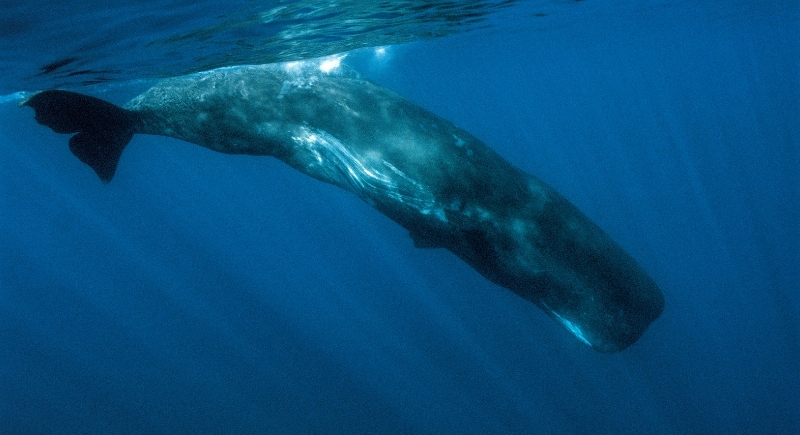
Image via Getty Images/Sergio Hanquet
The anatomy of a sperm whale is built for sound production. Inside its massive head lies the spermaceti organ, a structure packed with waxy oil and layered tissue. This organ works like an amplifier and focuses on pushing air through the whale’s nasal passages into sharp, powerful signals.
Beneath it, a structure called the “junk” further shapes and directs those sounds into precise beams. Each click is produced by the movement of air between specialized flaps that snap shut and create rapid pulses.
Unlike the vocal cords in humans, these sounds are adapted for underwater acoustics, where density carries vibrations differently. This design allows sperm whales to project pulses strong enough to travel vast distances and bounce off objects in complete darkness. On that note, experts studying these features often compare the whale’s head to an intricate acoustic system, engineered by evolution to make the loudest sounds ever measured in the animal kingdom.
Why Sperm Whales Need Sounds This Loud
The clicks of sperm whales reach an astonishing 230 decibels, a level that surpasses anything naturally produced on land. To understand the scale, humans experience pain at 120 decibels, and eardrums rupture near 160.
Yet these underwater creatures rely on such intensity for survival. Short, rapid bursts form the basis of their echolocation system and allow them to detect giant squid and other prey in the darkest parts of the ocean. The returning echoes provide a detailed map of the water and guide these whales with remarkable precision.
Beyond hunting, sperm whales also exchange patterned sequences of clicks known as codas. These codas vary by group and may serve as cultural markers, almost like dialects. The power of their calls ensures that signals can travel across thousands of miles to connect animals separated by immense distances.
Other Animals Competing for the Loudest Title
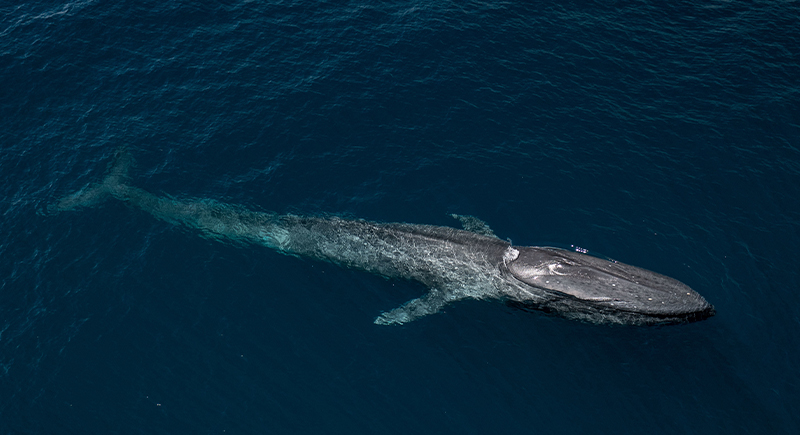
Image via iStockphoto/Wirestock
Although the sperm whale leads in decibel measurements, other animals reach impressive sound levels. Blue whales produce calls up to 191 decibels, lower in frequency but lasting as long as half a minute. These calls carry hundreds of miles to enable long-distance communication across oceans.
Meanwhile, tiny pistol shrimp rival whales with their claw snaps, which collapse into shockwaves up to or exceeding 200 decibels, based on the species.
On land, the greater bulldog bat produces 140-decibel echolocation calls, though they fall outside human hearing range. Birds such as the white bellbird can hit 125 decibels, loud enough to hurt ears at close range. Cicadas, roosters, and lions also rank high in their own environments.
These comparisons show that “loudest” depends on how sound is defined—whether by intensity, duration, or reach. Still, none consistently match the sperm whale’s combination of sheer force and biological purpose.