What Pet Food Labels Really Mean: A Vet’s Guide to Marketing Claims
Pet food labels influence a lot of pet parents’ decisions, even though many of the claims on them are not as clear as they appear. Marketing terms often come with loose or inconsistent meanings. At the same time, organizations like the Association of American Feed Control Officials (AAFCO) focus on nutritional standards rather than label language. That gap is why two similar-looking bags can represent very different choices for a pet’s diet.
Words That Sound Impressive But Say Very Little

Image via Canva/pixelshot
Start with the front of the bag. This is where brands compete for attention, and it is also where clarity often fades.
“Natural” usually means the product avoids artificial colors or preservatives, but it does not guarantee ingredient quality or sourcing. “Premium” and “gourmet” sound reassuring, yet they have no strict regulatory definition. Any brand can use them.
“Grain-free” has gained attention in recent years, though grains like rice, barley, and oats remain well-tolerated by most dogs and provide fiber and energy. Unless a veterinarian identifies a specific sensitivity, grain-free formulas offer no built-in advantage.
What The Product Name Is Secretly Telling You
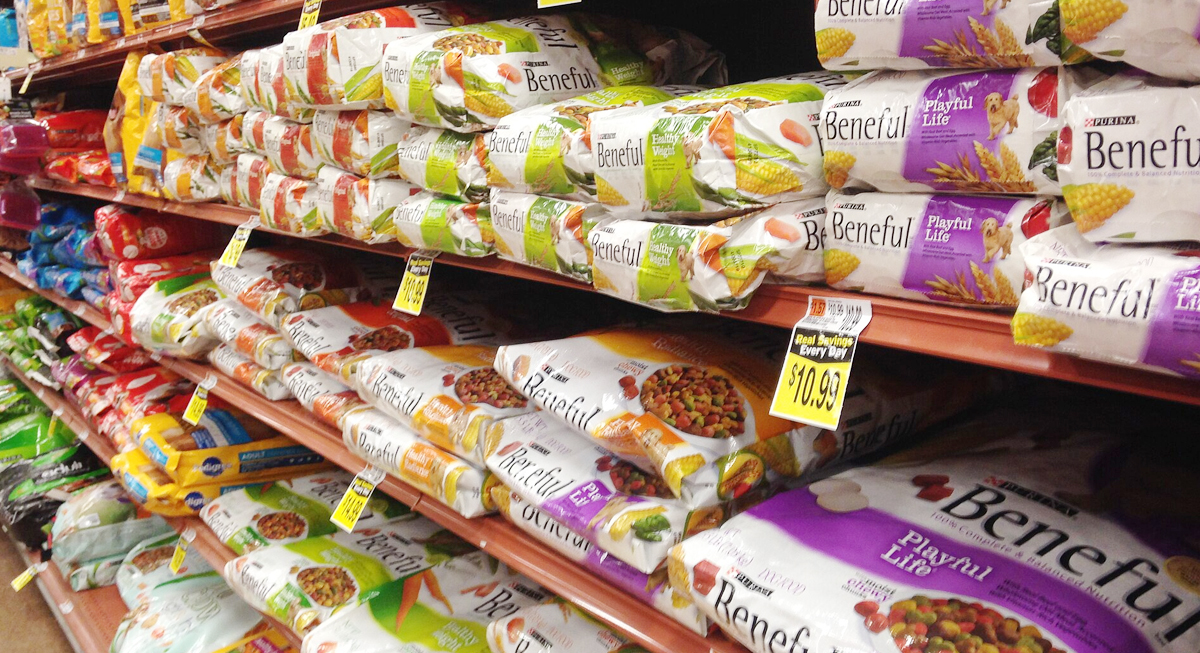
Image via Wikimedia Commons/MarkBuckawicki
A label that reads “Chicken Dog Food” must contain a high percentage of chicken, often around 70 percent, excluding water. Shift that wording slightly to “Chicken Dinner” or “Chicken Recipe,” and the requirement drops to about 10 percent. Add “with chicken,” and the number falls to roughly 3 percent. Thus, “Chicken flavor” may contain very little actual chicken.
That small wording change can flip the entire composition of the product, even though the packaging still highlights the same ingredient.
The Ingredient List Isn’t As Simple As It Looks

Image via Getty Images/JackF
Flip the bag over, and the ingredient list looks easy to follow at first. Ingredients are listed by weight before processing, so the first few matter most. Seeing a named protein like chicken, beef, or salmon near the top is usually a good sign. Even so, this section can still be misleading.
Manufacturers sometimes use a tactic called ingredient splitting. Instead of listing a single large carbohydrate source, they break it down into smaller parts, such as rice, rice flour, and rice bran. Each appears lower on the list, yet combined, they can outweigh the main protein.
Then there is the debate around by-products. Organ meats such as liver and heart fall into this category and provide valuable nutrients. The concern arises from vague labeling, as a clearly named by-product meal offers more transparency than a generic “animal by-product.”
Numbers That Need A Second Look
The guaranteed analysis panel lists protein, fat, fiber, and moisture. It helps compare foods, but only when read in context. Dry kibble usually has around 10 percent moisture, while wet food can reach 75 to 85 percent, which changes how those numbers should be understood.
A canned food showing 10 percent protein is lower than dry food at 25 percent. Once moisture is adjusted, that same wet food can actually provide a higher protein level on a dry-matter basis. A simple calculation can shift the comparison entirely.
Among all this, one line matters more than most: the nutritional adequacy statement. AAFCO-approval confirms whether the food is complete and balanced for a specific life stage, such as growth, adult maintenance, or all life stages.
If a product says “for intermittent or supplemental feeding only,” it is not intended as a full-time diet. This is one of the few parts of the label tied to established standards rather than marketing language.