
From the tiny swivel during a treat bag crinkle to the flat-back warning you should respect, ear position gives you the day's whole mood map.
The micro-swivel that means you were heard
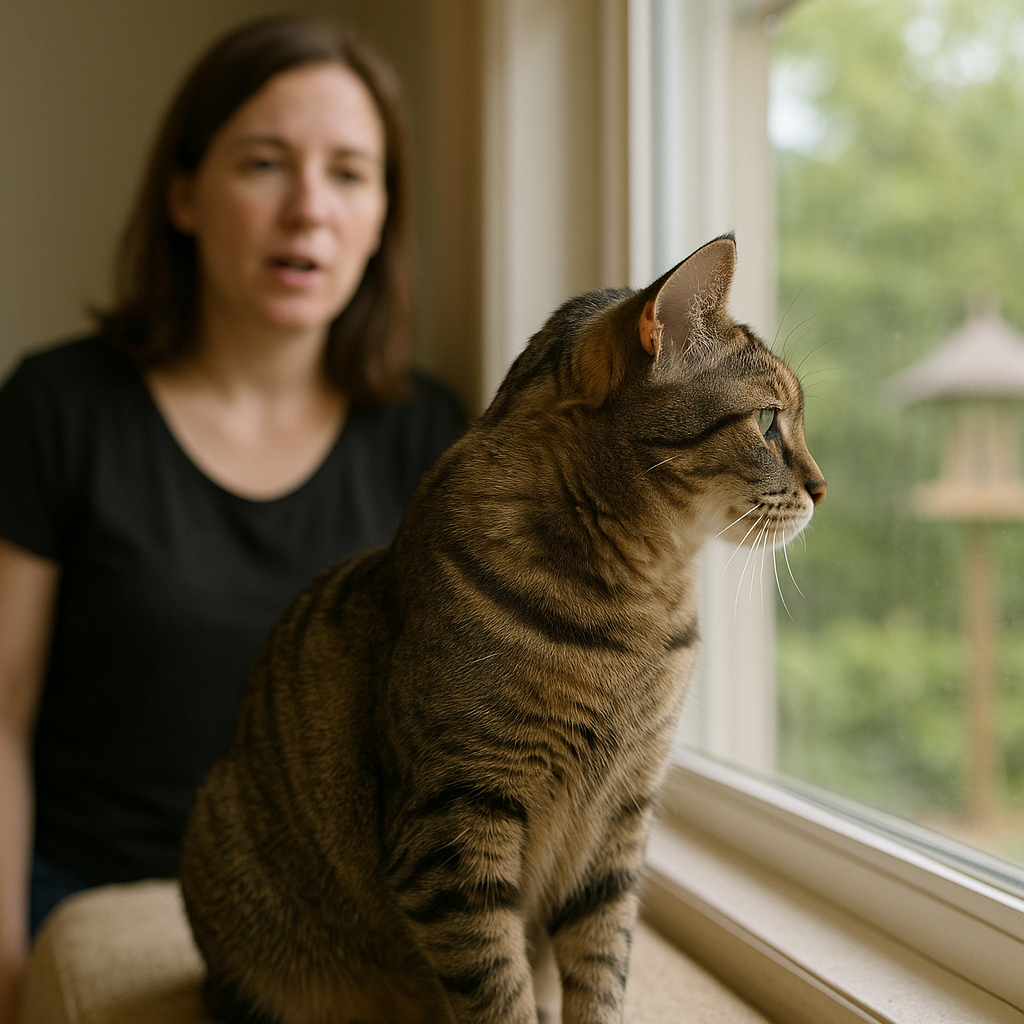
I used to assume my cat was ignoring me because her face stayed pointed at the window while I talked. Then I noticed the ears. That tiny, almost lazy swivel toward me, like a satellite dish making a half-degree correction, is usually the tell that she clocked every word and is deciding whether it merits movement. Try it when the house is quiet: say her name once, normal volume, from across the room. If one ear angles back toward you but her eyes don't leave the bird feeder, you didn't get ignored. You got evaluated.
This is also why the treat bag crinkle works even when they're supposedly asleep. You'll see the ear tip twitch before the rest of the body commits. With my own, the right ear is the first one to rotate when she hears the little clink of kibble hitting ceramic. If both ears pivot forward and hold there, she's in full audio lock-on and she'll probably follow you to the kitchen like it's her job. If the ears swivel but then go neutral again, she's telling you she heard it, but the offer isn't strong enough to get her off the couch.
One thing that fooled me early on: head direction isn't the same as attention direction. Cats can keep their nose pointed one way and aim their hearing somewhere else. If you live with more than one pet, this gets funny fast. The moment I call the dog, my cat's ears do a quick back-and-forth scan like she's tracking a tennis match. It's not anxiety. It's information gathering. When you start noticing that micro-swivel, you stop repeating yourself, and you stop walking across the room just to confirm they heard you. They did.
Forward, but pinned: the difference between curious and fed up
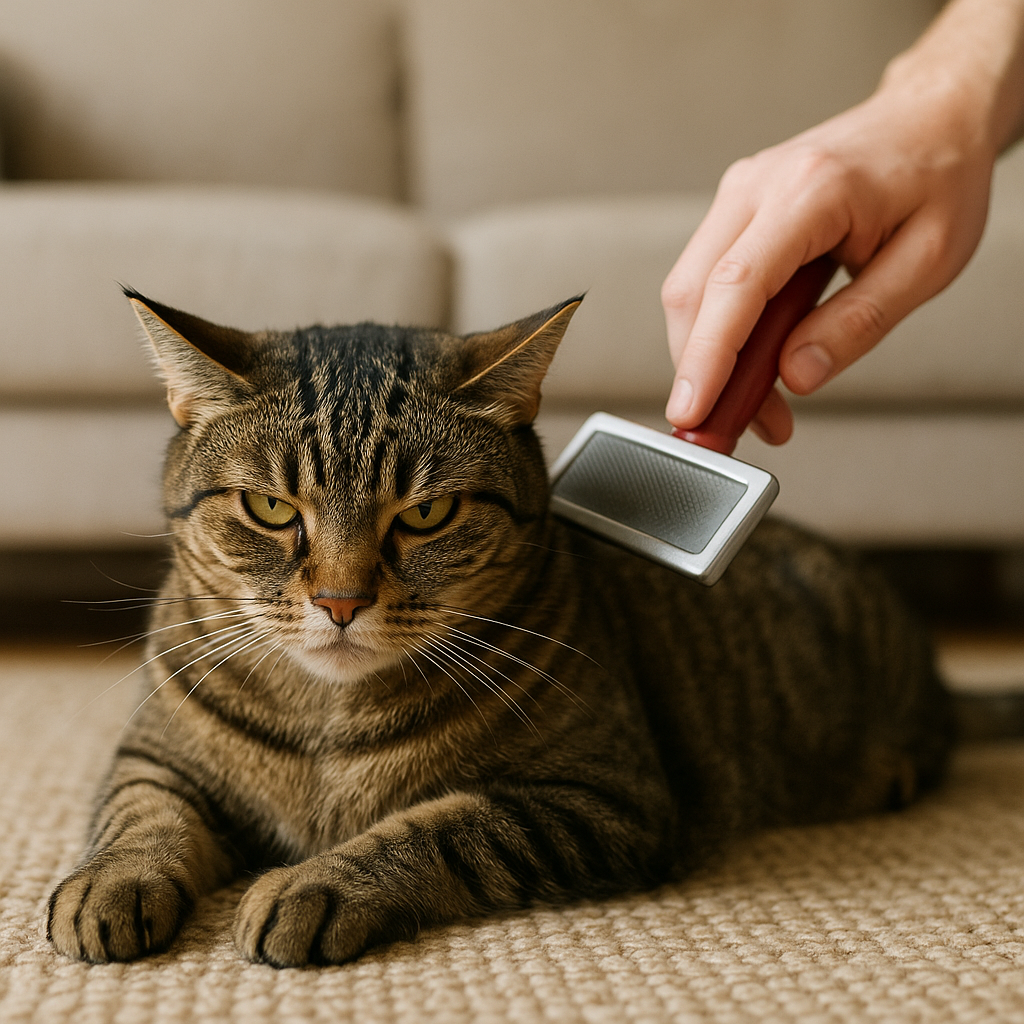
Most people know “ears flat back” is a warning, but the subtler one is when the ears are technically forward and still not inviting. I see it most during the exact moments you want to be affectionate: brushing, nail trims, or that ill-advised belly rub when they're sprawled in a sun patch looking like a postcard. The ears can sit forward and tight, almost stiff, like they got clicked into place. Curious ears look alive. They swivel, they soften, they adjust as the sounds change. Fed-up ears look bolted on.
Here's how it plays out at my place with a slicker brush. When she's enjoying it, her ears stay forward but they keep making little corrections as I move the brush down her back. If the vacuum kicks on in another room, one ear flicks toward it, then returns. That's a relaxed cat who still cares about the environment. When she's tolerating it, both ears point forward and stop moving. Her eyes go half-lidded, but not in a sleepy way. More like she's trying to outlast me. If I keep going, those ears slide sideways, then back, and I'm on borrowed time.
The practical move isn't to power through, it's to change the terms before she has to escalate. I switch to a couple of short brush strokes, then I stop and let her reset. Sometimes I trade to a wide-tooth comb for the last minute because it doesn't tug as much at the hips. You can also change where you stand. If you're looming over them, that rigid forward ear can be their way of tracking your hands without turning their whole body. Sit on the floor beside them instead. When the ears start moving again, you're usually back in the safe zone.
And if you're dealing with a kid in the house who wants to hug the cat, teach them this one cue. “Are the ears moving?” is a better question than “Is she purring?” because plenty of cats purr while they're stressed. Still ears plus a tight face is a no, even if the tail isn't doing much. That's the moment to give her space before she has to make her point with teeth.
One ear up, one ear sideways: the split-attention tell
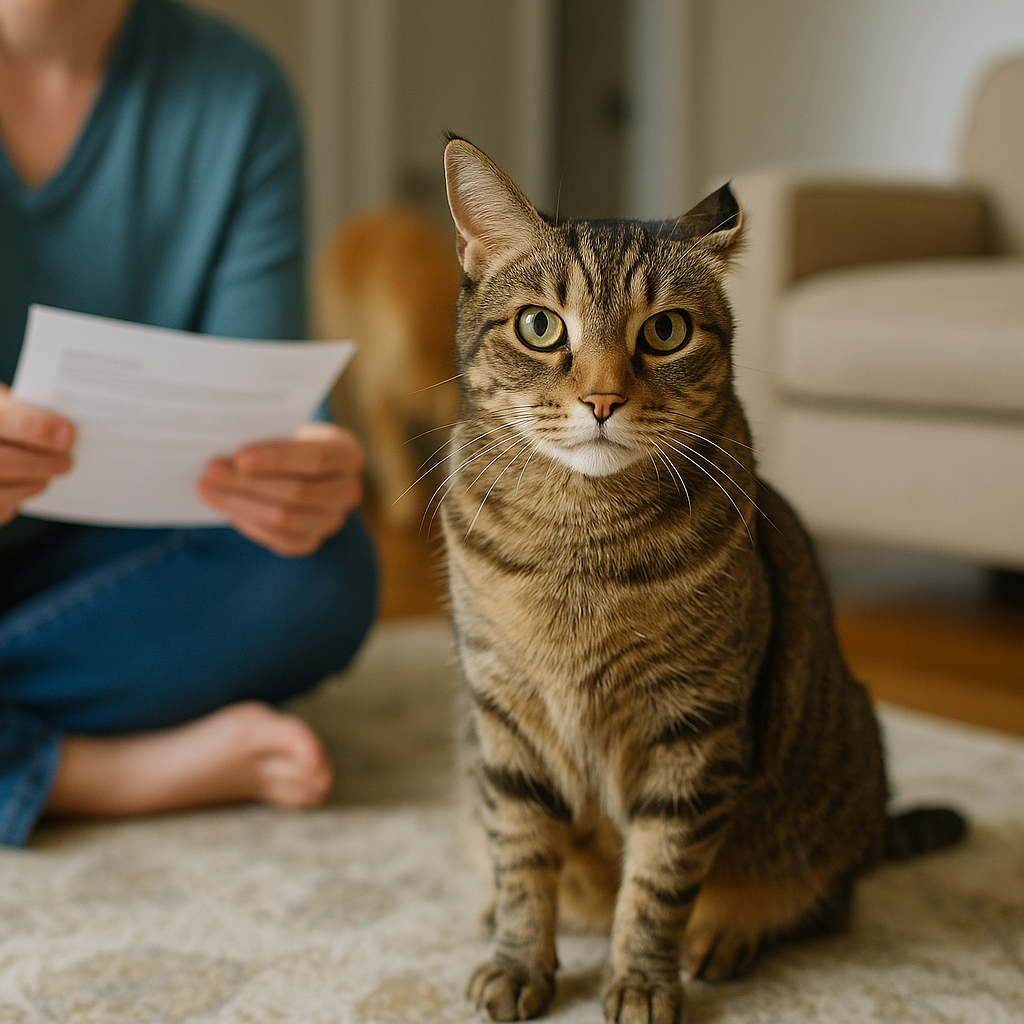
The funniest (and most useful) ear position in my house is what I call the “two-radio-stations” look: one ear aimed at me, the other ear aimed somewhere else entirely. You'll see it when you're talking and your cat looks calm, but there's clearly something happening outside, in the hallway, or near the food bowls. It's not confusion. It's bandwidth.
I notice it a lot during that after-work hour when everything in the house makes noise at once. I'm opening mail, the dog is clicking around on nails, and the dishwasher is making its hollow slosh. My cat will sit on the rug, eyes on me, with her left ear canted back to track the dog. If the dog pauses, that ear shifts forward a hair. If the dog starts walking toward her, it swings further back and locks. Meanwhile the other ear stays forward, holding my voice in the mix. The whole time, her body doesn't move. That's the point. The ears are doing the work so she doesn't have to.
This is also the cue that helps me decide whether to intervene in a multi-pet moment. If she has one ear on the dog and one ear forward, she's monitoring and she's still okay. If both ears swing hard back toward the dog and stay there, she's done being generous and I should call the dog away before she feels cornered. It saves everyone a scene, especially in tight spaces like a hallway or when you're standing between them without realizing it.
For people who worry their cat is “randomly” swatting, this split-ear posture is the missing lead-up. It's the pre-swat math. They heard the approach. They tracked the footstep. They decided whether it's a threat or just annoying. The swat is usually the final option after the ears have tried to manage the situation quietly. Next time your cat is perched on the back of the sofa and you're about to vacuum, look at the ears first. If one ear is glued to the machine and the other is still forward, you might get away with it. If both ears are locked on the vacuum before you even pull the cord, do yourself a favor and shut the bedroom door first.