
Three breakfast-time copycat moves (kettle, keys, and the bathroom line) that made me realize my pets think mornings are a script.
The Kettle Click That Summons the Whole Household
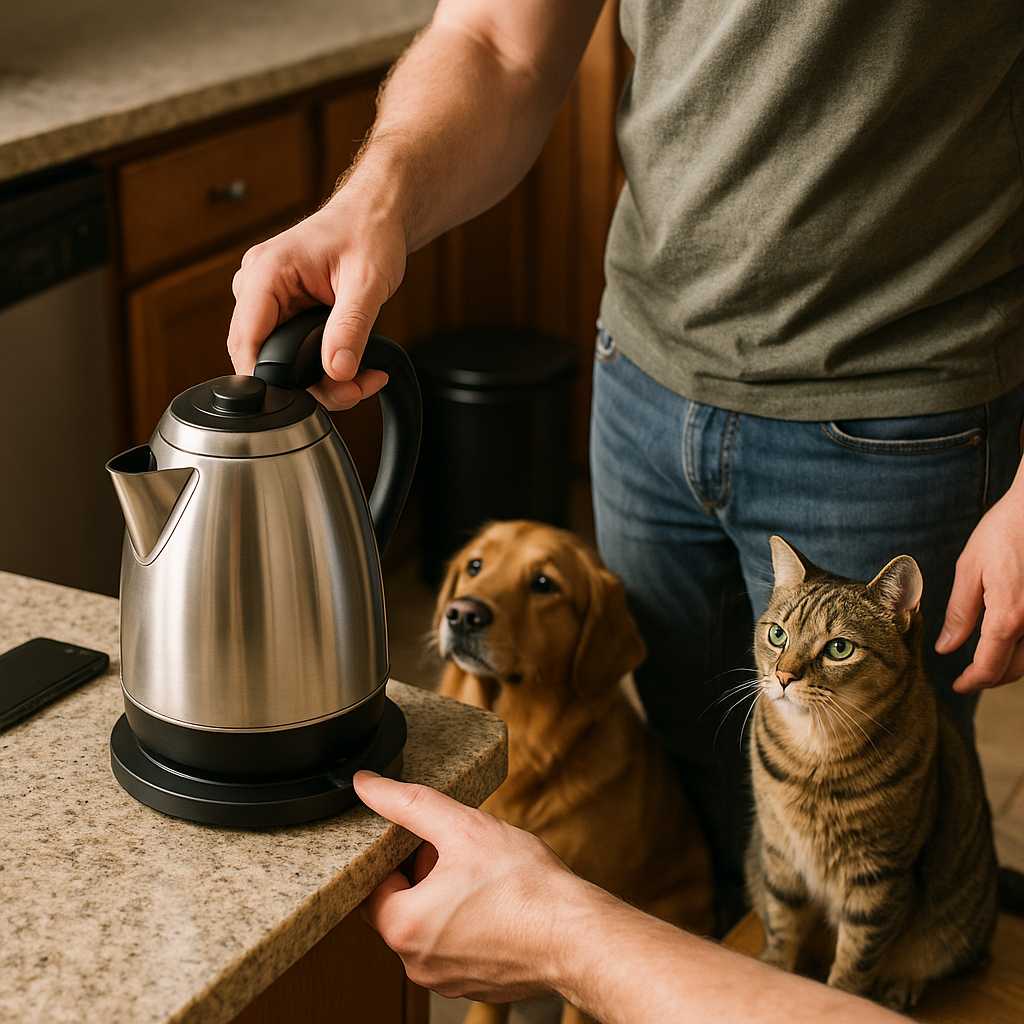
My coffee setup has one loud tell: the kettle base makes this little plastic-on-plastic click when I set it down. I used to think my pets were responding to the smell, but nope. If I just rinse a mug in the sink, nobody moves. If I click the kettle onto its base, I suddenly have a full entourage, as if I rang a bell for a meeting I didn't schedule.
What makes it funny is how quickly the routine recognition shows up. The dog doesn't just appear in the kitchen. He does a quick perimeter check of the same spots I touch: the cabinet where the mugs live, the counter edge where I set my phone, the narrow strip of floor between the fridge and the trash can. It's like he's rehearsing the route. The cat goes one step weirder: she sits in the exact place where my hip bumps the counter while I wait for the water to heat, then gives me a look that says I'm late and she's been here all morning.
If you want to see how specific this is, swap one part of the routine and watch them glitch. I moved my beans from a glass jar to an OXO pop container, and the first two mornings they still showed up on the kettle click, then stared at the old jar location like the scene had been blocked wrong. The little details are what they key on. The kettle clicks, the grinder whirs, and the drawer that sticks. They learn the cues that never change.
I started leaning into it on purpose: I click the kettle down before I do anything messy, so everyone gathers while my hands are clean. Then I can do a quick headcount, refill the water bowl, and toss a couple of pieces of kibble into a snuffle mat so I'm not being herded while I'm holding hot liquid. It's not training in the formal sense. It's me admitting the morning has a soundtrack, and I'm not the only one listening.
Why They Patrol the Bathroom Door Like It's Airport Security
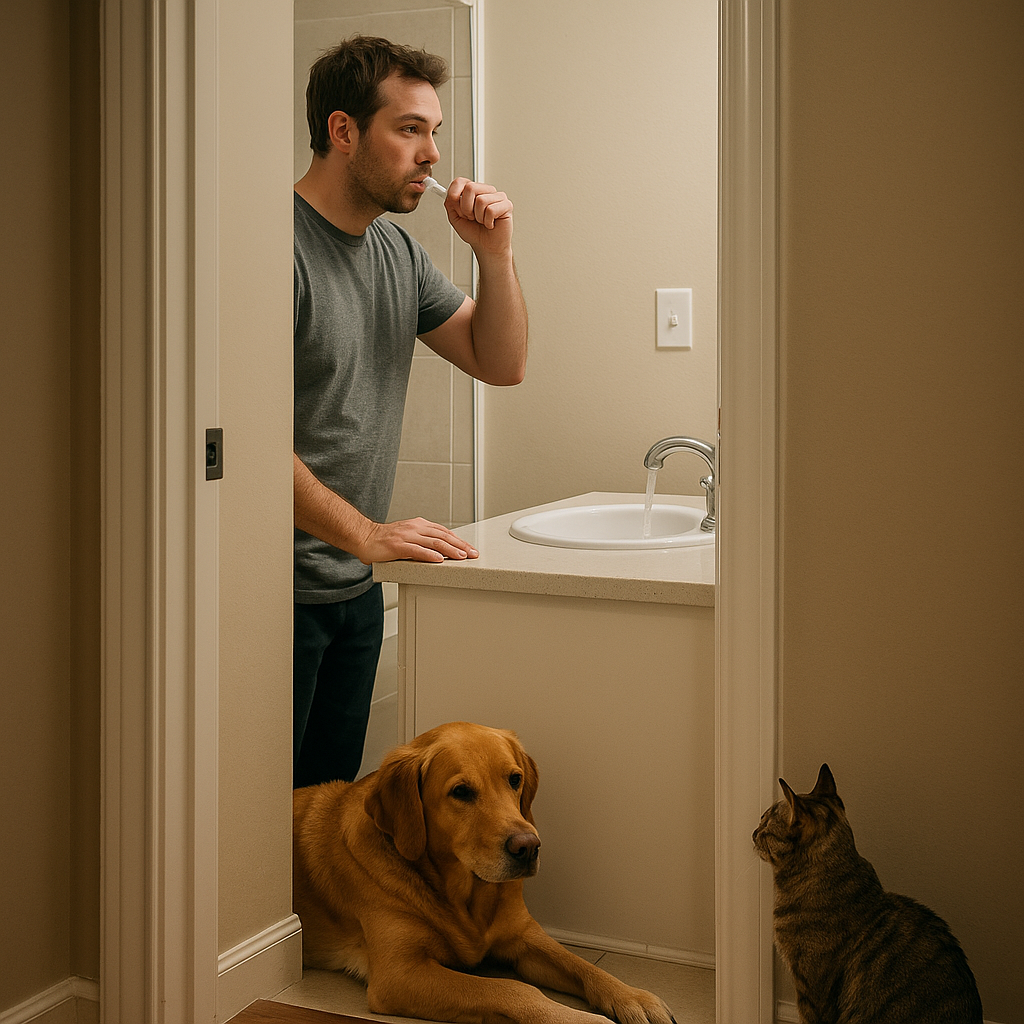
There's a particular kind of quiet that happens when you try to use the bathroom before you've fully become a person. It's not silence in my house. It's the soft, coordinated shuffling of two animals positioning themselves as if I'm about to do something risky in there, like file taxes or open a can.
They aren't copying the bathroom routine so much as tracking its rhythm and familiar cues. I brush my teeth and spit, and I hear a matching pause outside the door. I turn on the faucet, and someone does a little circle, then re-parks. The dog ends up lying across the doorway threshold with his chin on his paws, perfectly placed, so I have to step over him if I come out. The cat sits just out of reach, facing the door, like a tiny bouncer who doesn't work for tips.
Here's the part that made routine-learning seem like a big part of it: if I change the order, they still run the bathroom script. On weekends, I shower first, and they still show up at the toothbrushing time slot, then look around like the schedule got bumped. If I grab my deodorant from a different drawer, the cat investigates the original drawer anyway, because in her mind, that drawer is what happens next.
I also noticed the props matter. The electric toothbrush buzz is a big one. So is the distinct clack of a medicine cabinet mirror. If you use a Sonicare, you know that sound carries. They don't need to see you to know exactly where you are in the sequence.
I didn't fix this by locking anyone out, because that just makes mornings louder. I fixed it by giving them a parallel job that fits the same time window. The dog gets a lick mat stuck to the tile with a thin smear of dog-safe peanut butter with no xylitol, and the cat gets her breakfast split between a shallow dish and a puzzle feeder. Now the hallway still has a little traffic, but it's not a full security detail. I can brush, rinse, and find my face. They can follow the morning script without needing a front-row seat.
The Key-Jingle Ritual and the Backpack Inspection
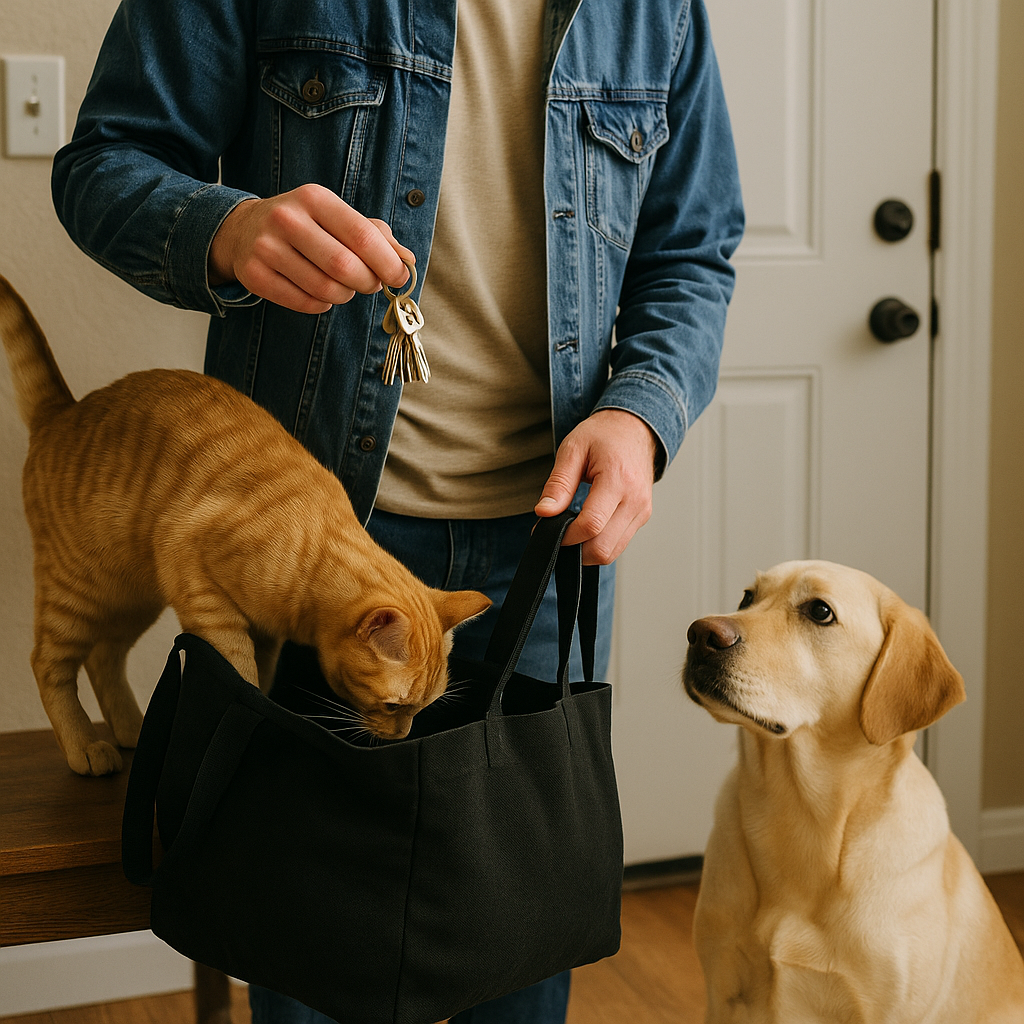
My pets don't care about my calendar, but they care deeply about my keys. The second the key ring does its little jingle, the whole mood shifts. It's like the house just got an announcement over the intercom. And what they've learned isn't just that the keys matter. They've picked up on the whole inspection routine.
I have a specific leaving sequence: wallet, keys, phone, then I tug my bag zipper to make sure it's closed. If I skip any of it, I notice because I get a furry audit. The dog starts by following at heel so tightly his collar tag taps my leg. Then he veers into the hallway and sits in the spot where I tie my shoes, watching my hands. The cat comes in for the bag check, nose straight into the open tote, pushing aside whatever's on top like she owns inventory control.
When I started carrying a different bag, a black Patagonia sling instead of my usual canvas tote, the cat did not accept the change. She inspected it longer, pawed at the zipper pull, and then tried to sit on it while I was holding it. Not a cuddle sit, either. A deliberate, full-body paperweight move. The dog has his own version: he grabs one of his toys and brings it to the door because, in his mind, door + shoes + keys mean we are all going somewhere. He isn't being subtle. He is submitting his required document.
Those routine cues help explain why pets can know when a weekday morning feels different from a weekend one. Keys, shoes, clothing, pace, and other repeated signals can all become predictors of what happens next: different pants fabric, different shoes, different pace. Add in a work badge on a lanyard, and it's basically a siren.
What helped me was changing one cue I didn't care about, instead of trying to convince them I'm allowed to leave. I switched to a quieter key holder (a KeySmart-style organizer), so the jingle isn't a house-wide alarm. And I made a small, consistent alternative cue: before I touch the doorknob, I toss a few treats into a scatter mat in the living room. They still watch me get ready, because it's their favorite show. But the last beat of the routine belongs to them now, and I can get out the door without stepping around a dramatic doorway sprawl.