
From the slow-body-block to the decoy nap, these are the tiny maneuvers that decide the best spot before you turn out the lights.
The Slow-Body-Block (the move that looks like nothing)
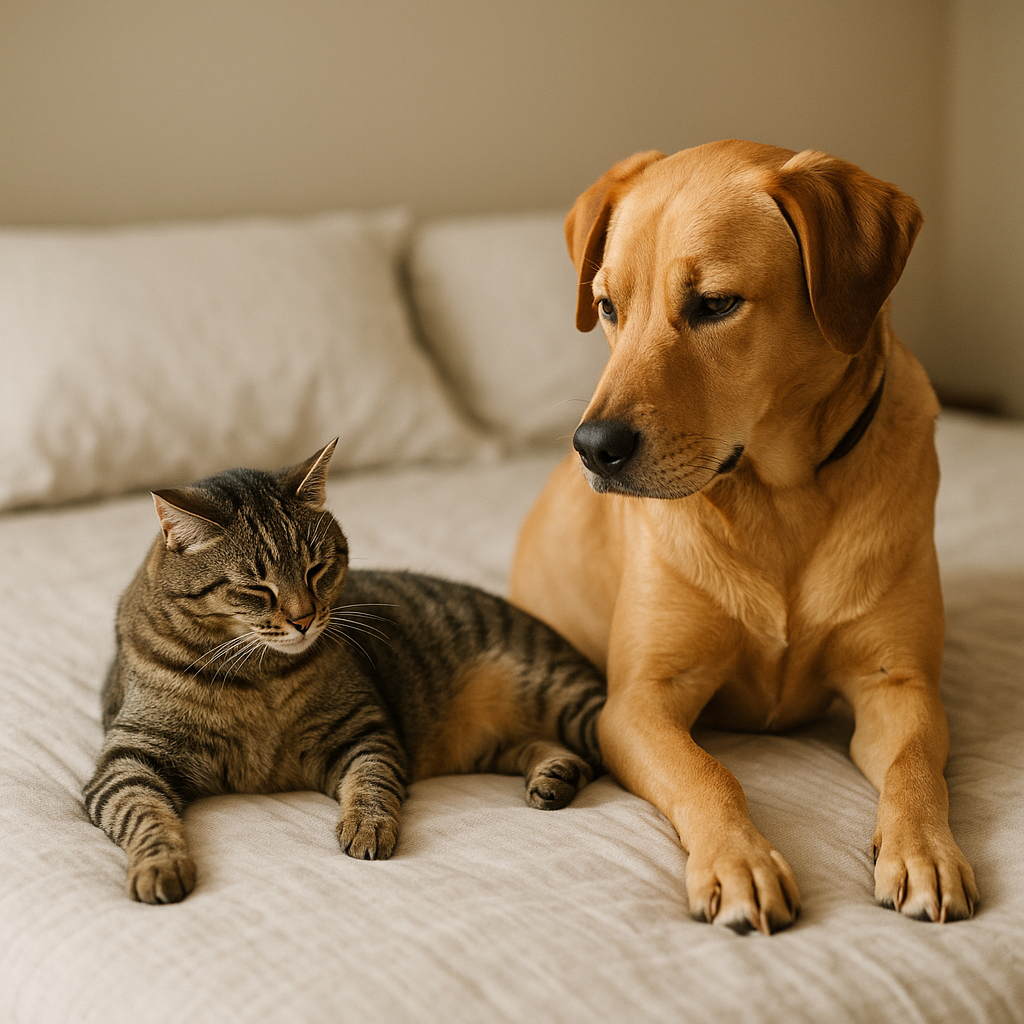
I used to think the bed politics started with a jump. Nope. It starts with a drift. One of them will approach like they have zero intention of committing, then slide their body into the lane the other one uses to access the prime zone. Not a confrontation, not even eye contact. Just a soft, slow sidestep that forces a reroute. My dog does it with his shoulder and ribs, the way he squeezes past a coffee table without touching it. The cat does it with a casual flop that somehow occupies the exact strip of fabric the dog needs to step over to reach the pillow end.
It can look remarkably calculated, although there is no way to know exactly what is going through a pet's mind. Dogs and cats can compete over valued resting areas, and subtle positioning may be enough to make another animal choose a different spot. If the other animal pushes through, the blocker acts surprised, then resettles half an inch closer the next time. It is maddeningly patient.
If you want to catch it in real time, watch for the pre-sleep patrol: two or three loops around the room, a quick sniff at the baseboard, then a slow angle toward the bed like they are magnetized. The blocker will arrive first and park sideways, not lengthwise, because sideways takes up more runway. In my house, the other pet often pauses and chooses another spot rather than stepping over the animal already there. That is the win. Nobody growled. Nobody got told off. One of them controlled access, and the decision got made without a sound.
Decoy Nap: the fake-out that holds the spot
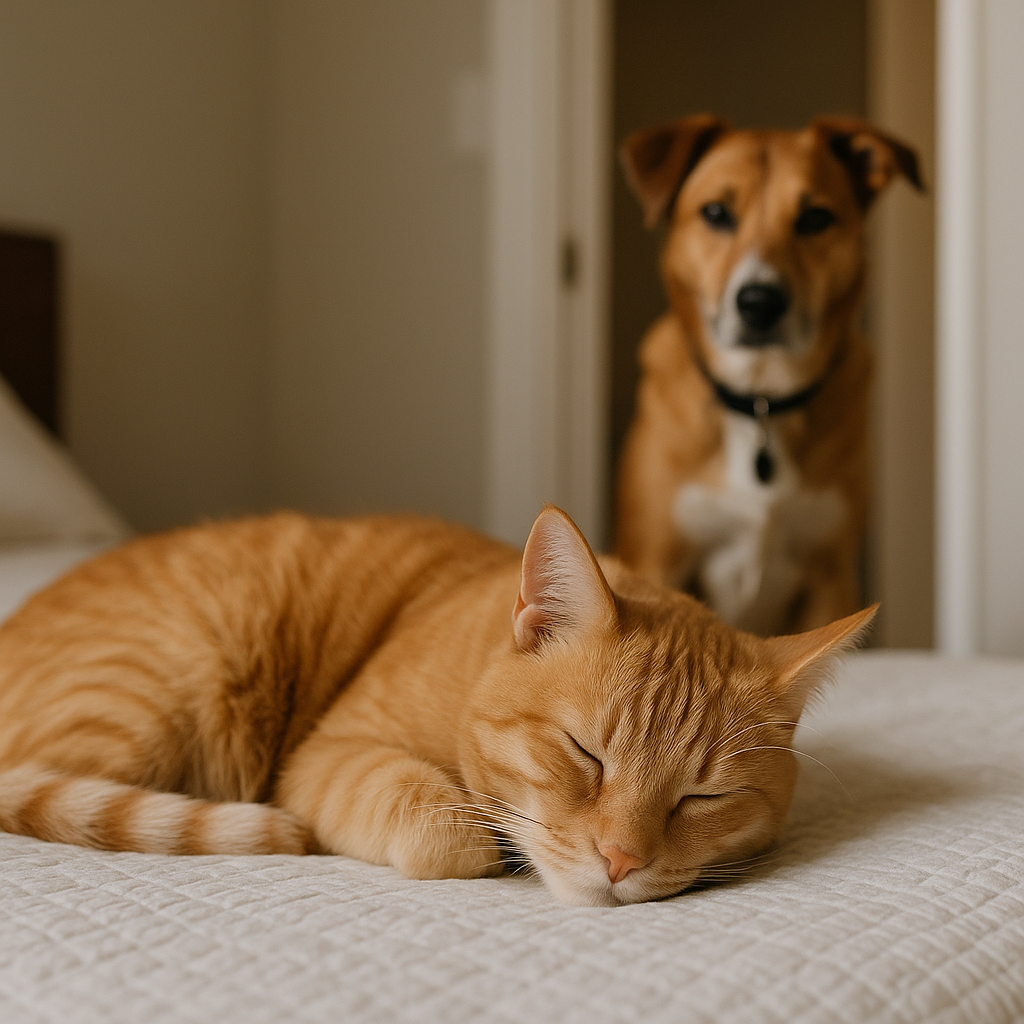
There is a specific kind of nap that looks suspiciously like a reservation. The cat is a master at claiming the good spot early, and I have seen my dog do the same. They settle into the good spot early, before the room is fully quiet, and look asleep just convincingly enough that you do not move them. Eyes closed. Limbs loose. A little sigh. If you are unlucky, you will even get the slow head sink, as if they have melted into the blanket.
Then the other one arrives and does the usual math: is it worth stepping over a body, risking a startle, and triggering the whole nighttime shuffle? Most of the time, no. So the second animal chooses a less desirable location, and the decoy nap becomes permanent by default.
Ear movement can show that a resting cat is still responding to sounds, but it cannot tell you that the cat is 'faking' sleep. A relaxed cat may still swivel an ear toward something interesting in the room. With my dog, it is the chin. When he looks half-asleep, his chin is down, but he still seems tuned in to tiny noises around the room. The second animal is not even doing anything wrong. They are just existing near the claimed territory, and the claimant is waiting them out.
When I want peace at lights-out, I do the opposite of what feels natural: I do not let the first one camp out early. I give them a different perch for the wind-down, like a folded throw at the foot of the bed, and only invite them up when I am ready to sleep. If you let the decoy nap start at 9:15, you are basically agreeing to the seating chart for the next eight hours. It is a tiny trick, but it is why the “best” spot is often decided before your toothbrush is even wet.
The Edge-Claim: toes, tail, and the art of making you move
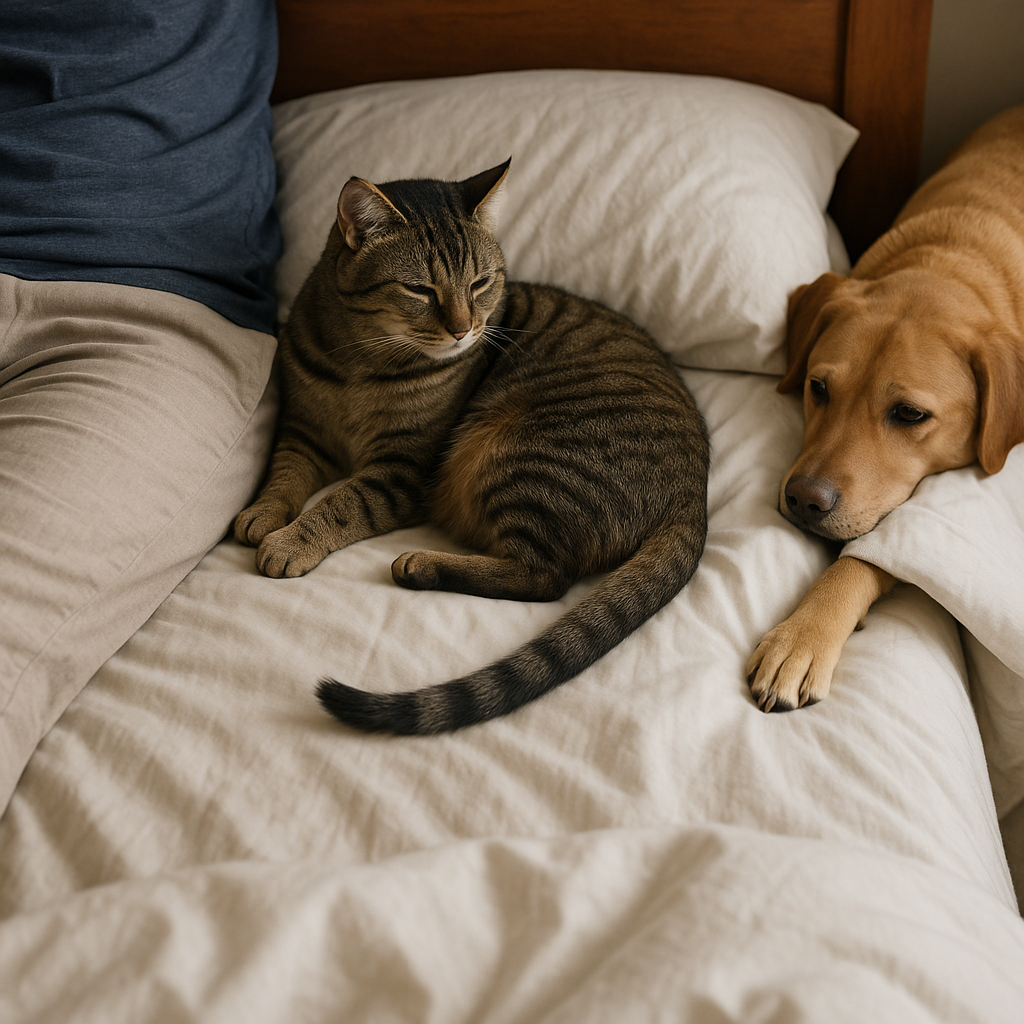
This one is so subtle it took me an embarrassing amount of time to name it: they claim the edge, because the edge forces everyone else to negotiate. The cat will start with a neat little crescent right against your thigh, leaving plenty of open bed. My dog will take the outside rail near the blanket hem. It looks polite. It is not. The edge is leverage.
Here is how it plays out: the edge-claimer positions one hard-to-ignore body part right where movement must occur. For the cat, it is the tail laid across the exact spot where my dog wants to step up. For the dog, it is the paws tucked under the duvet so the cat cannot knead without touching them. Nobody is “in the way” enough to justify eviction, but they are inconvenient enough to make the other animal choose a different route or location.
The details are what give it away. The cat does the slow tail sweep, not the happy twitch. It is a metronome that says, go around. My dog does a quiet stretch, extending one paw two inches farther into the shared space, then freezes. He is not reaching for comfort. He is drawing a line.
If the other animal challenges it, you will often see a soft counter: the cat sits up and starts washing one shoulder as if it were never involved in any scheme. The dog pretends to readjust the blanket with his nose, then resettles with his back pressed more firmly against the boundary. It is a negotiation by friction. Not aggression, not drama, just making the preferred path annoying enough that the rival picks something else.
Once you see the edge-claim, you will notice it happens before sleepiness even sets in. It starts during the settling noises: the click of the lamp, the phone hitting the nightstand, the duvet shake. In my house, that settling-down routine is the cue for both pets to start choosing where they want to spend the night.