Why Dogs Lose Themselves in the Joy of a Squeaky Toy
Dogs and squeaky toys often collide quickly. In many homes, a flattened plush with a torn seam or missing squeaker ends up forgotten under furniture, a clear sign of how intensely dogs engage with these toys. The fixation can be brief or sustained, but it rarely looks accidental.
What appears to be simple play has deeper roots. The response is not learned from people or shaped by routine. It comes from how dogs react to sound, resistance, and physical feedback during play, instincts that formed long before manufactured toys entered their world.
The Sound That Changes Everything
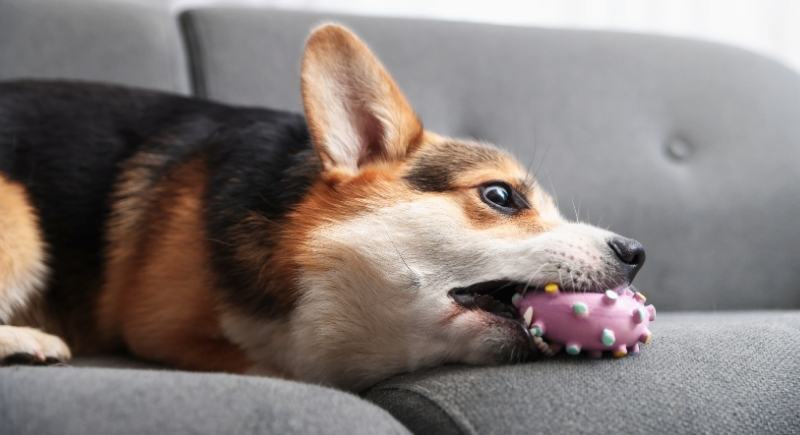
Image via Canva/Africa images
The defining feature of a squeaky toy is its sound. High-pitched squeaks closely resemble the distress noises made by small prey animals. When a dog bites down and hears that response, it can activate instinctive prey-driven behaviors. This reaction does not mean a dog is aggressive or confused. It reflects how a dog’s brain recognizes a familiar signal tied to hunting behavior.
As the squeak continues, bite pressure often increases, and head shaking may follow. This sequence mirrors behaviors seen in wild canids when they capture small animals. The toy becomes a stand-in for a living target, and the squeak provides feedback that the interaction is “working.” Each sound reinforces the action, keeping many dogs engaged longer than silent toys do.
This is why some dogs clamp down repeatedly on the same spot. They are not trying to play gently. They are responding to a sound that suggests resistance. Once the squeaker stops, that feedback loop often breaks. For many dogs, interest fades because the signal guiding the behavior is gone, though others may continue chewing or carrying the toy for comfort or habit.
Owners frequently notice a familiar pattern. A dog becomes intensely focused on a new squeaky toy, methodically works it apart, removes the squeaker, and then loses interest in what remains. In instinct-driven terms, noise suggests resistance, while silence often signals completion. When the toy stops responding, it loses its appeal.
Not All Dogs Are the Same

Image via Pexels/Ambareesh Sridhar Photography
Not all dogs respond to squeaky toys with the same intensity. Breeds developed for hunting, terrier work, or vermin control often show stronger fixation, as their breeding favored quick reactions to small sounds and fast, decisive responses. Other dogs may engage briefly, show mild interest, or ignore squeaky toys altogether.
Energy level and daily stimulation also matter. A dog with limited outlets for physical or mental activity may interact more intensely with a squeaky toy, turning it into a focused task rather than casual play. That does not mean boredom creates the instinct, but it can amplify the strength of the behavior.
Some dogs actively avoid squeaky toys. Loud, sudden noises can overwhelm dogs that are more noise-sensitive or less prey-driven. These dogs may freeze, retreat, or simply walk away. In those cases, a lack of interest is not a problem. It reflects a different sensory threshold or temperament. Crinkling toys, tug toys, or durable chews often suit these dogs better.
Supervision and Safety
Because squeaky toys tend to invite focused biting and tearing, supervision matters. Dogs that work to remove squeakers may swallow small pieces of fabric, plastic, or stuffing. This risk increases once a toy begins to break apart.
Regular inspection and timely removal of damaged toys reduces the chance of ingestion. For dogs that dismantle toys quickly, sturdier designs or squeak-free alternatives can provide safer outlets for chewing and play.
To human ears, a squeaky toy can sound like pure irritation. To a dog, it is a signal with meaning. The enjoyment comes from engagement, feedback, and resolution. What looks like a noisy obsession is often a behavior sequence playing out in a way that feels natural and satisfying to the dog experiencing it.