
Three feeding-schedule shifts that quietly crank up the meowing, plus what I change in my kitchen to settle it down.
The empty-bowl alarm you accidentally trained
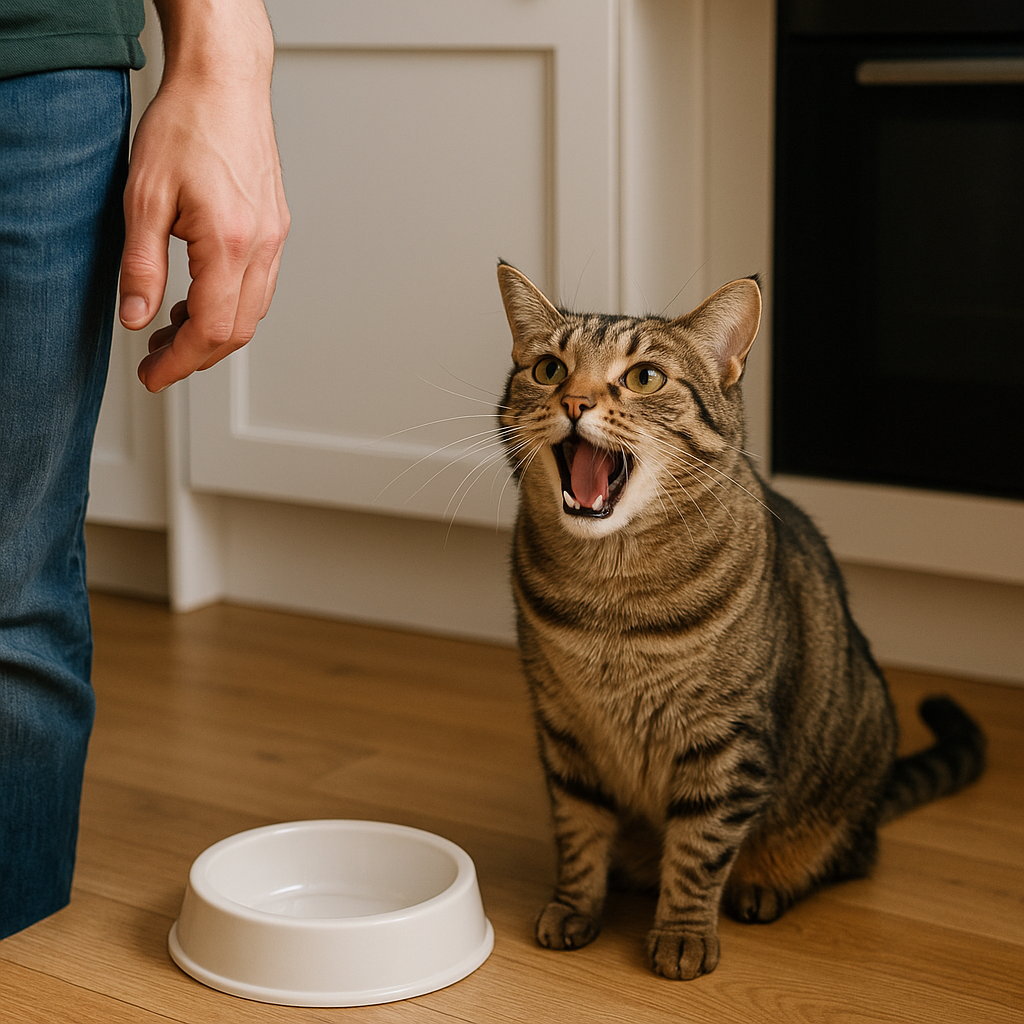
The most common "why are you screaming" moment in my house is also the most boring: the bowl is empty, and my cat has decided that empty bowl equals emergency. It usually starts after a schedule change that feels minor to us. You started feeding dinner later because you joined a gym. You moved breakfast earlier for school drop-off. You stopped free-feeding and now do measured meals. The cat doesn't experience that as a calendar update. They experience it as, "The food pattern is unreliable, so I'd better be first in line."
Here's the part people miss: it's not just hunger, it's the noise paying off. If the cat meows at 5:30 a.m. and you stumble out once, they've learned the rule. The rule isn't "meow and get breakfast." It's "meow and the humans move toward the kitchen." That's enough to keep the behavior alive.
What worked for me wasn't a dramatic training plan. It was tightening the pattern so the bowl stopped being a slot machine. I picked two feed times I could hit even on messy days (for me, 7:00 a.m. and 6:00 p.m.), and I set a phone alarm for a week like I was an intern. If I'm switching times, I move it in small steps, 10 to 15 minutes per day, not an hour jump. And I don't reward the pre-alarm chorus. If the cat starts up early, I do my normal morning stuff first: bathroom, coffee, shoes on. Food is the last step, and it happens when the alarm goes off, not when the yelling peaks.
If you want one simple kitchen tweak, use a timed feeder for the meal that's getting the most noise. It doesn't have to be fancy. The point is that the food arrives without you starring in the scene, so the cat stops treating your footsteps as the cue to escalate.
When the new diet is fine, but the math isn't
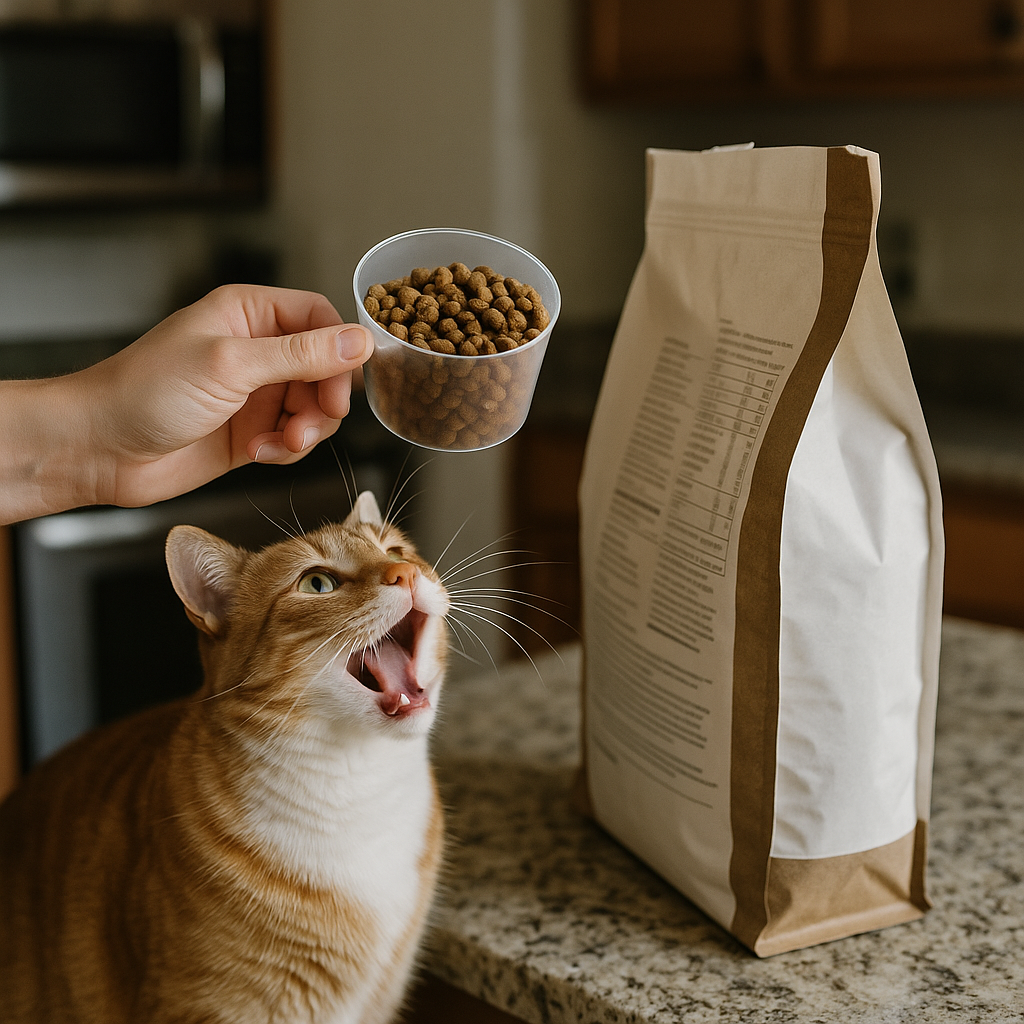
I've watched this happen with my own eyes: you switch foods (maybe to help hairballs, maybe because the old one was out of stock), you also adjust the schedule to match your workday, and suddenly you live with a tiny opera singer. Then you read the bag, do the responsible thing, and assume the portion is correct. The problem is that the cat is doing different math than the bag.
Dry food especially can make this messy because measuring a scoop is not measuring calories. Kibble size varies. Calorie density varies. Even the scoop you grabbed from the drawer varies. I used to pour by vibe, and my cat would start meowing right around the part of the day when the previous food would've still been sitting heavier. The new stuff was fine. I just wasn't feeding an equivalent amount for my cat's appetite and routine.
If the meowing spiked right after the change, I check three things before I spiral into behavior theories:
- Are you unintentionally feeding less? Use an actual measuring cup for a few days, or better, a small kitchen scale if you have one. You don't need to get obsessive, just consistent enough to see whether about a half cup is really closer to a third.
- Did wet food get cut back without noticing? A lot of people drop the evening wet food because they have kibble, then wonder why the late-night yowling starts.
- Did the schedule shift create a long gap? Moving dinner from 8:00 p.m. to 5:30 p.m. can create a brutal overnight stretch, even if total calories are the same.
What I do in that long-gap scenario is boring but effective: I split dinner. Same total amount, just divided into two smaller servings, one at dinner time and one as a late-night snack. If you want the cat to stop treating 3:00 a.m. like a legitimate meeting time, you can't leave them with a 14-hour stretch and act surprised when they file a complaint. If you're adjusting amounts for weight or health, loop your vet in. But if the change was lifestyle-driven, the simplest fix is often restoring the cat's sense that the day contains enough food events to relax.
The weekend sleep-in that resets your household clock
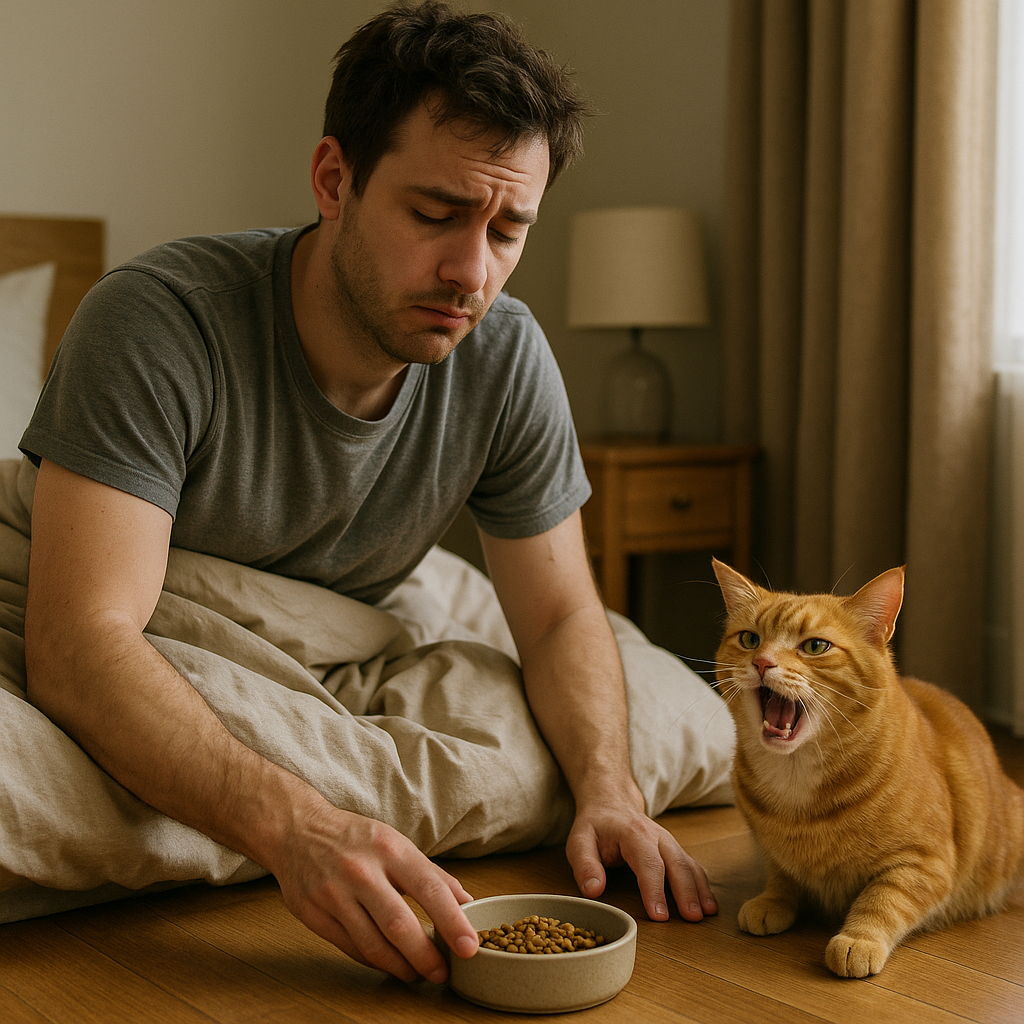
Nothing makes my cat more vocal than my own optimism. If I feed at 6:30 a.m. on weekdays, then decide I'm sleeping in on Saturday and Sunday, my cat treats that like a negotiated contract. Come Monday, the old time feels like betrayal. And if I cave once because I'm tired, the next few mornings get louder. It's not moodiness. It's pattern recognition with claws.
This is the feeding-schedule change people forget to count because it isn't a deliberate change. It's two days of drift. The cat doesn't think in weekdays. They think in: lights on, humans moving, bowl appears. When those cues slide around, you get a cat who starts meowing earlier to drag the whole routine back into place.
My fix is the opposite of what I want to do. I keep the first meal time consistent on weekends, then I go back to bed. Seriously. I set the bowl down, do not start playing or chatting, and I don't open the blinds like it's a morning show. If you use a timed feeder, even better, because you can keep the same time without your cat learning that your face equals breakfast.
If you're trying to move the morning meal later (maybe the cat is waking you at 4:00 a.m.), don't do it by force. You'll lose. Move it later in small increments and give the cat something predictable to do in the meantime that isn't yelling. In my place, that's a tiny pre-breakfast routine: fresh water in the fountain, then I toss two or three pieces of kibble into a treat ball on the rug so there's a job to do while the clock runs out. It's not a full meal, it's just enough to take the edge off and keep their mouth busy.
One more thing I watch: if the cat's meowing is new and intense, and especially if it comes with other changes (gulping food, vomiting, obvious weight change, drinking a lot more water), I don't chalk it up to schedule drama. Cats are masters at turning discomfort into feed me behavior, and it's worth a vet check rather than trying to out-stubborn a problem that's physical.