
From synchronized squeaky-toy heists to joint hallway security, these unexpected pet alliances run your house now.
The hallway checkpoint duo
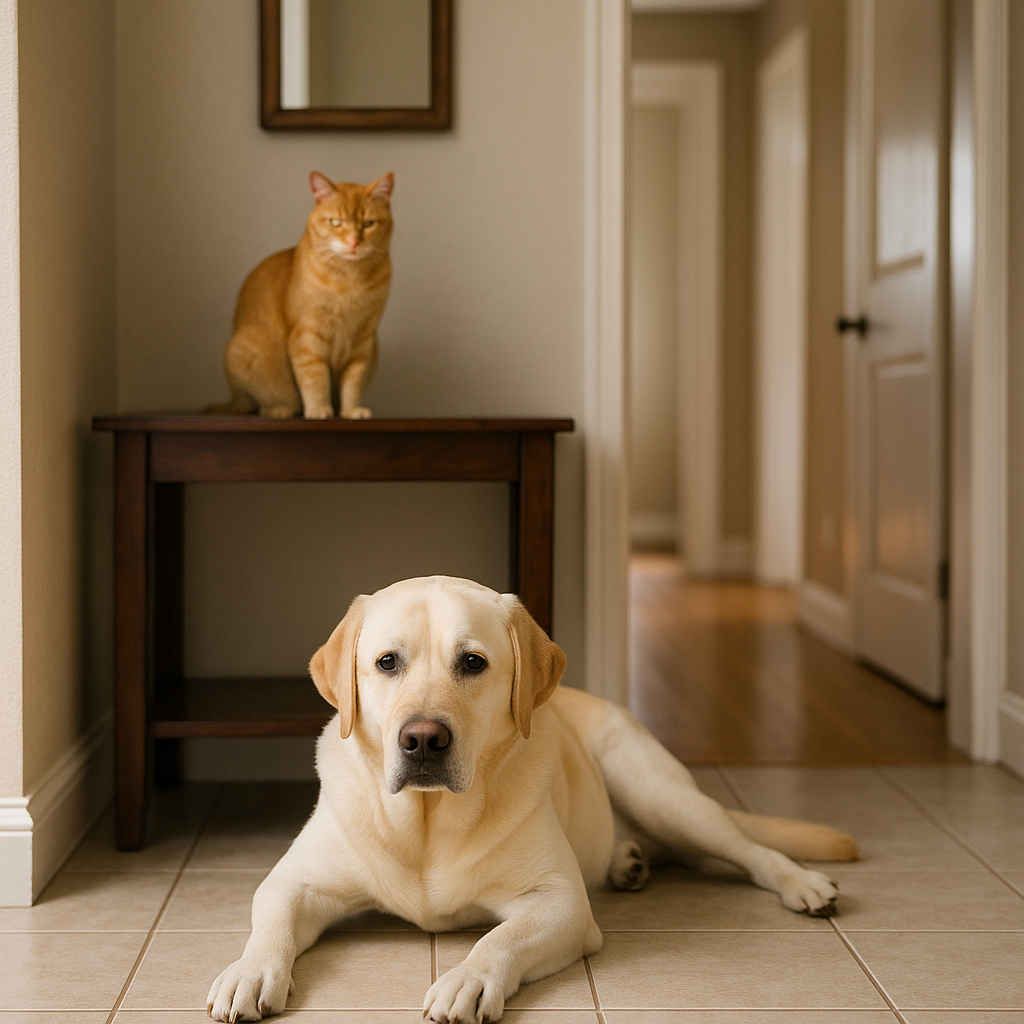
It starts as a coincidence. Your dog flops down in the doorway because the tile is cooler than the rug. The cat chooses the same stretch of hallway because it funnels every human past her whiskers. Then one day, you realize neither pet plans to move, and somehow getting down your own hallway has become your problem.
In my house, the dog is the visible bouncer. Big body, chin on paws, a look that says, no one gets through without paying the toll (usually ear scratches). The cat is the silent security camera. She sits just out of reach on the console table and does that slow head turn as you approach, like she's tracking you for a documentary. Together, they run a checkpoint that somehow makes you detour through the laundry room to grab socks, even when you're already late.
Somehow, there is always one of them on duty. The dog hears the fridge door click and lifts his head. The cat hears the faint rattle of a pill bottle in the bathroom and is instantly present, because she knows you're doing something without her approval. If one of them gets distracted, the other holds the line. I've watched the cat step into the doorway to stall me while the dog hustled over from the kitchen, like a tiny orange traffic cone buying time.
You can try to step over them, but multi-pet physics applies: one tail flick, and you'll do the slow-motion stumble that turns into an apology. So you end up negotiating. "Buddy, can I get through?" as if the hallway is his lease. The cat closes her eyes like she's granting a permit. And somehow you leave the interaction feeling like you were the one being rude.
Squeaky-toy theft, executed with teamwork
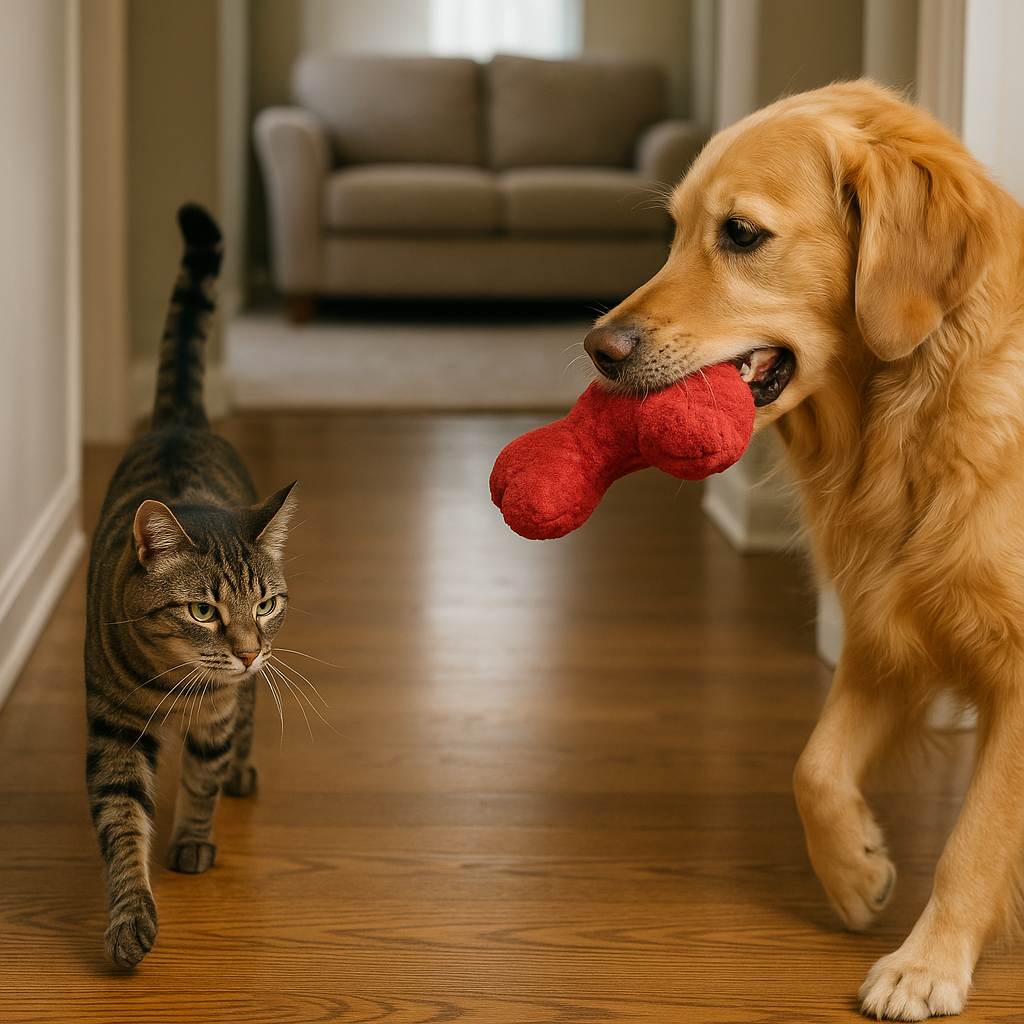
If you live with a dog and a cat, you know the squeaky toy isn't just a toy. It's a portable noise machine, a status symbol, and a way to summon you from three rooms away. In a one-pet home, it's straightforward: dog squeaks, you toss. In a multi-pet home, it turns into a coordinated operation that looks suspiciously like planning.
Here's the pattern I've seen over and over: the dog gets emotionally attached to one specific squeaker (in our case, a battered Kong plush that should've retired months ago). The cat does not want the toy. She wants the dog to want the toy, loudly, in the hallway you just vacuumed. So she'll stroll up, tap it with one paw like she's testing a doorbell, and then casually walk away. The dog takes the bait every time, scoops it up, and begins the full squeak-and-prance routine.
While the dog is performing, the cat does the actual work. She slips behind him and takes the warm spot he just left on the couch. Or she uses the commotion to hop onto the counter for a quick audit of whatever you thought you put away, like the rotisserie chicken container you're "saving for tomorrow." (She is not saving it for tomorrow.)
The best partnership version is when the dog participates without knowing. The cat will bat the toy under the coffee table on purpose, because she knows the dog will shoulder-check the table leg, huff dramatically, and then look at you like you're the one who lost it. Congratulations, you're now on the floor retrieving a slobbery squeaker while the cat watches from her newly claimed cushion, blinking slowly like a manager observing staff.
And just when you're about to declare the whole thing chaos, they reset. The dog drops the toy right in front of the cat as if offering a peace treaty. The cat sniffs it, declines, and walks away with the confidence of someone who just pulled off a clean job.
The two-bowl truce (until you mop)
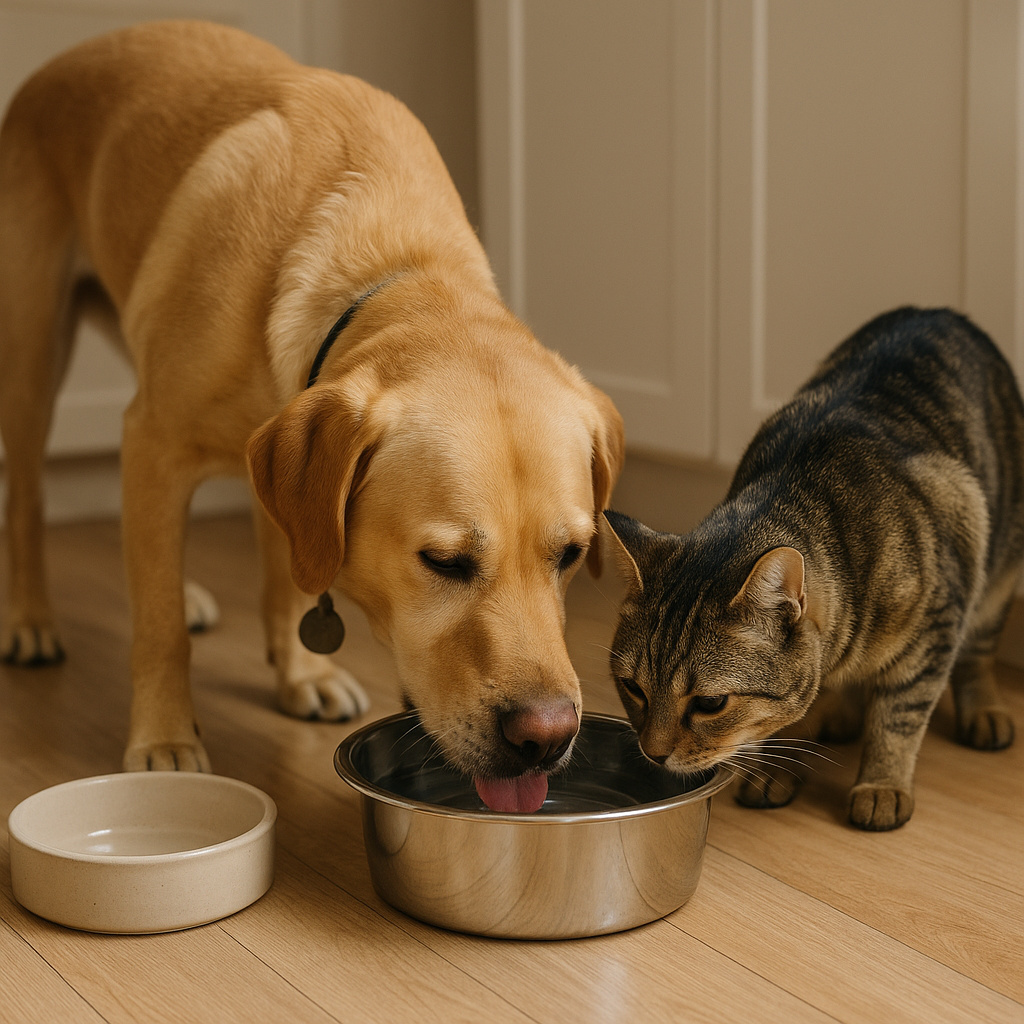
Every multi-pet home I know has tried the sensible setup: one bowl for the dog, one bowl for the cat, placed at a polite distance apart, as you once read in an article. Then you watch them both march over to the same bowl and drink out of it like it's a pop-up bar with better vibes. It's not thirst. It's politics.
My dog prefers a heavy stainless-steel bowl that clanks when he nudges it. My cat seems especially interested in anything that was supposedly meant for the dog, including his water bowl. When they're in a good mood, the shared drinking turns into an accidental buddy comedy. The dog takes loud gulps. The cat takes tiny sips between gulps like she's taste-testing. They pause, look at each other, and continue as if they've practiced the timing.
Then you clean. That's when the partnership shows itself. The moment I mop or refill the bowls, both of them appear, side by side, to supervise the water situation. The dog plants himself close enough that his tags tap the rim. The cat sits one foot away and stares at the surface as if she's judging its clarity. If I fill the cat's bowl first, the dog suddenly becomes extremely interested in it, as if it were always his favorite and he's been too humble to mention it.
What makes it funny is the way they recruit you into the truce. If I move the bowls farther apart to reduce crowding, they treat it like I've rearranged a shared office. The dog will carry a mouthful of water across the kitchen and drip a trail, which is his version of filing a complaint. The cat will do the opposite: she'll drink two sips, walk away, and then come back five minutes later to stare at me again, as if I was supposed to fix the vibe.
I stopped fighting it and focused on the practical part: I keep both bowls topped off and wash them often, because pet bowls can develop that slick film if they aren't cleaned regularly. They can swap bowls all they like, but I still keep a clean water source available for each of them. My main job is washing the bowls regularly, keeping the water fresh, and trying not to slip on the splash zone.