Why Resilience Is Higher in Dog Owners, and Neuroticism Is Higher in Cat Owners
Researchers at James Cook University studied more than 320 people to understand how pet ownership relates to personality. They compared dog owners and cat owners, while also accounting for factors such as age and gender. Using the Big Five personality traits, they also measured resilience, or how well someone handles and recovers from stress.
The results were consistent with earlier expectations. Dog owners scored higher in resilience, while cat owners scored higher in neuroticism. The difference was small, but it kept the findings grounded. Outside those two traits, the study did not find large differences in areas such as extraversion, agreeableness, or openness. Thus, making the contrast between resilience and neuroticism even more distinct.
Resilience In Dog Owners

Image via Canva/Dean Drobot
The resilience link builds on earlier research tied to the COVID-19 lockdowns. During that period, dog owners who lived alone reported lower levels of loneliness compared to people without dogs. At first, the explanation seemed obvious because dogs get people outside, create routine, and increase social interaction.
But that theory didn’t hold up under closer testing. Follow-up research found no clear connection between dog walking and reduced loneliness. This forced a shift in thinking. Instead of asking what dogs do for people, researchers started asking what kind of people choose dogs in the first place.
Resilience became the missing piece. People who naturally handle stress better may also be drawn to the structure and responsibility that come with dog ownership. Caring for a dog requires consistency, activity, and daily engagement. Those demands align well with someone who already functions well under pressure.
There is also a second possibility. Owning a dog involves routines, challenges, and constant responsibility, and over time, that could strengthen resilience rather than simply reflect it.
Neuroticism Appears Higher In Cat Owners
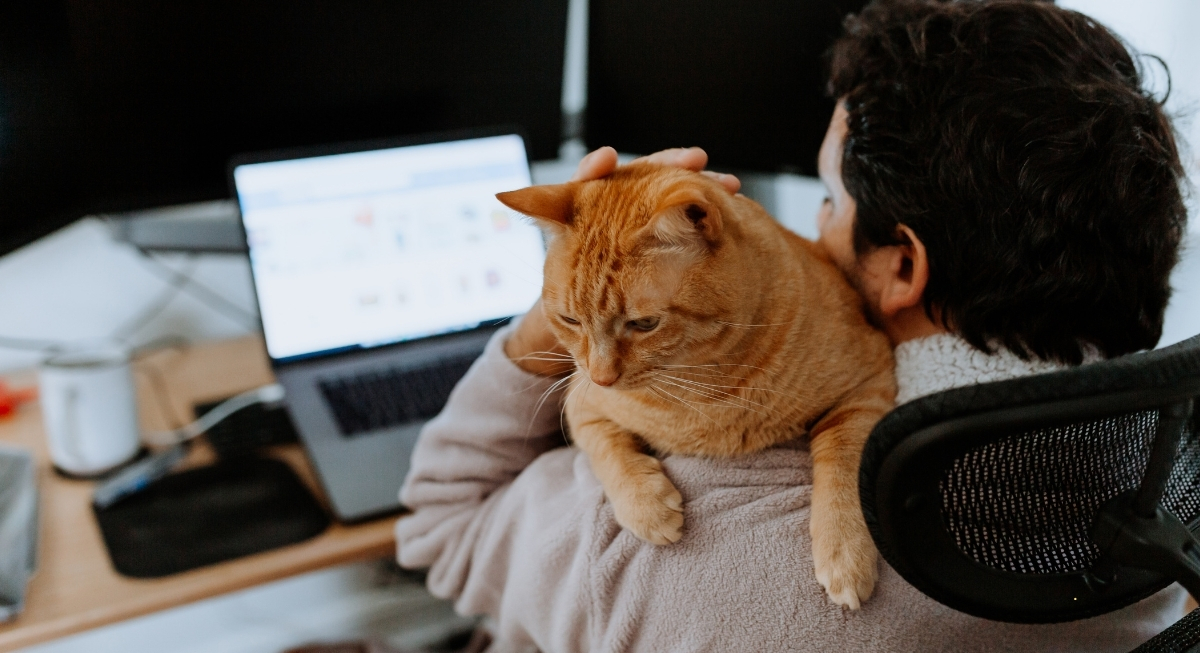
Image via Getty Images/GabrielPevide
The pattern for cat owners follows a similar logic, but with a different trait. Neuroticism relates to how strongly someone reacts to stress, uncertainty, and emotional shifts. In the same study, cat owners scored higher on this trait compared to dog owners.
Studies going back decades have found that people who prefer cats tend to score higher in neuroticism and openness, but that doesn’t mean cat ownership causes emotional instability.
Cats tend to fit lifestyles that involve less structure. They require less supervision, adapt well to smaller living spaces, and operate more independently. Those traits may appeal to people who prefer flexible routines or quieter environments. And again, instead of asking what cats do to people, it becomes about who gravitates toward cats and why.
There is also a biological angle worth noting. Some research suggests that both personality traits and pet preferences may be influenced by genetic factors. That means the same underlying tendencies that shape personality could also shape which animal someone feels drawn to.
The Question That Still Has No Clear Answer
It is still unclear which comes first. Personality could guide the choice of a pet, or owning a pet could gradually shape personality over time. Both ideas have evidence to support them, but neither fully explains the pattern on its own.
What is clear is that the pet itself is not the full story. The owner’s personality plays a larger role than most people expect.
This subtly changes the conversation. Choosing a dog or a cat may feel like a preference based on lifestyle or taste, but research suggests it also reflects how someone responds to stress, routine, and change before the pet comes into their life.