Why Scientists Think Cross-Species Animal Friendships Are More Than Just Cute
Most animals build strong social bonds with their own kind, and researchers have found that the brain systems behind those connections are similar to the ones humans rely on in close relationships. Still, it feels surprising to see a dog settle next to a bird, or a much larger animal calmly share space with a smaller one. These moments stand out because they go against what we expect from nature.
That is part of why these interactions catch attention so quickly. People often see them as heartwarming or unusual, but scientists look at them a bit differently. They study these bonds to understand how social behavior works across species, and what it might reveal about how animals form connections in the first place.
It’s Not Just Random Cuteness
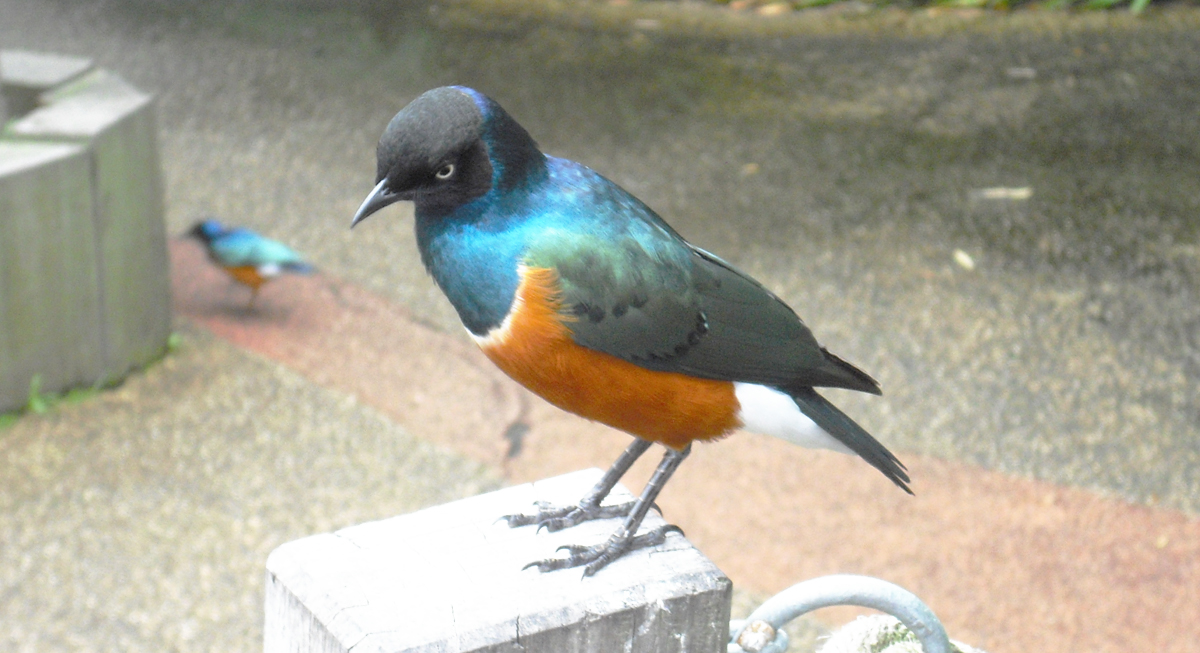
Image via Wikimedia Commons/Emma dusepo
Researchers have documented cross-species relationships that last for years and involve real coordination. One of the clearest examples comes from African starlings. A long-term study led by evolutionary biologist Dustin Rubenstein at Columbia University tracked these birds for over two decades.
Some individuals repeatedly helped unrelated birds raise chicks by defending nests and feeding young across roughly 40 breeding seasons. That kind of consistency points to stable partnerships rather than one-off interactions.
Marine life shows a similar pattern. Field observations have recorded day octopuses teaming up with reef fish like coral trout and goatfish during hunts. Fish locate prey hiding in coral, while octopuses flush them out with their arms. Both sides benefit, and the cooperation improves success rates. In some cases, octopuses even push or strike fish that fail to participate, which researchers interpret as a way to maintain the partnership.
Scientists studying animal cognition have found that several species can recognize individuals from other species, anticipate behavior, and adjust their own actions.
Nature Has Been Doing This for Millions of Years
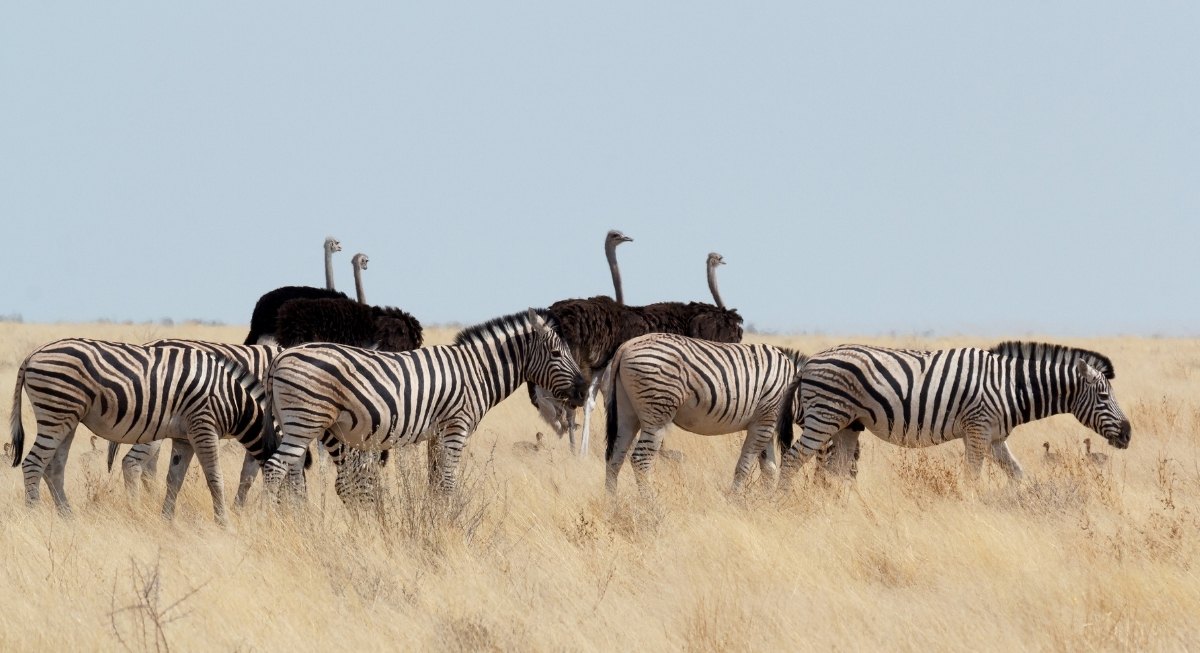
Image via Canva/Artush
These relationships fall within a broader system called mutualism, in which different species benefit from interacting with one another. Some partnerships are so closely linked that survival depends on them, while others provide advantages without full dependence.
On African plains, zebras and ostriches often graze side by side. Ostriches have poor eyesight but a strong sense of smell; zebras see well but have poor smell. Together, they spot danger faster than either could alone. Charles Darwin even noted this pairing in early observations.
Elsewhere, woolly bats in Borneo roost inside pitcher plants. The plants gain nutrients through the bats’ droppings, and the bats get a safe place to rest. Legumes such as clover rely on bacteria in their roots to convert nitrogen into usable nutrients, a relationship that dates back about 60 million years.
When Friendship Breaks the Rules
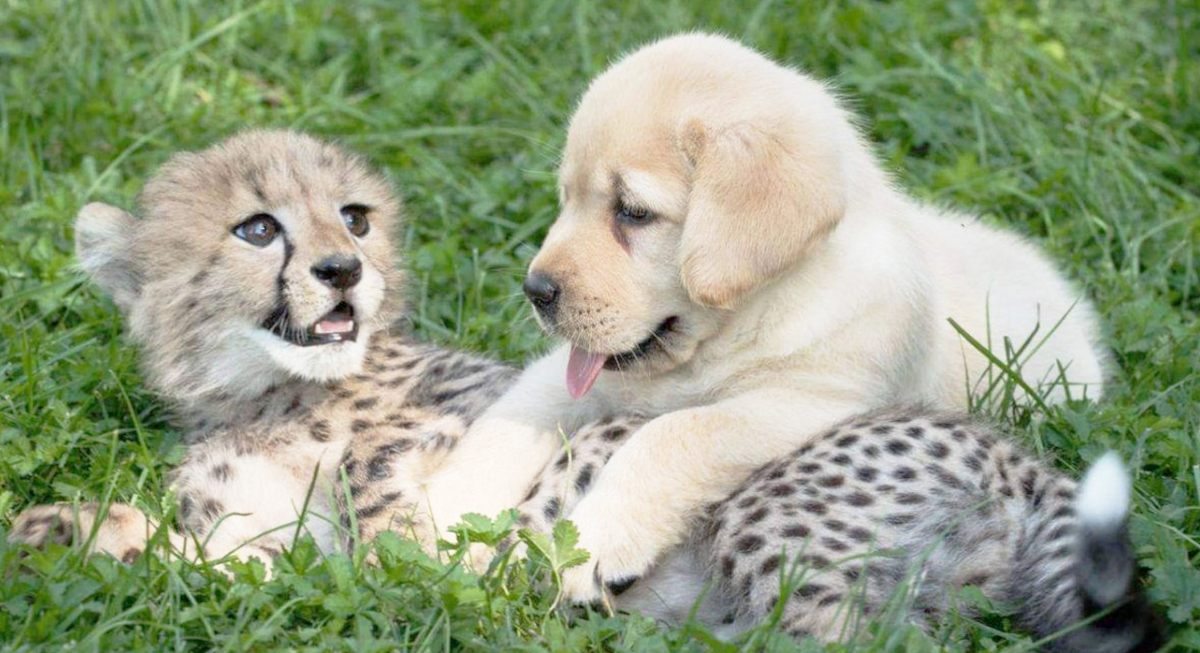
Image via Facebook/Columbus Zoo and Aquarium
Some of the most famous examples come from settings where animals don’t have typical choices. In captivity or unusual conditions, social needs can override instinct.
At Busch Gardens, a cheetah named Kasi, born in 2011, was paired with a Labrador mix named Mtani after losing his littermates. They formed a bond early, and trainers observed how they learned each other’s signals over time. Experts note that these relationships can shift as animals mature, which adds a layer of unpredictability.
Other cases have emotional weight. An elephant named Tarra formed a close bond with a dog named Bella and showed clear signs of distress after Bella died. Owen the hippo and Mzee the tortoise developed a long-term connection that researchers described as a form of cross-species communication.
Scientists studying animal behavior have also noted that these bonds often form when animals seek comfort, especially in stressful situations. Even predator-prey pairings can occur, though they require a high level of trust.
What Scientists Are Really Seeing
These relationships are not rare accidents or internet flukes. They show cognitive flexibility, real cooperation, and in some cases, emotional attachment.
Studies analyzing more than 600 animal social networks have found that shared environments create opportunities for repeated interactions, increasing the likelihood that bonds will form. As habitats overlap and resources fluctuate, working with another species can be advantageous.