Why the Livyatan Whale Was Even More Terrifying Than the Megalodon
Megalodon tends to dominate conversations about prehistoric ocean predators. Its massive jaws and oversized teeth have turned it into a pop-culture icon that feels almost mythical. Yet during the Miocene, another hunter cruised those same waters, one that rivaled Megalodon in size and may have been even more dangerous. Livyatan melvillei was not just huge. It was purpose-built to hunt other giants.
What sets Livyatan apart is how its physical power paired with the instincts and intelligence of a whale. This was not a predator that depended on a single devastating bite. It likely stalked, pressured, and controlled its prey over time, turning encounters into drawn-out struggles rather than sudden strikes. That combination makes Livyatan especially unsettling to imagine in its prime.
A Predator Designed To Target Large Animals
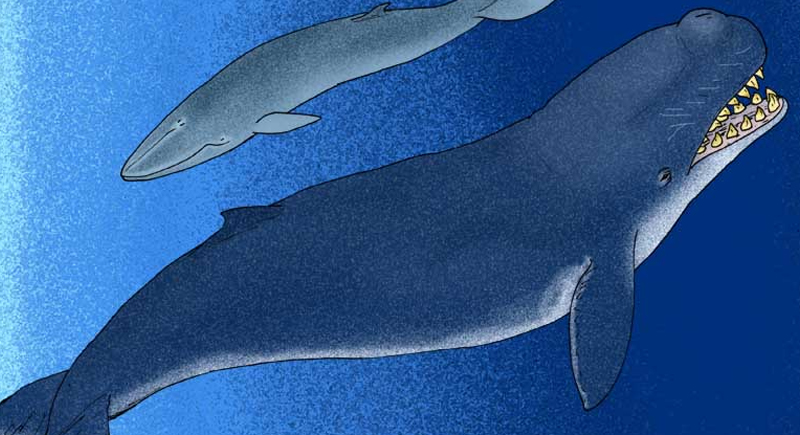
Image via Wikimedia Commons/Apokryltaros
Livyatan belonged to a group known as macroraptorial sperm whales, meaning it evolved specifically to hunt large prey. Fossil evidence shows it carried massive, enamel-coated teeth in both the upper and lower jaws, unlike modern sperm whales. These teeth, some exceeding a foot in length, were built for gripping, tearing, and maintaining control during prolonged struggles.
This anatomy suggests Livyatan routinely attacked whales, seals, and other sizable marine mammals. Rather than delivering a single disabling strike, it likely engaged in extended pursuits and direct confrontations. That alone places it in a rare category among marine predators.
Intelligence As A Weapon
One of Livyatan’s most unsettling advantages was its brain. As a close relative of modern sperm whales, it likely possessed advanced cognitive abilities, including complex sensory processing and spatial awareness.
Echolocation would have allowed Livyatan to detect prey in low-visibility conditions, track movement at depth, and respond dynamically during a hunt. This capability changes how the predator interacts with its environment. Instead of reacting to prey, it could locate, follow, and adapt its approach in real time.
The result is a hunter that relies on strategy as much as strength.
Teeth Built For Control, Not Just Damage
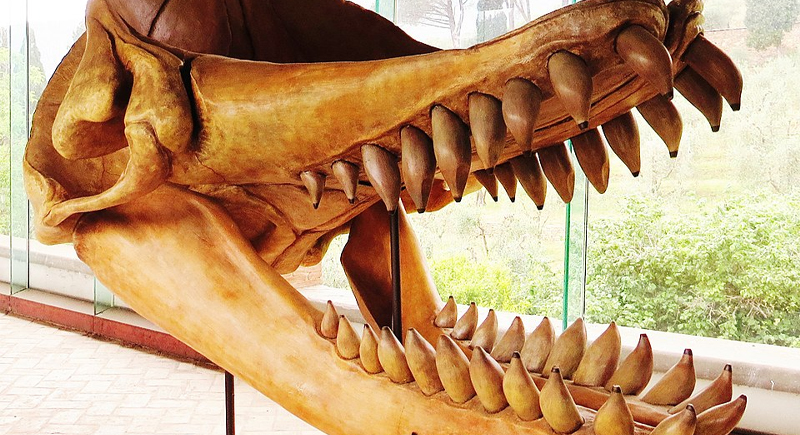
Image via Wikimedia Commons/Ghedoghedo
Livyatan’s teeth were structurally different from those of large sharks. Rather than thin, blade-like teeth meant to slice and withdraw, Livyatan’s teeth were thick, conical, and resistant to breakage. This design favors holding onto prey and applying sustained force.
Such teeth would be especially effective against large, muscular animals that struggle violently when attacked. The goal was not simply to wound, but to overpower. In a prolonged encounter, this difference matters.
The Apex Contender: Size, Stamina, and Overlap
Estimates place Livyatan between 44 and 57 feet long, with a body mass that may have exceeded 60 tons. That puts it among the largest predators ever to exist. While Megalodon may have reached greater lengths, mass and endurance likely played an equally important role.
As a warm-blooded mammal, Livyatan would have been capable of longer pursuits and quicker recovery from exertion. In ecosystems filled with fast, resilient prey, stamina could determine the outcome of a hunt just as much as speed.
There is no direct evidence that Livyatan hunted Megalodon. What is clear is that both species occupied similar ecological roles in warm Miocene oceans and targeted many of the same prey animals.
Only a small number of predators would have been capable of competing with Megalodon for large marine mammals. Livyatan was one of them, and it did so without becoming a dominant food source itself.