Why We’re Hardwired to Love Watching Unlikely Animal Friendships
Spend a little time online, and you’ll notice how often the same kind of video pulls you in. A dog and a kitten curled up together. A massive animal gently keeps company with a much smaller one. You don’t plan to watch for long, but you end up staying, sometimes replaying it without thinking.
There’s a reason those moments land so easily. It’s not just that the animals are cute. Watching two unlikely companions get along taps into something familiar, something reassuring about connection showing up where you wouldn’t expect it.
The Brain Likes What It Recognizes
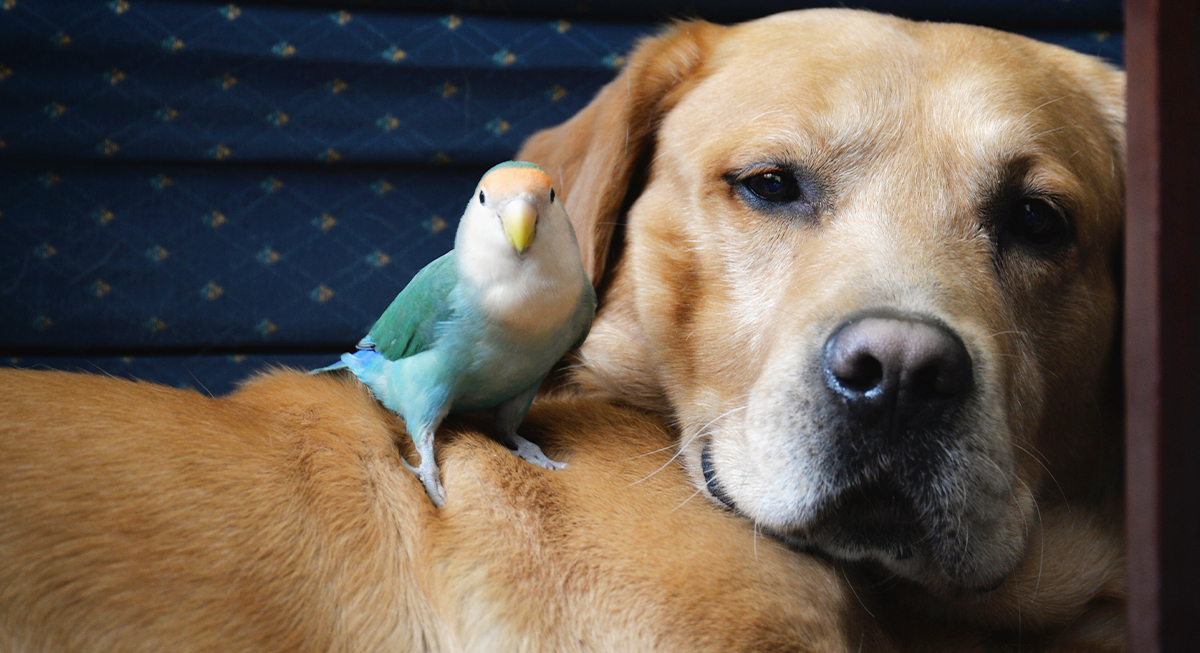
Image via iStockphoto/Goja1
Research across species shows that animals form strong social bonds with their own kind through behaviors such as grooming, play, and physical closeness. When a dog and a bird show the same signals, the brain recognizes it.
A 2022 research review suggests the brain systems animals use for social bonding may overlap with those in humans. That overlap makes it easier to interpret what’s happening on screen. Even without knowing the animals’ full experience, people instinctively connect the behavior to friendship as they understand it.
Surprise Does the Heavy Lifting
There’s another angle that explains why these videos don’t get old: they break expectations. People grow up with simple mental rules about the natural world. Cats chase birds, predators hunt prey, or species stick to their own. Then a video flips things. A fox and a cat share space in Turkey, or a magpie named Molly bonds with a dog named Peggy in a family home.
When expectations get challenged, the brain reacts. Neuroscientists have found that surprise triggers chemicals linked to reward and attention. That reaction creates a small burst of satisfaction, which explains why these clips feel good and stay memorable.
Real Bonds, Not Just Internet Hype
It’s easy to assume these relationships are staged or exaggerated. But experts say many of them are genuine. John Wright, a Ph.D. and applied animal behaviorist at Mercer University, explains that animals can form lasting bonds under the right conditions. Young animals are more flexible in behavior and open to new social experiences. Warmth, comfort, and shared rest can help establish that early connection.
For instance, after the 2004 Indian Ocean tsunami, a baby hippo named Owen lost its mother and was relocated to Haller Park in Mombasa, Kenya. Owen bonded with Mzee, an Aldabran tortoise, and stayed close to him for years.
Another case involves Suriya, an orangutan, and Roscoe, a dog, who formed a close relationship after meeting at a wildlife facility. In Canada, a German shepherd named Faith helped a rescued kitten named Hope survive, and the two remained inseparable.
Why Environment Shapes These Bonds
These friendships depend heavily on where animals live. In homes or protected spaces, they are not dealing with hunger or competition. Food is steady, and survival does not depend on hunting. That shifts behavior. A cat raised around a bird, with no need to chase prey, treats it as familiar rather than something to hunt.
Barbara J. King explains that a real interspecies bond needs to last over time, involve mutual interaction, and require both animals to adjust. Many of the widely shared examples meet these conditions, which is why they hold up beyond a single moment.
These bonds are not always stable. Some animals become more solitary with age, and the relationship changes. Others stay uneven, with one animal more engaged than the other.
People respond to these examples because they reflect cooperation. Seeing animals form bonds outside expected patterns supports the idea that differences do not always lead to conflict.